Early Green Up on One Side of the Lawn Is Usually Not Random
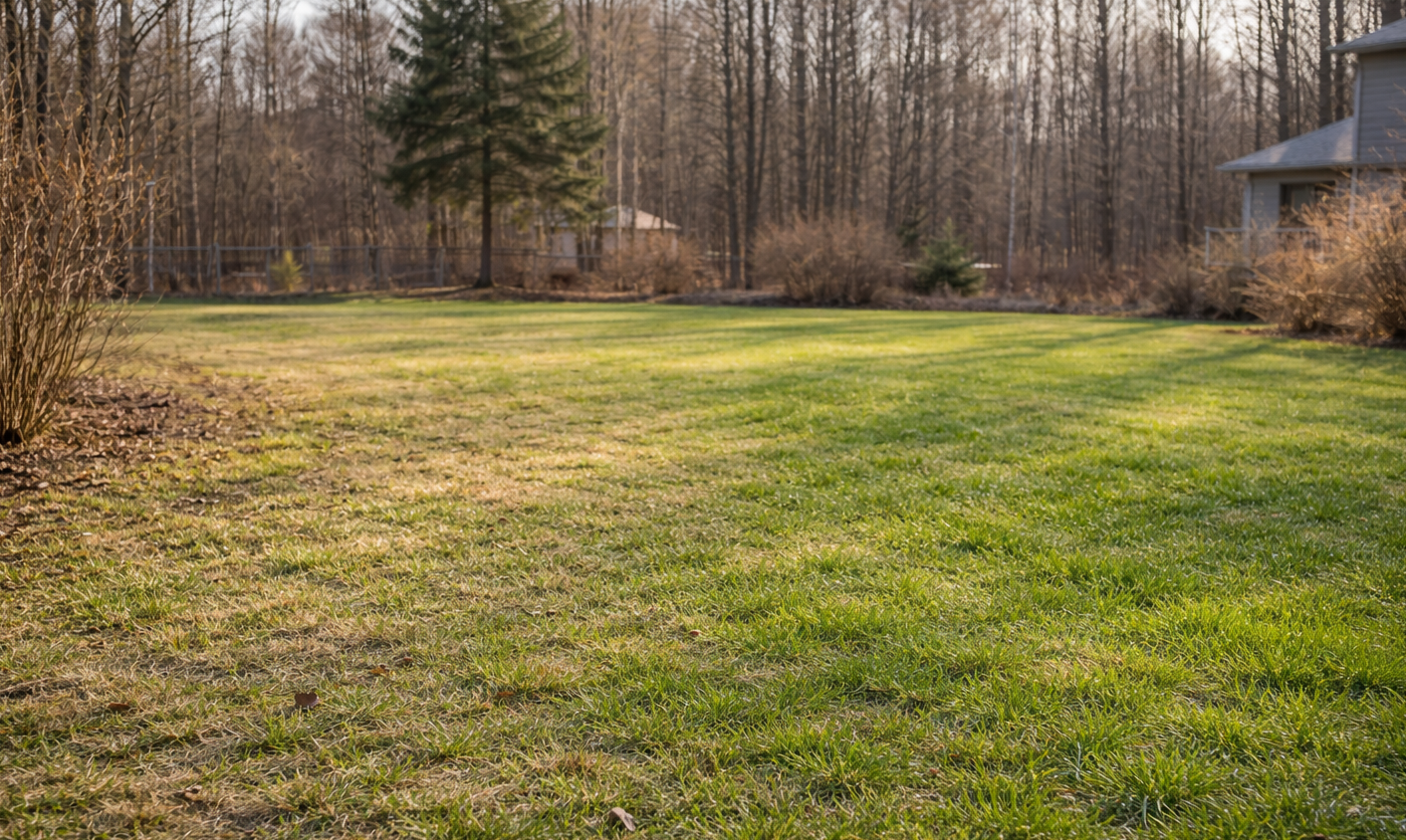
Sometimes the lawn does not come out of winter evenly.
One side of the yard starts turning green and filling back in, while the other still looks dull, slow, or half dormant. The difference can be obvious enough to make it feel like two separate lawns are waking up at two different speeds.
That kind of uneven spring green up usually is not random.
In most cases, the lawn is responding to real differences in site conditions across the property. One section may be getting more sunlight. Another may be staying colder and wetter longer. One side may drain better, while the other holds moisture and stays soft deeper into spring. Even when the grass type is the same, the growing environment often is not.
That is why one side of the lawn can look ready for the season while the other still seems stuck.
Uneven spring green up usually starts with uneven site conditions
A lawn rarely behaves as one perfectly uniform surface.
Different parts of the property warm at different speeds. Sun exposure changes from one side of the yard to the other. Tree cover creates cooler sections that stay shaded longer. Low areas can remain wetter after snowmelt and spring rain. Areas near sidewalks, driveways, or darker surfaces may warm sooner because they collect and hold more heat.
All of those factors affect how quickly turf starts growing again.
The side that greens up first is usually the side with conditions that support earlier activity. That does not always mean it is the healthier side in every way. It simply means it reached active growth sooner.
The slower side is often dealing with a condition that delays recovery.
Sun exposure is one of the most common reasons one side turns green first
Sunlight changes spring timing in a big way.
The side of the lawn that gets longer or earlier sun exposure usually warms up faster. That can move the grass out of winter dormancy sooner and create earlier top growth. It can also help the soil dry out faster after snowmelt or early rain, which makes the area more favorable for recovery.
The opposite side may stay shaded for longer parts of the day, especially if the property has tree cover, fencing, neighboring structures, or a house orientation that limits spring light. That section often remains cooler and slower even if it looks fine later in the season.
This is one of the main reasons homeowners see one side of the lawn pulling ahead while the other still looks flat and inactive.
It is not always a treatment issue. Sometimes it is simply exposure.
Soil temperature and moisture levels do not stay equal across the yard
Spring green up is not only about what you can see above the surface.
The grass responds to what is happening in the soil first. If one side of the lawn warms up sooner and reaches a more workable moisture balance, growth tends to start there first. If another section stays cold, wet, or compacted, it often lags behind.
That moisture difference matters more than many homeowners realize.
A lawn area that stays wetter longer can remain sluggish even if the grass is still alive and capable of recovery. The roots are dealing with heavier conditions, slower oxygen movement, and reduced early season activity. That can delay color, density, and overall response.
This is why the slow side of the lawn often is not dead. It is simply behind.
Drainage patterns often explain recurring slow sections
If the same side of the lawn wakes up late every year, drainage should be part of the conversation.
Water does not move evenly across every property. Some sections dry out in a reasonable timeframe, while others stay saturated longer because of slope, grading, runoff patterns, downspout discharge, or naturally heavier soil. Those wet sections often remain colder and less active in early spring.
That delay can show up as pale color, thin turf, or a section that simply does not seem to respond when the rest of the yard starts moving.
This is especially common on properties where one side consistently feels softer, stays muddy longer, or shows repeated thinning later in the season. In those cases, the uneven spring start is not just a temporary visual issue. It may be an early sign of a broader site imbalance.
Tree competition can slow one side down even before summer begins
Trees affect lawns in more ways than shade alone.
A lawn area near mature trees often deals with a different growing environment from the rest of the property. It may receive less light, but it may also face stronger root competition for water and nutrients. In spring, that section can come out unevenly because the turf is already operating with less support.
This does not always create dramatic damage right away. Sometimes it simply shows up as delayed green up, weaker density, or a section that never quite catches the rest of the yard.
If one side of the lawn borders a heavy tree line or sits beneath a large canopy, that part of the property should never be judged as if it is working under the same conditions as the open side. It is not.
Compaction can also delay early season recovery
Some areas of the lawn have a harder time resetting after winter.
If one side of the yard deals with heavier foot traffic, more concentrated use, repeated snow storage, or chronically tighter soil, that section may come out of winter slower than the rest. Compacted ground does not support the same kind of easy early season recovery as a looser, better functioning soil profile.
That can make the lawn look behind even if both sides received the same winter weather.
When one section consistently greens up late, feels firmer, or struggles to fill in evenly, compaction may be part of the reason. It does not always create a dramatic symptom on its own, but it can slow the lawn enough to make the difference visible in spring.
Differences in grass type can make the contrast stronger
Not every uneven spring lawn is caused by a site problem alone.
Sometimes one side of the property contains a different grass mix, whether from past seeding, old repair work, builder grade establishment, or years of patching. Some grasses naturally wake up faster than others, especially when the property has been repaired in stages over time.
That can create a strong visual contrast in spring.
One side may show active green color early, while the other still looks slower and less responsive. If the texture or density also seems different once the lawn fully grows in, the issue may be partly tied to grass variety rather than site conditions alone.
In many yards, it is both. Different grass populations are reacting to different site pressures at the same time.
Early green up does not always mean the faster side is healthier
This is an important distinction.
The side that wakes up first is not automatically the stronger side for the full season. It may just be the side that warmed up faster. In some cases, early growth can even make homeowners assume everything is fine when that section later runs into summer stress or thinning.
The slower side usually gets more attention because it is lagging. But the faster side should not automatically be treated as the standard without looking at the full property.
What matters more is whether both sides settle into stable, even performance as the season develops. If they do, the spring difference may be mostly environmental and temporary. If the slow side keeps struggling well beyond early spring, the lawn is probably showing you something more structural.
When uneven green up is just seasonal and when it points to a deeper issue
A short period of uneven wake up in spring is common.
Lawns do not always move into the season in perfect sync, especially in Western NY where spring weather can shift quickly and soil conditions vary from one week to the next. A temporary difference in color or activity does not always mean the lawn has a major problem.
The concern grows when the same side stays behind for too long or repeats the pattern year after year.
If that section also tends to be thinner, wetter, weedier, or less durable through the season, the slow spring start is probably part of a larger pattern. It may be tied to shade, drainage, compaction, weak soil performance, or some combination of conditions that keep putting that side at a disadvantage.
In that case, the lawn is not just waking up unevenly. It is functioning unevenly.
What helps a slower side catch up more effectively
The right response depends on what is causing the delay.
If the issue is mostly shade and cooler spring conditions, the answer may be patience and a more realistic expectation for that part of the yard. If the area stays wet too long, drainage patterns may need to be addressed. If the soil is tight, compacted, or low performing, the lawn may benefit from corrective support that improves how that section functions over time. If thinning continues into the growing season, overseeding or renovation work may be part of the solution.
What usually does not work is treating the whole lawn as if every section has the same problem.
When one side of the property consistently behaves differently, the lawn needs to be evaluated that way. The goal is not to force uniformity overnight. The goal is to understand what is creating the imbalance and improve the weaker side as deliberately as possible.
Why this pattern matters beyond spring appearance
Uneven spring green up is easy to dismiss as cosmetic.
But it often gives an early look at how the property is structured. The side that lags in spring is often the same side that stays thinner, struggles more in summer, or opens up for weeds more easily later on. The lawn is showing where conditions are less favorable before the full season makes that difference more obvious.
That makes spring a useful evaluation window.
It helps identify which sections are consistently behind and which parts of the yard are operating with a stronger baseline. That information matters because a lawn rarely becomes more even by ignoring the side that keeps falling behind.
Stable lawns are usually built by improving the weaker sections, not just maintaining the better ones.
Why Western NY properties often show this pattern more clearly
Western NY lawns are especially prone to uneven spring performance because spring conditions are rarely simple.
Snowmelt, cold rain, shaded ground, lingering moisture, and uneven warming can create sharp differences across the same property. One side may begin moving as soon as it gets sun and drainage, while another stays cool and heavy for much longer.
Properties with trees, slope changes, or mixed sun exposure often show that contrast even more clearly.
That is why this issue is so common in the region.
The lawn is not overreacting. It is responding to different conditions across the yard in real time.
What one side waking up faster is usually telling you
When one side of the lawn greens up sooner than the other, the lawn usually is not being unpredictable. It is revealing that the property does not function evenly from side to side.
That difference may be tied to sunlight, moisture, drainage, shade, compaction, tree competition, or grass type. Sometimes the contrast fades as the season settles in. Sometimes it points to a section of the yard that needs more deliberate support throughout the year.
Either way, the pattern is worth paying attention to.
A lawn that wakes up unevenly often needs to be managed with a better understanding of the conditions driving that imbalance.
That is how a temporary spring difference turns into a more useful read on what the property needs long term.
LawnLogic FAQ
Is it normal for one side of the lawn to turn green before the other?
Yes. Different parts of the yard often warm up and dry out at different speeds in spring. A short term difference is common, especially on properties with uneven sun exposure or moisture conditions.
Does slower green up mean part of the lawn is dead?
Not necessarily. In many cases, the slower side is still alive but dealing with colder, wetter, shadier, or more compacted conditions that delay early growth.
Will the slower side catch up on its own?
Sometimes it will. If the difference is mostly tied to normal spring timing, both sides may even out as temperatures rise and conditions stabilize. If the same section stays behind every year, there is usually a deeper issue affecting that area.
Should the slower side be treated differently?
It often should be evaluated differently. If one side consistently lags because of shade, drainage, compaction, or thinning, that section may need more targeted support than the rest of the property.
Get ahead of the section that keeps falling behind
If one side of your lawn always wakes up slower, there is usually a reason. LawnLogic evaluates how different parts of the property are functioning, then builds a more structured path toward better balance, stronger consistency, and a lawn that holds together more evenly across the season.
Explore More About Managing Your Lawn
Continue building your understanding of how structured lawn care supports long-term stability.