A Proper Early Spring Lawn Visit Sets the Tone for the Season
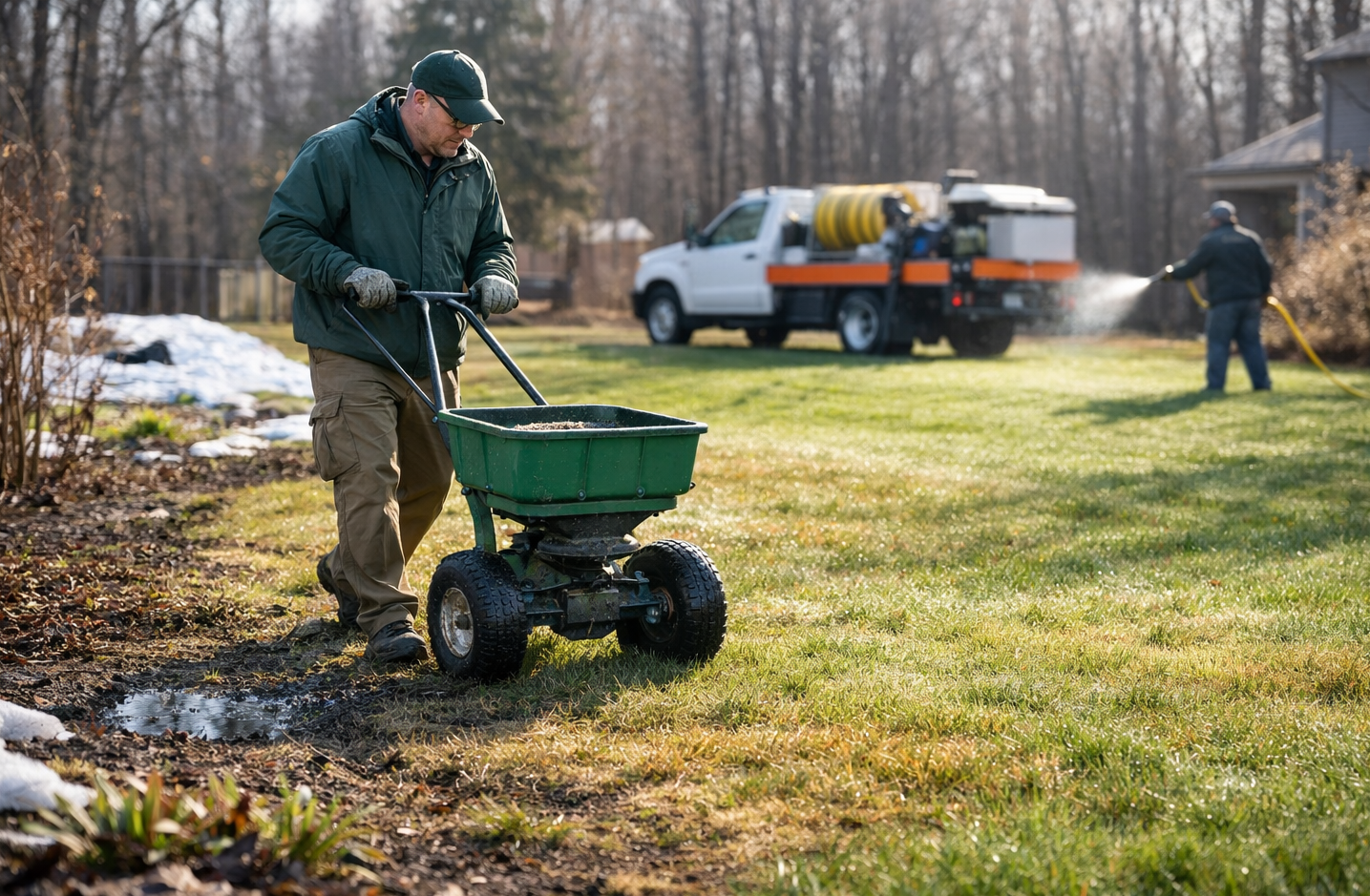
A lawn does not need to look fully active for early spring service to matter.
In fact, one of the biggest mistakes homeowners make is judging the first visit of the season by whether the lawn looks dramatically different right away. Early spring work is not supposed to function like a cosmetic reset. Its value is in what it puts in place before the lawn moves deeper into the growing season.
That is especially true across the Greater Rochester area, where lawns often come out of winter unevenly. Some sections stay colder longer. Some hold moisture. Some begin moving early while others lag behind. Weed pressure starts building before most homeowners are paying close attention, and the lawn’s seasonal direction is often shaped before the yard looks fully awake.
That is why a proper early spring lawn visit should do more than show up and put something down.
It should establish control early, support the lawn’s first stage of seasonal recovery, and position the property to move into the rest of spring with better structure than it had coming out of winter.
Early spring lawn service should begin with seasonal positioning
The first visit of the season matters because it influences what happens next.
A lawn entering spring is not starting from zero. It is carrying over the effects of winter moisture, site exposure, drainage behavior, weak areas, and whatever issues were left unresolved at the end of the previous year. That means the first application is not just a starting point. It is an opportunity to begin managing the property before visible problems gain momentum.
This is where structured turf management separates itself from basic treatment.
A proper early spring visit should begin positioning the lawn for the season ahead. That means supporting early nutrient availability where appropriate, addressing weed prevention timing, and evaluating how the property is coming out of winter so the lawn is not managed blindly from the first round forward.
The goal is not to make the yard look finished in March or early April.
The goal is to put the lawn on a more controlled path before spring pressure starts building.
The first visit should support early recovery without forcing the lawn
There is a difference between helping the lawn start moving and trying to push a result too early.
A properly structured early spring visit should support recovery, not overstimulate it. The lawn is just beginning to transition out of winter conditions. Soil temperatures are still changing. Moisture levels are often inconsistent. Some sections of the property may be ready to respond while others are still sluggish because of shade, site pressure, or lingering wetness.
That is why early spring service needs to be measured.
The objective is to help the lawn begin its seasonal progression in a steady way, not create an aggressive flush that looks good briefly but leaves the turf more vulnerable later. In the Rochester region, where spring can shift quickly from cold and wet to active growth conditions, that restraint matters.
A structured visit should support the lawn’s foundation for the season, not chase a fast visual spike.
Weed prevention should be one of the main objectives of the visit
One of the most important things an early spring lawn visit should accomplish is getting ahead of weed pressure before it becomes visible.
This is where timing matters more than appearance. Many homeowners do not think much about weeds until they can see them, but by then the lawn is already reacting instead of staying in front of the issue. A properly timed early spring visit helps establish control before weed activity becomes a visible distraction across the property.
That matters on properties throughout the Lake Ontario side of New York, where spring conditions can create a narrow window between winter dormancy and the beginning of real seasonal pressure.
A structured visit should account for that timing. It should not wait for the lawn to look fully active before beginning the work that helps prevent early season weed problems from gaining ground.
This is one of the clearest examples of what early service is really buying.
It is not just treatment. It is prevention delivered on time.
The visit should create a better starting point for lawn stability
A lawn that stays more stable through the season usually does not get there by accident.
It usually gets there because the season started with enough structure to reduce early instability. That is part of what a good spring visit should accomplish. It should help the property begin the year with more control than it had at the end of winter.
That means the visit should contribute to baseline stability.
The lawn should begin receiving the kind of early seasonal support that helps reduce uneven momentum across the property. Some areas may still lag. Some sections may still need corrective help later. But the property as a whole should start moving under a managed framework instead of drifting into spring without a clear plan.
That distinction matters because a lawn rarely becomes more predictable by reacting one issue at a time.
It becomes more predictable when the season is structured early enough to reduce how often those issues can take hold.
A proper visit should account for what different parts of the lawn are doing
Not every section of the property enters spring in the same condition.
Sunny areas often move first. Shaded areas may stay cooler longer. Border sections near concrete may already be under pressure from runoff, snow storage, or winter accumulation. Tree lined sections may be slower, thinner, or less responsive. Low spots may still be holding moisture while higher areas begin drying out and waking up.
A proper early spring lawn visit should be grounded in that reality.
It should not treat the whole property as if every section is functioning the same way. A structured provider is looking at how the lawn is coming out of winter, where the weak areas are likely to be, and how the season needs to be managed based on actual site conditions rather than generic timing alone.
That is part of what makes the first visit valuable.
It begins the year with observation and direction, not just application.
The first visit should reduce the lawn’s need for early reactive fixes
A strong early spring visit should make the next phase of the season easier to manage.
That does not mean it solves every problem on the spot. It means it reduces the chance that the lawn immediately falls into a reactive pattern. When the first visit is handled properly, the lawn has a better opportunity to move into spring with support already in place instead of needing early correction for preventable issues.
That is a major part of the value.
The more the lawn can be stabilized at the front end of the season, the less likely it is to spend the next several weeks chasing problems that could have been addressed earlier. That might mean fewer weed surprises, better early density support, or a clearer read on which parts of the property need closer attention as temperatures rise.
In the greater Rochester area, where spring does not always unfold evenly, that early structure can make a meaningful difference.
It should not be judged by immediate cosmetic change
alone
This is one of the biggest misunderstandings around early season lawn service.
Many homeowners expect the first visit to produce an obvious visual shift almost immediately. If that does not happen, the visit can feel underwhelming. But a properly structured spring application is not supposed to be judged like a quick surface level improvement.
Its value is often quieter than that.
A good early visit helps determine how the lawn enters the season. It begins nutrient and prevention timing. It creates a better baseline for what follows. It helps the property move toward stronger spring control before visible problems build momentum.
Those are meaningful outcomes even if the lawn does not transform overnight.
That is why the first visit should be evaluated by what it sets up, not just by what it instantly changes.
Early spring service should connect to the rest of the program
A structured first visit should never feel isolated.
It should connect clearly to the rest of the lawn care program and function as the opening move in a larger seasonal sequence. That is what gives the service more value than a one time treatment. The first round matters because it starts establishing the rhythm, timing, and control the rest of the year will build on.
Without that connection, the visit has less strategic value.
It may still provide some benefit, but it is not doing what a proper seasonal program is supposed to do. A managed lawn improves more reliably when each round supports the next and when early season decisions are made with the full season in mind.
That is the real strength of structured care.
The lawn is not being treated as a series of disconnected tasks. It is being managed through a coordinated seasonal framework.
A proper visit should help clarify whether the lawn needs more than baseline service
The first round of the season can also reveal where standard program support may not be enough on its own.
Some lawns come out of winter with clear signs that additional attention may be needed later. Certain areas may already be thinner. Some sections may show drainage related weakness. Tree lines may be lagging. Border strips may look worn. The property may show an uneven pattern that points to compaction, weak soil performance, or a recurring imbalance that basic seasonal treatment alone will not fully solve.
A proper early spring lawn visit should help identify those conditions.
That does not mean everything gets addressed immediately. It means the lawn is being read correctly from the beginning. When the season starts with better evaluation, it becomes easier to determine where aeration, overseeding, targeted corrective work, or other support may need to fit into the larger plan.
That is another way the first visit adds value.
It helps establish direction, not just treatment.
The first lawn visit should make the season feel more controlled
This is the standard that matters most.
A good early spring lawn visit should make the property feel like it is being managed, not just serviced. Even before the lawn is fully active, the visit should begin moving the property out of winter drift and into a more deliberate seasonal structure.
That means the lawn is not waiting for visible decline before action begins. It is not waiting for weeds to announce themselves. It is not waiting for weak areas to become more obvious. The season is being opened with enough intent to create a steadier path forward.
That is what homeowners are really buying when early service is done properly.
They are not just paying for the first treatment of the year. They are paying for the lawn to start the season with more order, better timing, and a more stable framework than it would have on its own.
What an underwhelming early spring visit usually gets wrong
When an early spring lawn visit feels underwhelming, the issue is often not that it happened too soon.
The issue is usually that it did not accomplish enough structurally. If the visit is treated like a basic stop instead of a meaningful seasonal starting point, its value becomes harder to see. A quick application without clear timing logic, without alignment to the broader program, or without attention to how the property is actually coming out of winter does not create much confidence.
That is where disappointment starts.
A lawn owner may see the visit happen and still feel like nothing has really begun. The season does not feel more organized. The lawn does not feel more understood. The service may technically be completed, but the property still feels unmanaged.
A proper visit should create the opposite impression.
It should feel like the lawn is being brought under control early.
Why early spring structure matters so much in the Rochester area
Properties around Rochester often come out of winter with uneven momentum.
Cold nights linger. Soil moisture can stay high. Shade can hold some sections back while sunnier areas begin moving sooner. Spring weed pressure does not wait for perfect lawn conditions. Some lawns look mostly ready while others still appear half asleep. That creates a seasonal environment where timing and structure matter more than simple activity.
That is why the first visit matters so much here.
The property does not need a rushed treatment. It needs a measured, well timed start that accounts for how lawns in this region actually behave. A structured visit helps reduce the gap between the lawn’s winter condition and the season it is about to enter.
That is what makes it valuable.
What the first lawn visit should leave behind
By the time a proper early spring lawn visit is complete, the lawn should not necessarily look finished.
But it should be better positioned.
The property should have the beginnings of seasonal support in place. Weed prevention timing should be underway. The lawn should be moving into spring with more structure than it had before the visit. The service should help reduce early instability, improve seasonal direction, and make the next phase of management more effective.
That is what the first visit should actually accomplish.
It should not just mark the start of service on the calendar. It should help set the tone for a more controlled season.
LawnLogic FAQ
Should the lawn already be green before the first spring visit happens?
No. A proper early spring visit is often valuable before the lawn looks fully active. The goal is to begin seasonal positioning and prevention on time, not wait for full visual recovery first.
Is the first lawn visit mainly about fertilizer?
Not by itself. Early spring service may include nutrient support, but it should also help with seasonal timing, weed prevention, and overall program direction.
Should homeowners expect an immediate visual change after the first visit?
Not always. Some benefits of the first visit are not immediate. Its value often comes from what it sets up for the rest of spring rather than a dramatic overnight change.
What makes an early spring lawn visit feel more structured?
A structured visit connects to the broader lawn care program, reflects actual site conditions on the property, and helps position the lawn for the next stage of the season rather than acting like a one off application.
Start the season with more control
If the lawn is going to perform more evenly through spring and beyond, that process starts with the first visit. LawnLogic approaches early spring service as part of a structured seasonal program designed to establish timing, improve control, and give the property a more stable path into the rest of the year.
Explore More About Managing Your Lawn
Continue building your understanding of how structured lawn care supports long-term stability.