Your Lawn May Be Growing, But Mid May Shows Whether It Is Recovering, or not
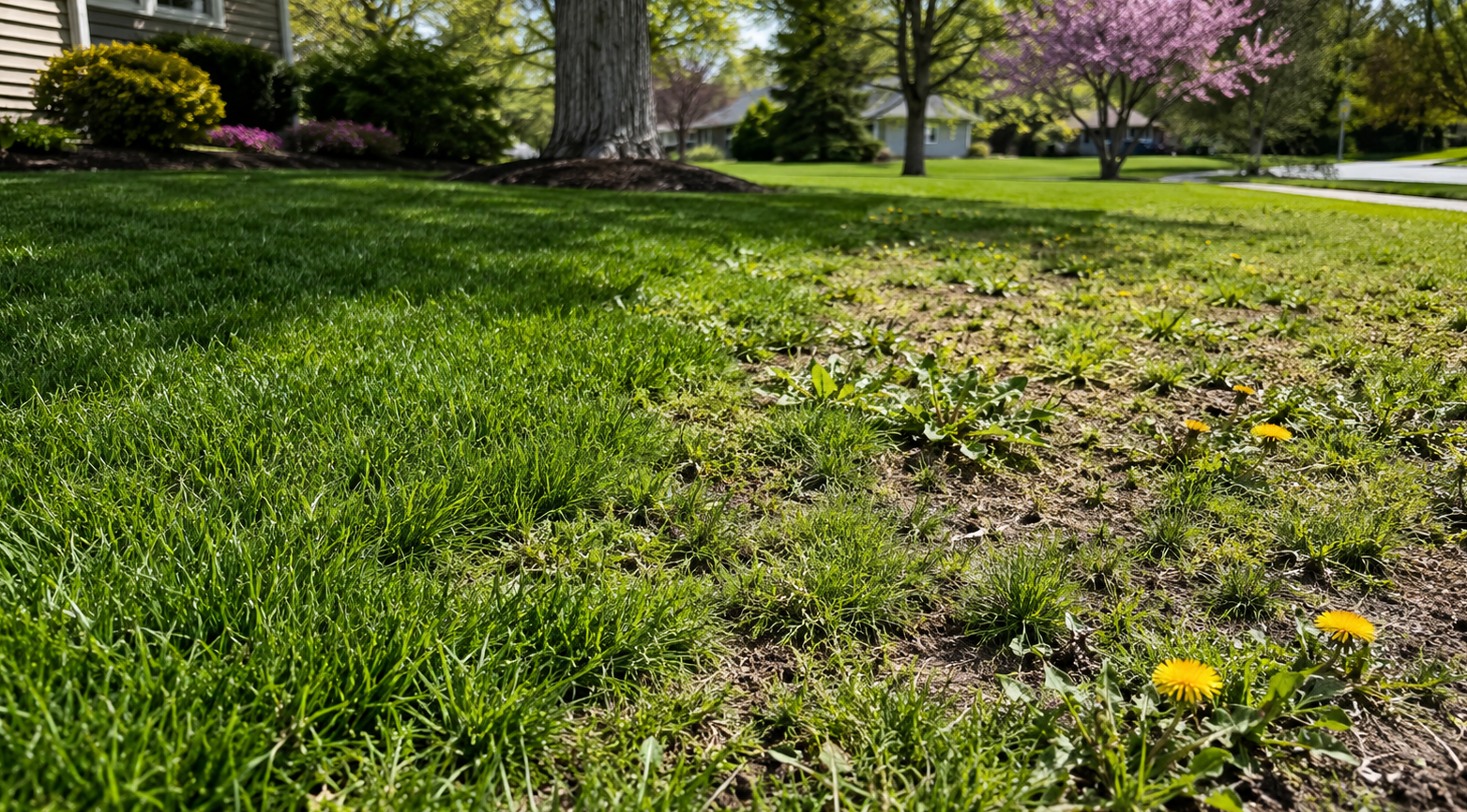
By mid May, most Rochester lawns are finally showing what they carried out of winter.
The lawn may be growing again. It may look greener than it did a few weeks ago. Mowing may have started. From a distance, the yard may seem like it is waking up normally.
But mid May also reveals the areas that did not recover evenly.
Thin sections become easier to see. Weeds begin to stand out. Bare areas remain exposed. Some parts of the lawn may thicken quickly while others stay weak, pale, or uneven. This is the point in the season when homeowners can usually tell the difference between normal spring transition and lawn conditions that need more structured attention.
For Rochester area properties, that distinction matters.
Winter does not affect every lawn the same way. Snow cover, moisture, shade, drainage, salt exposure, foot traffic, and previous season density all influence how the lawn responds once spring growth begins. By mid May, those differences are no longer hidden.
Mid May Is When Uneven Recovery Becomes Clear
Early spring can be misleading.
In April, lawns are often still wet, matted, dormant, or slow to respond. Cold nights and inconsistent soil temperatures can make even healthy lawns look delayed. It is usually too early to judge the lawn clearly.
By mid May, there is more to evaluate.
The lawn has had time to begin active growth. Weeds are more visible. Thin areas are easier to identify. The difference between stronger turf and weaker turf becomes more obvious across the property.
This does not mean every imperfect area is a major problem. Some lawns simply need time. But recurring thinness, uneven color, exposed soil, or spreading weeds are signs that the lawn may need more than a single application or quick seasonal cleanup.
Thin Areas Often Show Where the Lawn Was Already Vulnerable
Winter usually does not create every lawn problem on its own.
In many cases, it exposes weaknesses that were already developing.
A lawn that went into winter thin may come out of winter even thinner. Areas with poor density are more likely to stay open in spring. Those open areas give weeds more room to establish and make the lawn harder to stabilize as the season moves forward.
Common areas that show weakness in mid May include:
Shaded sections
Grass often recovers more slowly where sunlight is limited. These areas may stay thinner, softer, or less consistent than open sections of the yard.
Edges near driveways and sidewalks
Salt, plow activity, foot traffic, and runoff can all affect lawn edges through winter. By mid May, these areas may look bare, weak, or slow to fill back in.
Low or wet areas
Parts of the lawn that hold moisture may remain soft or uneven longer than the rest of the yard. If those areas stay thin year after year, the issue is usually structural rather than cosmetic.
High traffic areas
Paths used by people, pets, or equipment often show wear after winter. These sections may need more than normal spring growth to recover properly.
Mid May helps separate temporary spring delay from areas that consistently need attention.
Weed Pressure Becomes Easier to Read
As the lawn begins growing, weeds begin showing up with it.
Dandelions, broadleaf weeds, and early seasonal pressure often become more visible in May. This is when homeowners start noticing whether weeds are isolated or beginning to spread across larger parts of the lawn.
Weeds are not just a surface issue. They often indicate that the lawn has open space, reduced density, or weak competition from desirable grass.
A few weeds are normal. Expanding weed pressure across thin or exposed areas is different. That usually points to a lawn that needs stronger seasonal structure, not just a one time reaction.
Green Growth Does Not Always Mean Lawn Stability
A lawn can be green and still be unstable.
This is one of the most important things mid May reveals.
Spring growth can make a lawn look better quickly, especially after a long winter. But color alone does not show whether the lawn is dense, consistent, or protected heading into summer.
A lawn may be growing and still have:
Thin areas that keep returning
If the same areas look weak every spring, the lawn may need more structured support over time.
Uneven color across the yard
Some variation is normal, but strong contrast can point to inconsistent recovery, soil conditions, moisture patterns, or turf density.
Weeds filling open spaces
If weeds are taking advantage of bare or thin areas, the lawn is not competing well on its own.
Exposed soil
Visible soil in May often becomes a bigger concern as heat, weeds, and summer stress increase.
Mid May is not just about whether the lawn is awake. It is about whether the lawn is recovering evenly enough to stay controlled.
Rochester Lawns Move Through Spring Unevenly
Rochester spring conditions are rarely smooth.
A lawn can move from cold, wet conditions to rapid growth in a short period of time. Some areas respond quickly. Others lag behind. That uneven transition is normal to a point.
What matters is whether the lawn begins to balance out as May progresses.
When a lawn remains patchy, thin, or weed heavy, the issue is usually not solved by waiting alone. The property may need a more deliberate plan that supports growth, manages weeds, and addresses weak areas before summer pressure increases.
This is why LawnLogic views lawn care as a managed seasonal process instead of a set of isolated treatments.
What Homeowners Should Pay Attention To
By mid May, homeowners should look at the lawn as a whole.
Not every mark or thin area needs immediate correction. But the pattern matters.
Pay attention to:
Where the lawn is filling in well
These areas show where the turf is responding properly and where the lawn has better existing strength.
Where thin areas are staying thin
These areas may need additional support, especially if they appear in the same places every year.
Where weeds are most active
Weed patterns can reveal weak sections of the lawn.
Whether the lawn looks even after mowing
Mowing often makes inconsistency easier to see. A lawn may look acceptable before mowing but show uneven density afterward.
Whether bare areas are shrinking or expanding
Bare areas that remain exposed into late spring usually require more attention than areas that are gradually filling in.
The goal is not to overreact. The goal is to understand what the lawn is showing before the season gets harder.
Mid May Is a Good Time to Bring the Lawn Into a Structured Program
By mid May, there is enough visible information to make better lawn care decisions.
The lawn has started to reveal its condition. Weed pressure is active. Weak areas are easier to identify. The next part of the season will place more demand on the lawn as temperatures rise and growth patterns change.
A structured lawn care program gives the property a more organized path forward.
For LawnLogic, that means coordinated seasonal applications, weed control, fertilization programs, and ongoing evaluation. The purpose is not to chase every visible issue separately. The purpose is to manage the lawn over time so it becomes more consistent, more stable, and less reactive.
A More Controlled Lawn Starts With Knowing What the Season Has Revealed
Mid May is not the end of spring recovery.
It is the point when the lawn starts giving clearer answers.
If the lawn is filling in evenly, showing limited weed pressure, and responding consistently across the yard, it may be entering the season from a stronger position.
If thin areas remain, weeds are spreading, or the lawn looks uneven after mowing, the property may need a more structured approach before summer conditions make those problems harder to manage.
LawnLogic provides structured lawn care programs for residential and commercial properties throughout Monroe County, NY and select portions of Wayne and Ontario Counties. Each program is built to support the lawn through the season with coordinated care, evaluation, and clear next steps.
Schedule a Lawn Care Evaluation
Mid May shows what winter left behind and what spring has not corrected on its own.
LawnLogic will evaluate your lawn, identify where the season is exposing weakness, and recommend the appropriate structured lawn care program for your property.
Explore More About Managing Your Lawn
Continue building your understanding of how structured lawn care supports long-term stability.