Why Thin Lawn Areas Keep Turning Into Weed Problems

A lot of homeowners treat weeds as the main issue.
They see dandelions, crabgrass, clover, or other unwanted growth and assume the fix is simply to kill what is visible. In many cases, that only addresses the symptom. The real problem is that the lawn has already lost enough density to give weeds room to move in.
That is what makes thin turf such a persistent problem. Once grass coverage starts to weaken, weeds are no longer competing with a full, stable stand of turf. They are moving into open space, inconsistent growth, and underperforming sections of the lawn that no longer resist pressure the way they should.
If you want to understand why certain lawns keep having weed issues year after year, it helps to stop looking at weeds as random invaders and start looking at lawn density, coverage, and overall stability.
Thin turf changes the balance of the lawn
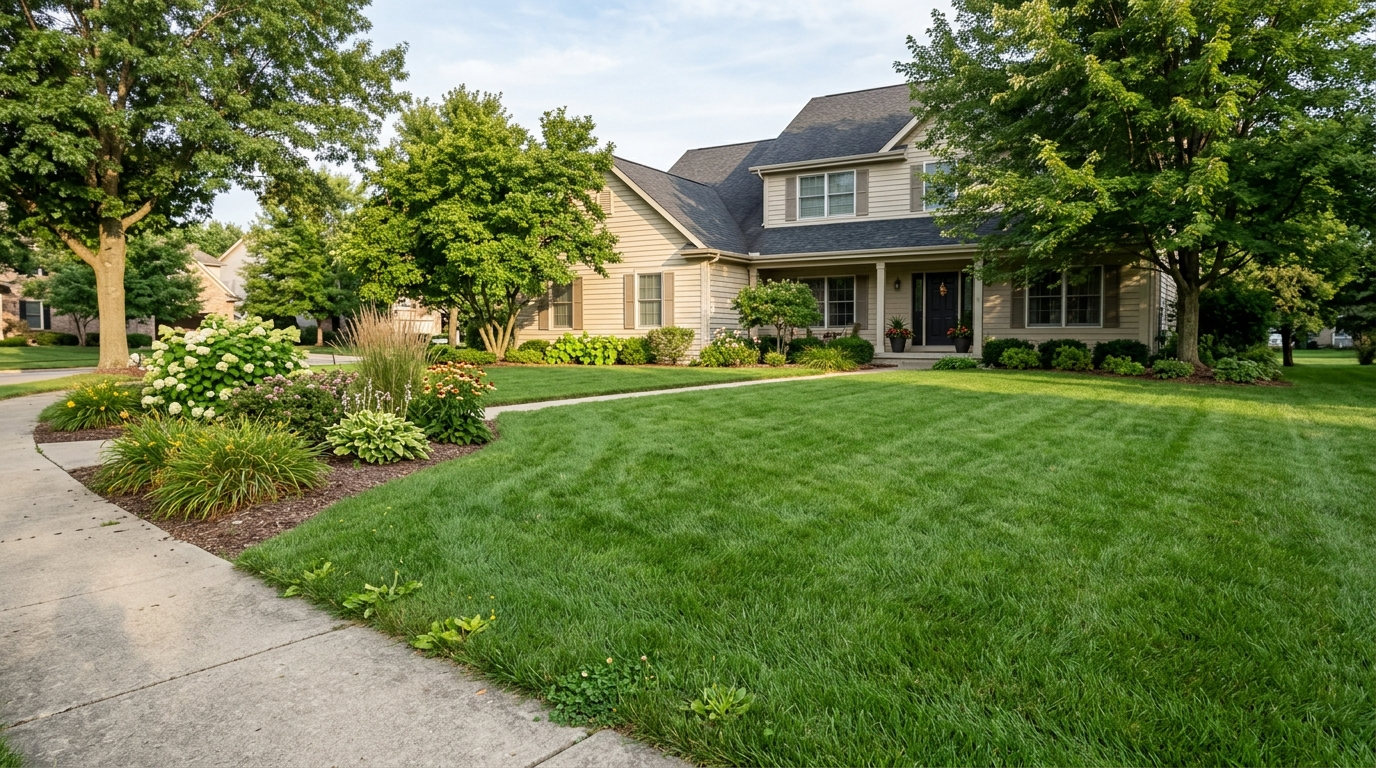
A healthy lawn does more than look full from the street. Dense turf creates natural resistance.
When grass is growing evenly across the yard, it occupies space more completely. That means there is less exposed soil, fewer weak areas, and less opportunity for weed seeds to establish themselves. A fuller lawn also tends to use available moisture, nutrients, and light more consistently, which leaves fewer open advantages for unwanted growth.
Thin turf changes that balance.
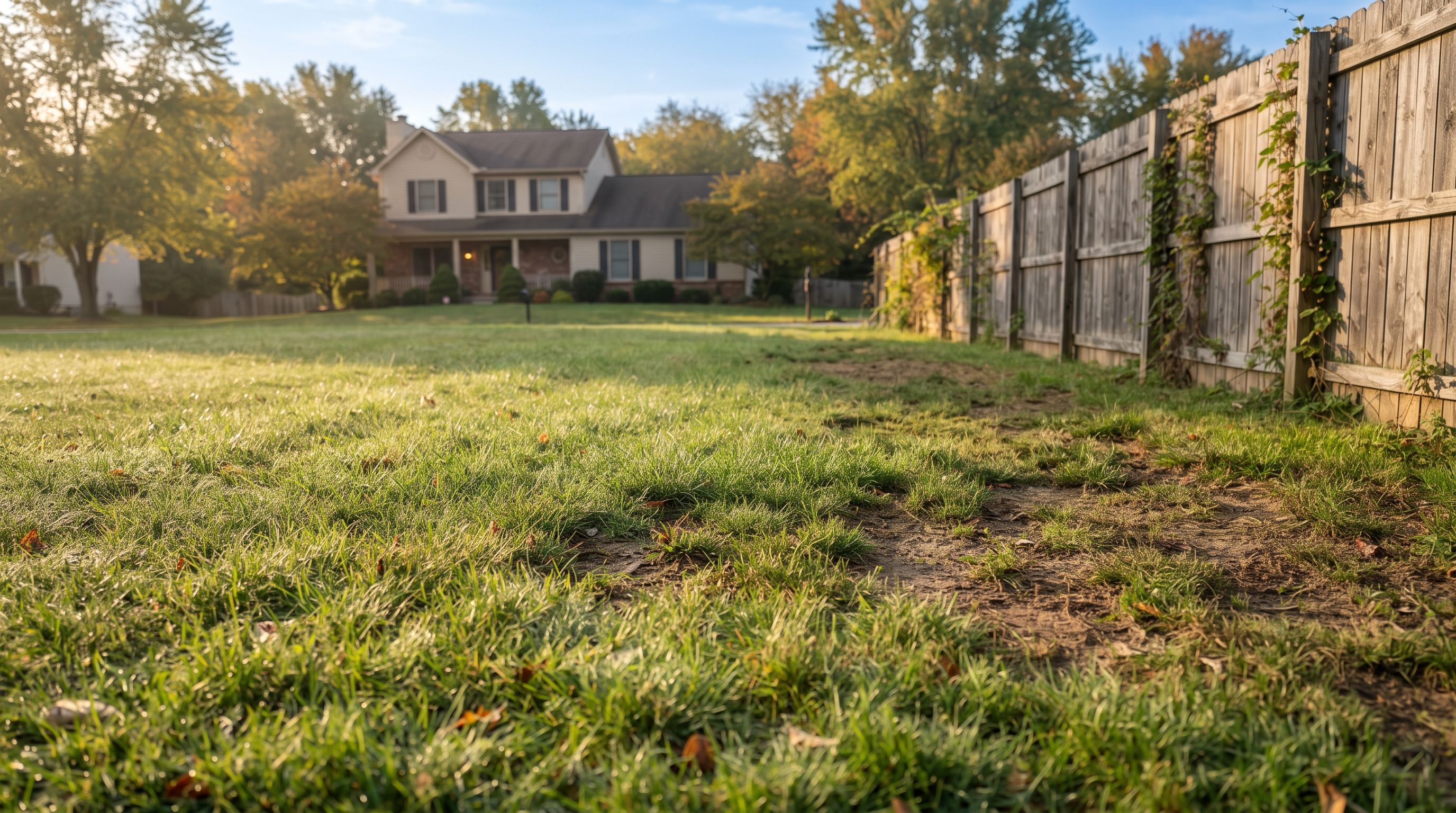
Instead of a uniform surface of active grass, the lawn starts to develop gaps, weak patches, and inconsistent coverage. Some areas may still look acceptable from a distance, but up close, the turf is no longer doing its job as a complete stand. Once that happens, weeds are not breaking into a strong lawn. They are stepping into openings that already exist.
That distinction matters because it changes how the problem should be approached. A weed problem is often a turf density problem first.
Why weeds respond so quickly to open lawn space
Weeds are opportunistic. They do not need ideal conditions to start gaining ground. In many cases, they simply need a little room.
Thin lawn areas create that room in several ways.
More exposed soil
When grass thins out, more soil is left uncovered. That exposed space becomes an entry point for weed seeds that are already present in the environment. Some arrive by wind, some by foot traffic, some by mowing activity, and some have been sitting in the soil waiting for favorable conditions.
Dense turf helps limit those openings. Thin turf gives weeds a place to start.
Less competition for resources
Grass and weeds are both trying to use the same basic resources. They compete for moisture, nutrients, sunlight, and physical space. When the lawn is thick and actively growing, competition is stronger. When the lawn is sparse, that pressure drops.
A weed seed that lands in a thin area does not have to fight through a tightly established stand of grass. It has easier access to what it needs, which increases the odds that it will take hold.
Uneven growth patterns
Thin turf rarely develops in a perfectly even way. It tends to show up in stressed sections, compacted areas, dry spots, shaded zones, edges, or places where the lawn has been weakened over time. Those sections often already have a performance issue behind them.
That means weeds are not just entering open space. They are often entering space where the grass is already struggling to recover on its own.
Thin turf does not always mean bare dirt
One reason homeowners miss this connection is that thin turf does not always look dramatic.
Sometimes the lawn is not bare. It is simply weak.
You might still see green across the yard, but the coverage is inconsistent. Grass blades may be sparse in certain sections, the lawn may feel uneven visually, or the yard may look like it never fully fills in the way it should. In those cases, the lawn can still be vulnerable to weeds even though it does not appear empty at first glance.
This is especially common in lawns that have recurring problem areas. If the same parts of the yard keep developing weed pressure, the issue is often not just the presence of weed seeds. It is that those sections never regain the turf density needed to hold their ground.
Common reasons turf starts to thin out
Thin turf is usually the result of one issue or several working together over time. A lawn rarely loses density without a reason.
Compaction
Compacted soil limits how well the lawn can function. Grass may struggle to root properly, use water efficiently, or recover from stress. When that happens, growth becomes weaker and more uneven, which opens the door to thinning.
Inconsistent fertility
Grass needs seasonal nutrient support to stay active, balanced, and competitive. When feeding is inconsistent or poorly timed, the lawn may lose vigor and density. Weak turf does not defend space as effectively as actively managed turf.
Water stress
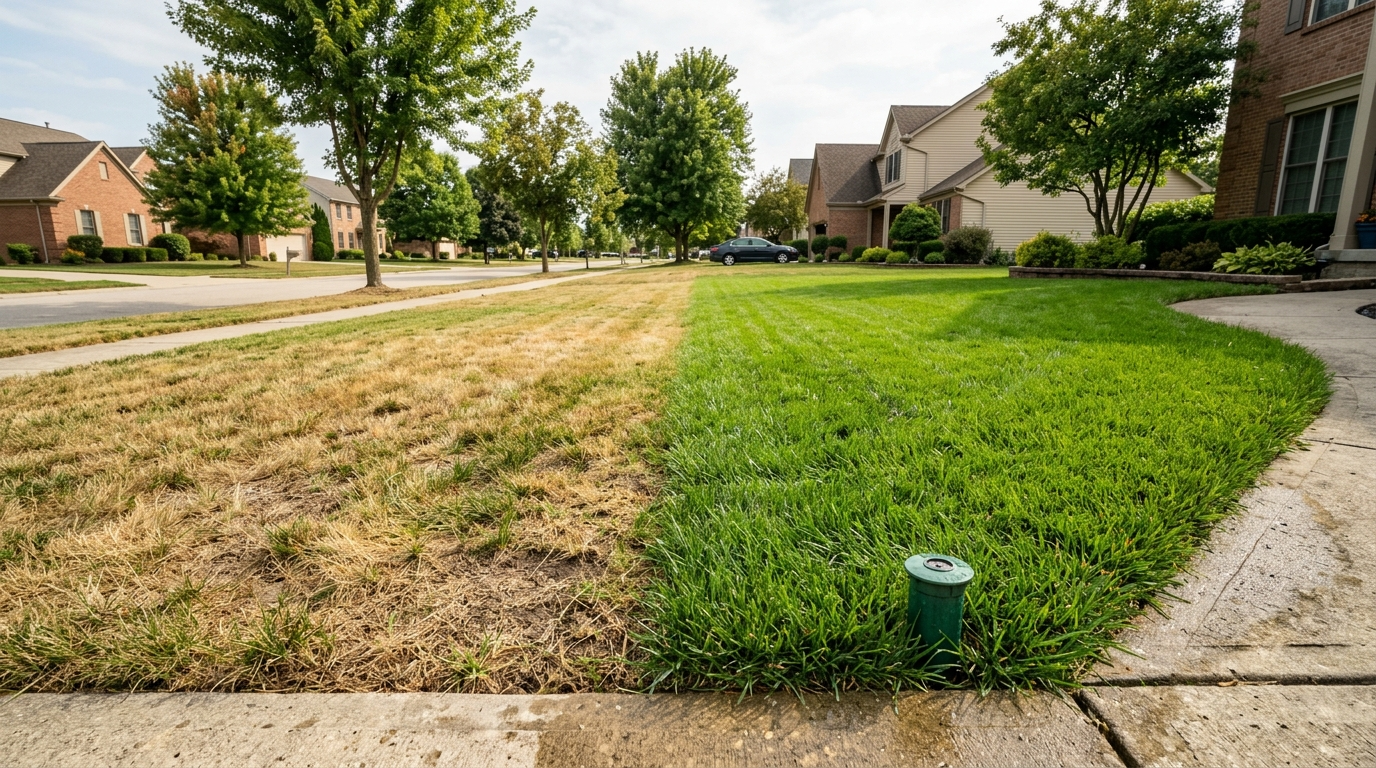
Both under-watering and inconsistent watering can weaken the lawn. Turf that repeatedly dries out, especially during high stress periods, often begins to thin in sections. Once those areas weaken, weeds are more likely to establish.
Shade pressure
Some parts of a property simply do not receive enough light for strong, consistent turf performance. In those areas, grass may remain thin even when the rest of the lawn looks decent. Those shaded sections often become reliable weed entry points.
Traffic and wear
Repeated use in the same parts of the yard can wear turf down over time. Foot traffic, pets, play areas, and routine movement patterns all contribute. Once the stand of grass breaks down, weeds often move in faster than the lawn can recover.
Disease, insects, or seasonal stress
When turf is weakened by disease activity, insect pressure, summer decline, or winter damage, density can drop quickly. Even if the original stress passes, the weakened section may remain vulnerable until the lawn is rebuilt.
Why weed control alone often falls short
A lot of lawns get stuck in a cycle of treatment without real improvement.
The weeds are addressed, they disappear for a while, and then new weeds show up again in the same sections. That pattern usually means the lawn still has an opening. As long as the turf remains thin, the property continues to offer weed opportunities.
This is why good weed control matters, but weed control by itself is not always enough.
If the goal is long term lawn stability, the work has to go beyond removing unwanted growth. The lawn also needs to become denser, stronger, and more complete so that weeds have fewer chances to establish in the first place.
That is where structured lawn care makes a meaningful difference. A managed program is not just reacting to visible problems. It is supporting the lawn in a way that improves seasonal performance and helps reduce the conditions that allow weed pressure to expand.
The relationship between lawn density and prevention
Weed prevention works best when it is paired with turf strength.
Pre-emergent control helps reduce the development of certain weeds before they emerge. Post-emergent control helps target weeds that are actively growing. Both have an important role in a complete lawn care program.
But even strong treatment strategy works better when the lawn itself is dense enough to compete.
A thicker lawn gives prevention and control measures more support. It helps reduce the number of open areas where weeds can gain traction, and it improves the lawn's ability to hold results over time. That is why density is not just a visual benefit. It is a functional advantage.
How thin turf affects the look of the whole property
Even when weed pressure is limited to certain sections, thin turf tends to change how the whole lawn feels.
The yard starts to look less even. Some areas appear active while others always seem behind. Color may vary from section to section. Weak areas may never seem to match the stronger parts of the lawn. The property begins to look like it is always in the middle of being fixed.
That inconsistency is often what frustrates homeowners most. It is not just the presence of weeds. It is the sense that the lawn never fully settles into a maintained, stable condition.
In many cases, that ongoing unevenness can be traced back to weak turf density.
What it takes to strengthen a thin lawn
Recovering from thin turf depends on why the lawn weakened in the first place, but the general objective stays the same. The lawn needs to reclaim space and improve its ability to perform consistently.
That may involve:
Seasonal fertilization
A properly timed fertility program helps keep the lawn active and supported through key parts of the growing season.
Weed control that works with turf recovery
Removing active weed pressure is important, but it should support the goal of building a stronger stand of grass, not just clearing the surface temporarily.
Crabgrass prevention
Crabgrass tends to exploit open, weak areas quickly. Preventive control is an important part of protecting thin sections from getting worse.
Aeration and overseeding where needed
When soil condition and turf density both need help, aeration and overseeding can play an important role in rebuilding coverage and improving the lawn's ability to fill in.
Ongoing evaluation
Some thin areas need more than one pass to improve. Lawns respond best when they are watched, adjusted, and managed over time rather than treated as one-time correction projects.
Why some lawns stay vulnerable year after year
The lawns that struggle most with weeds are often not the lawns with the most weed seeds.
They are the lawns with the most opportunity.
If grass is consistently thin, if certain areas never fully fill in, or if the property is only being treated when problems become obvious, weeds will keep finding openings. That is why some lawns seem to repeat the same issues every season. The underlying weakness was never fully corrected.
A more stable lawn usually comes from a more structured approach. When the turf is fed properly, protected seasonally, and supported in the areas where it tends to fall behind, the lawn becomes harder for weeds to invade.
That is the real goal. Not just fewer weeds today, but fewer opportunities for weeds to return.
Does thin turf always lead to weeds?
Not immediately, but it increases the likelihood. Thin lawn areas create more open space and reduce competition, which makes it easier for weeds to establish over time.
Can a lawn look green and still be too thin?
Yes. A lawn can have decent color and still lack the density needed to resist weeds well. Thin turf is often easier to spot up close than from the street.
Will killing weeds make the lawn look full again?
Not on its own. Removing weeds may clear space, but if the turf is still weak, that area can remain open and vulnerable until the lawn regains density.
What weeds take advantage of thin turf most often?
That varies by season and site conditions, but crabgrass and many broadleaf weeds commonly exploit weak, open lawn areas.
How do you stop weeds from coming back in the same spots?
The lawn usually needs more than treatment alone. Those sections often require a combination of weed control, seasonal support, and density improvement so the turf can hold space more effectively.
LawnLogic FAQ
A thinner lawn is easier for weeds to use
Weeds are rarely just a visibility problem. In many lawns, they are evidence that the turf is no longer covering, competing, and performing the way it should.
That is why thin turf creates weed opportunities. It gives unwanted growth the space and advantage it needs to move in.
A lawn with better density is not just more attractive. It is more stable, more competitive, and better positioned to hold its condition over time. When that becomes the focus, weed control starts producing stronger and more lasting results.
Explore More About Managing Your Lawn
Continue building your understanding of how structured lawn care supports long-term stability.