Why Compacted Soil Limits Your Lawn’s Growth
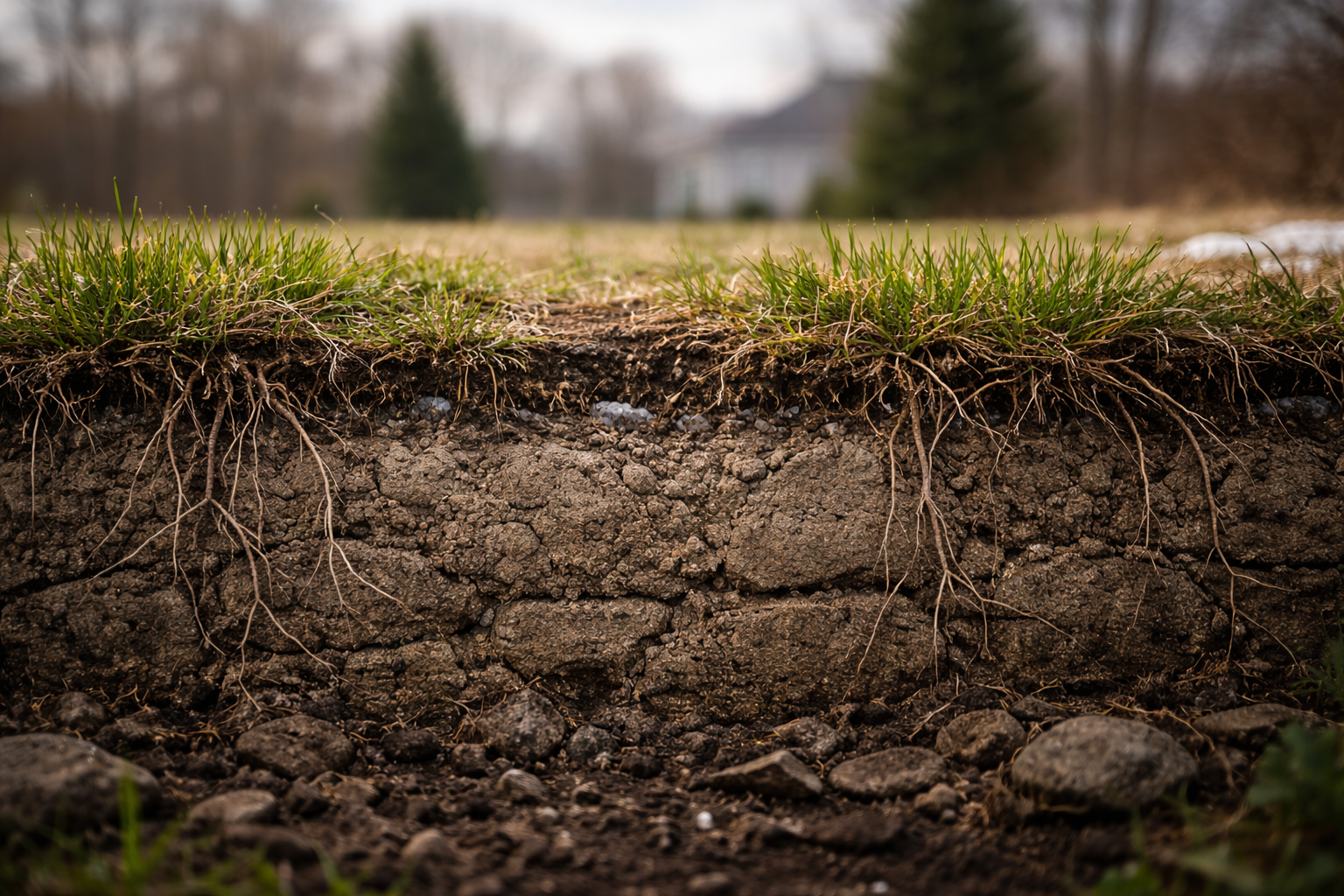
If your lawn struggles every spring, feels uneven underfoot, or never seems to thicken the way it should, the issue may not be fertilizer, watering, or seed. In many cases, the limiting factor is the soil itself.
Grass does not grow in isolation. It grows in soil, and when that soil becomes compacted, growth is restricted before it even begins.
Compacted soil is one of the most common and least recognized performance limitations in Western NY lawns.
What Healthy Soil Is Supposed to Do
Healthy soil is not solid mass. It is structured. Between soil particles are small pockets of air that allow oxygen to move below the surface, water to drain evenly, and roots to expand naturally.
Roots require oxygen just as much as they require water. Without sufficient air exchange, root activity slows. Without physical space, roots cannot extend outward or downward effectively. When soil structure is balanced, roots develop depth and strength. When that structure collapses, roots remain shallow and restricted.
Everything you see above ground reflects what is happening below it.
How Soil Becomes Compacted Over Time
Compaction rarely happens all at once. It develops gradually through repeated pressure and seasonal change. Foot traffic compresses soil particles together. Snow weight applies steady force for months. Freeze-thaw cycles shift and settle the surface unevenly. Equipment, mowing patterns, and natural settling all contribute.
As soil particles press closer together, the air spaces between them shrink. The surface may still appear level, but below it oxygen flow decreases and root movement becomes limited.
The lawn can survive in compacted soil, but it cannot perform at its full potential.
What Compaction Looks and Feels Like
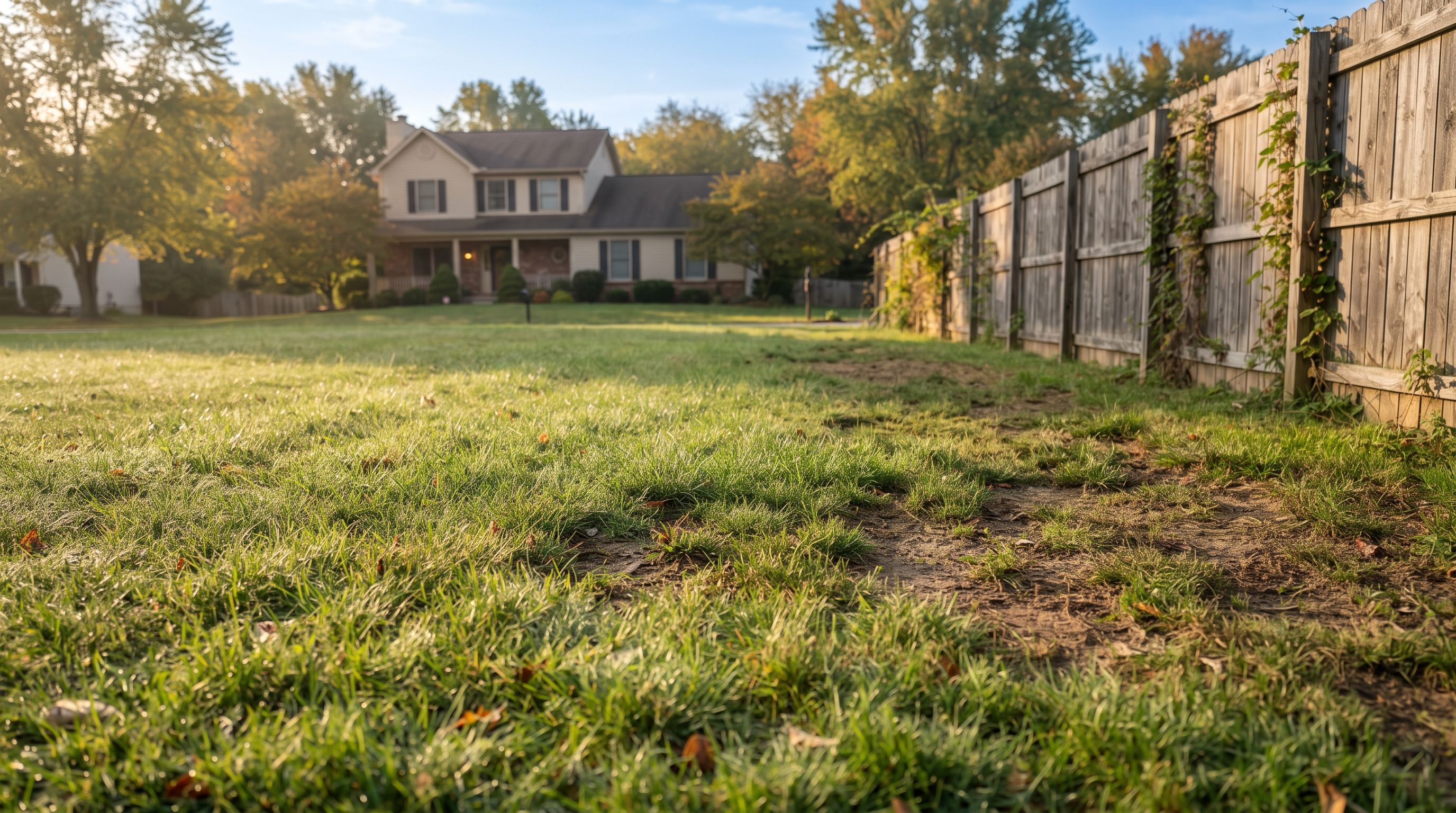
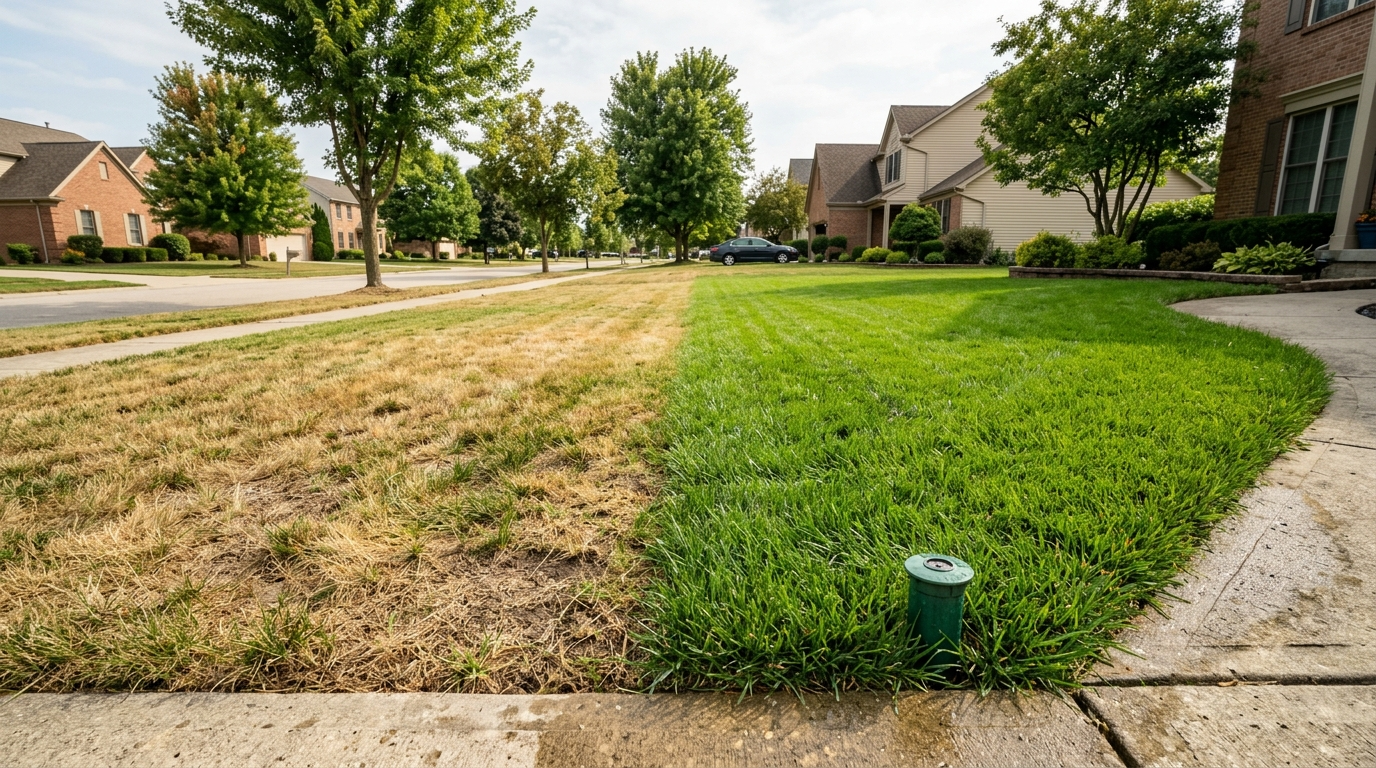
Compaction often reveals itself through patterns rather than dramatic symptoms. Certain areas may consistently lag behind others. High-traffic zones may appear thinner year after year. Water may pool briefly before soaking in. The surface may feel firmer and less forgiving underfoot.
These are not always signs of poor maintenance. They are signs of restricted structure.
When soil becomes dense, roots struggle to expand into surrounding areas. That restriction reduces access to moisture and nutrients, and growth becomes uneven as a result.
Why Compaction Limits Root Development
Roots expand by pushing through soil. In loose, well-structured soil, they move freely and establish depth. In compacted soil, resistance slows that expansion. Roots remain shallow and concentrated near the surface.
Shallow root systems are more reactive to environmental stress. Heat, dry conditions, and heavy rainfall all impact them more severely. Density fluctuates more easily. Recovery slows.
Compaction does not always cause immediate damage. Instead, it creates gradual instability that becomes more noticeable over time.
Why Fertilizer Alone Cannot Solve the Problem
Applying fertilizer to compacted soil may improve color temporarily, but it does not correct the structural limitation. Nutrients must move through the soil profile and be absorbed by active roots. If roots are confined, nutrient uptake remains uneven.
Feeding a restricted root system cannot create long-term stability. Soil structure determines whether fertilizer can be used effectively.
The Role of Oxygen in Lawn Performance
Oxygen is rarely discussed in lawn care conversations, yet it plays a critical role in performance. Roots require oxygen for proper function. Soil microorganisms depend on it to cycle nutrients. Balanced air exchange supports healthy biological activity below the surface.
Compacted soil reduces oxygen availability. Reduced oxygen slows root development. Limited roots restrict overall lawn performance.
The chain is direct and unavoidable.
What Balanced Soil Feels Like
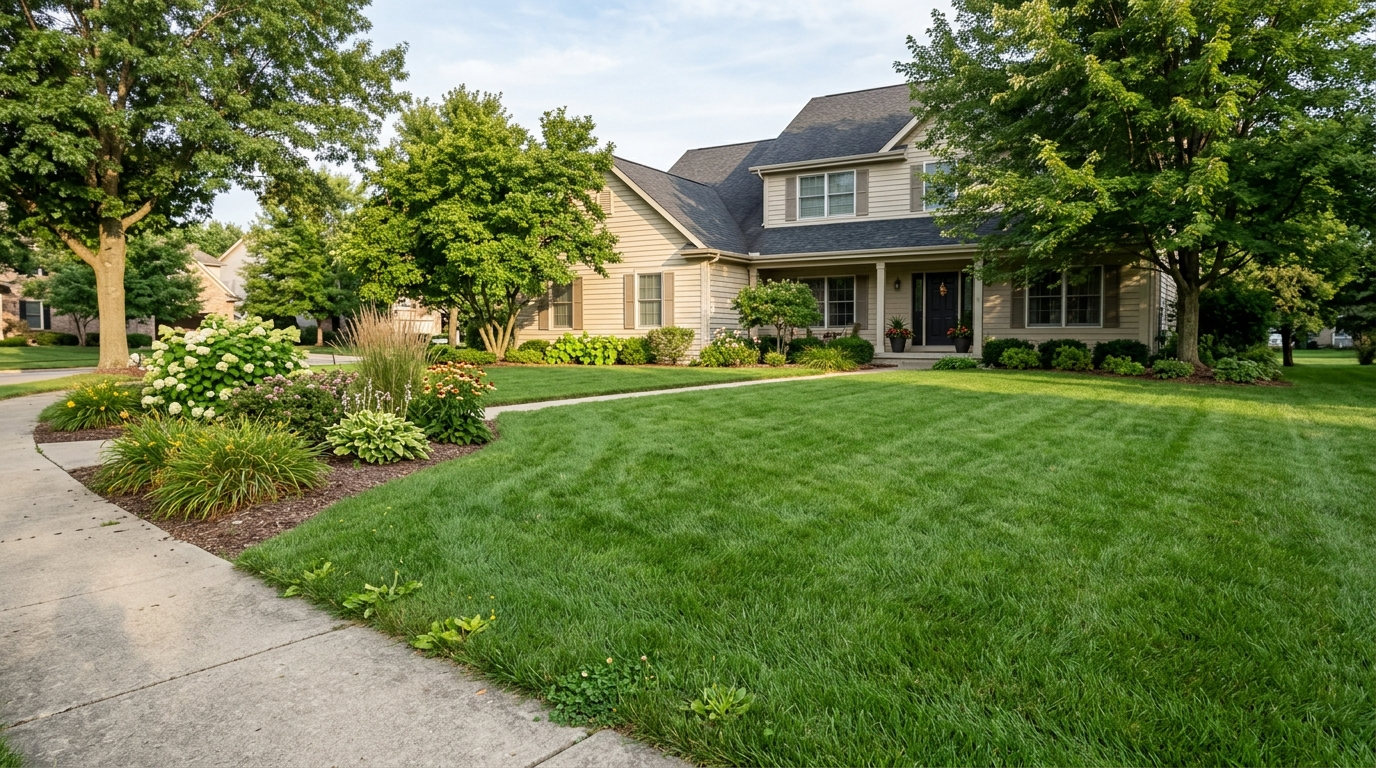
When soil structure is stable and properly balanced, the lawn feels different underfoot. The surface remains firm without feeling hard. Water absorbs more evenly rather than pooling in isolated areas. Growth becomes more consistent across the property, and thin sections recover more predictably.
The lawn responds steadily rather than in sudden bursts.
That steadiness is often the result of restored structure rather than additional inputs.
Why Structure Comes Before Everything Else
Before aggressive fertilization, before overseeding, and before layering treatments, soil structure should be considered. If the soil cannot support root expansion, every other effort becomes less effective.
In Western NY, seasonal freeze-thaw cycles and long winters make compaction common over time. Ignoring it allows limitations to compound gradually each year.
Addressing structure creates the space roots need to expand, oxygen to circulate, and nutrients to move efficiently. That space is what allows a lawn to perform consistently from spring through summer.
Explore More About Managing Your Lawn
Continue building your understanding of how structured lawn care supports long-term stability.