April Showers Bring May Flowers. In Rochester, It Is Usually More Complicated Than That
Everyone knows the phrase.
April showers bring May flowers. It sounds simple, clean, and seasonal. Rain shows up, the landscape wakes up, and everything starts moving in the right direction.
In the Rochester area, spring rarely works that neatly.
April rain can absolutely help a lawn. It can support recovery, help turf start growing again, and move the property further out of winter conditions. But it can also do the opposite in the wrong places. It can keep weak sections too wet, delay recovery in shaded areas, soften already unstable ground, and make the lawn’s uneven sections easier to spot once May arrives.
That is why spring rain should not be read as automatic progress.
In this part of New York, April moisture usually does not fix the lawn by itself. It reveals which parts of the property were ready to benefit from spring and which parts were already vulnerable before the rain ever showed up.
April rain helps the lawn only when the property can handle it well
Rain is not the problem on its own.
A healthy lawn with decent drainage, stable turf density, and relatively balanced site conditions can benefit from April moisture. The grass starts moving. Recovery improves. The property begins looking more active and more connected as the season settles in. In that kind of lawn, April rain supports spring progress.
But not every property is in that condition.
Some lawns enter April with weak density, soft low areas, compacted soil, worn sections, shade pressure, or recurring wet spots that never dry as evenly as the rest of the yard. On those properties, April rain does not just help. It also puts more stress on the sections that were already having trouble holding together.
That is where the simple phrase starts falling apart.
In Rochester, spring rain often exaggerates the lawn’s uneven areas
One of the biggest realities of spring in this region is that the whole property rarely responds the same way.
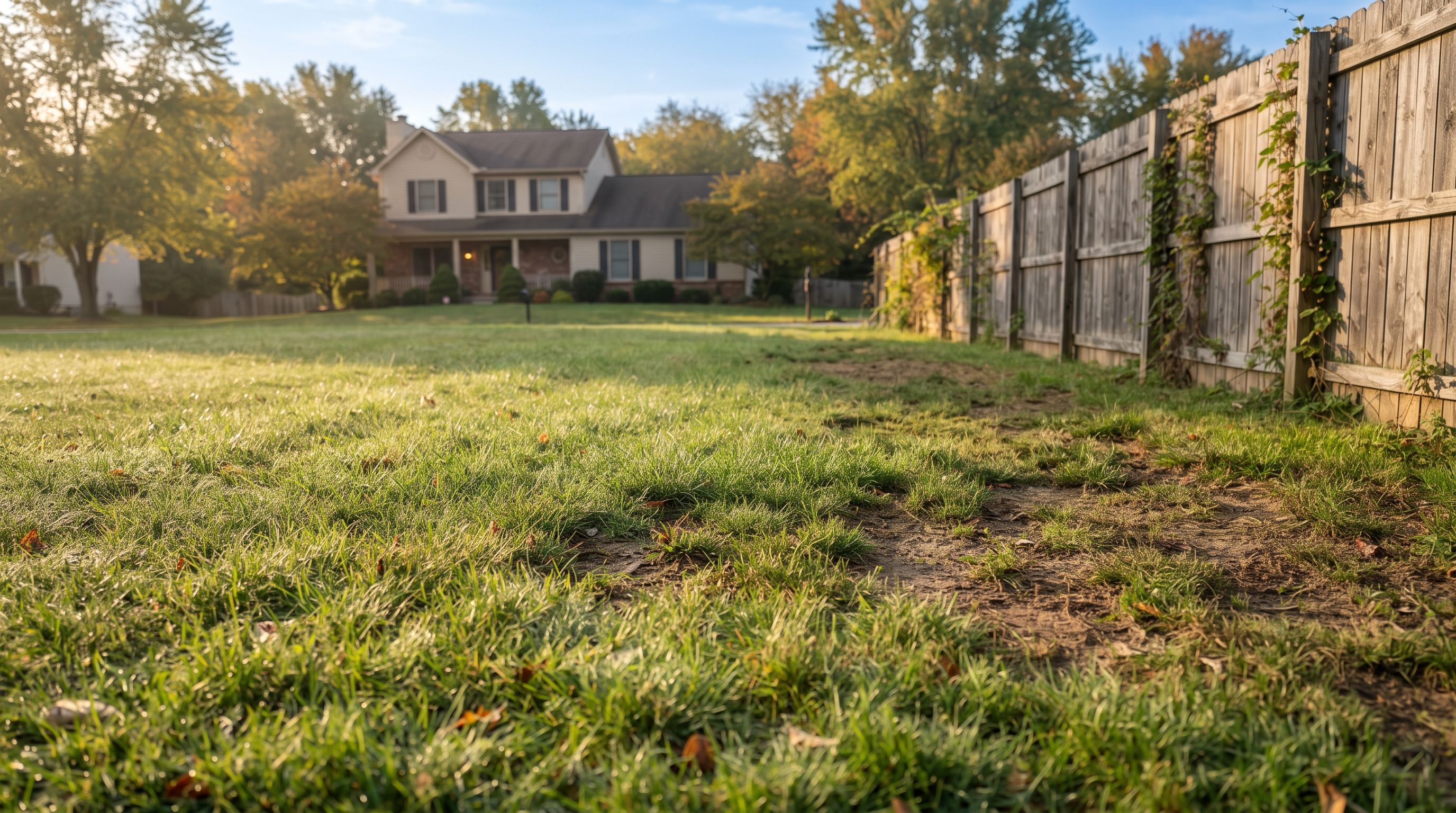
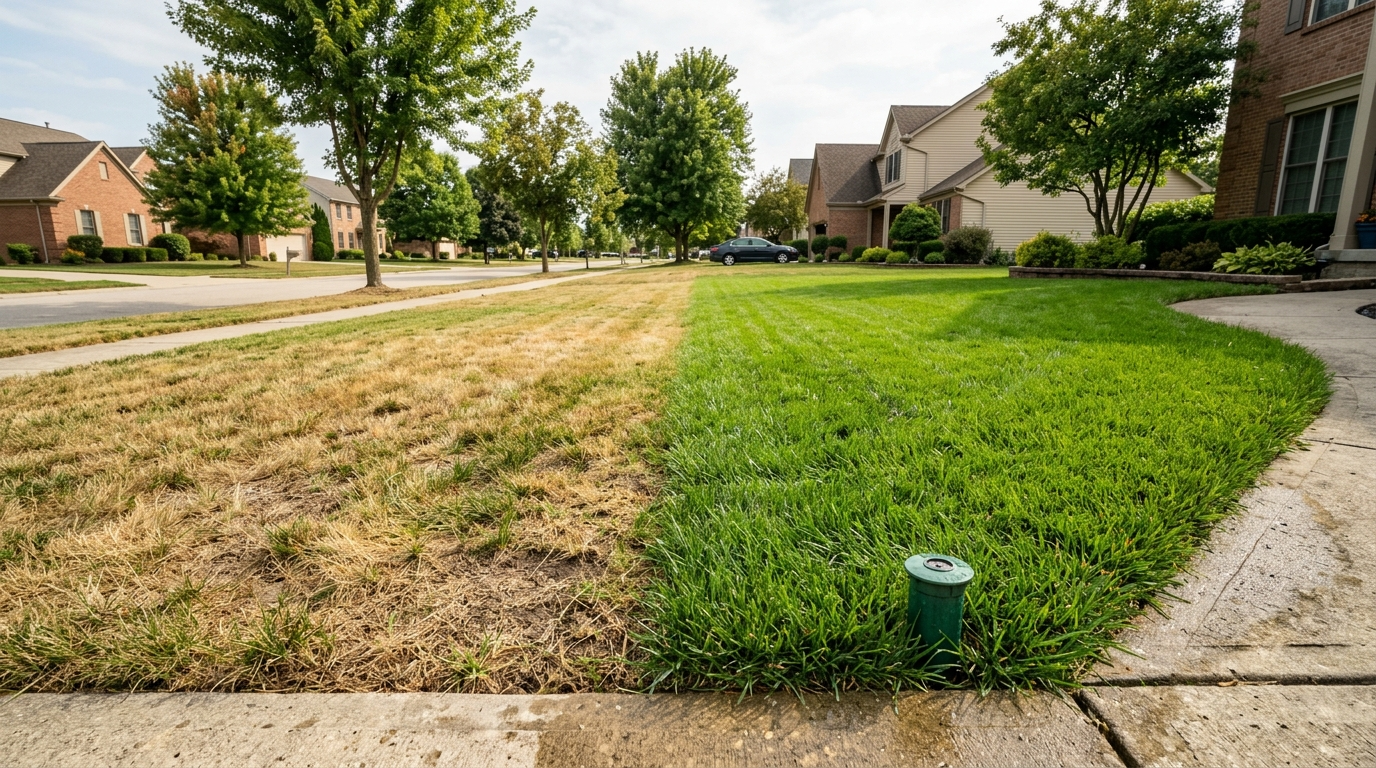
Some sections dry quickly. Others stay heavy. Some parts of the lawn green up and start moving. Others remain slower because of shade, slope, tree cover, or softer ground. Once repeated April rain gets layered on top of that, the contrast usually becomes more obvious.
That is why May often tells a clearer story than April.
The lawn starts showing which areas handled the rain well and which areas did not. A stronger section may look fuller and more active. A weaker section may still be pale, thin, or soft. The property does not just look wetter. It starts looking more separated.
That is what makes Rochester spring more complicated than a seasonal saying.
April moisture can support recovery in the right parts of the lawn
It is still important to say this clearly.
April rain is not bad for the lawn. In the right conditions, it helps. Lawns need moisture as they move out of winter and into active spring growth. A property that was dry, slow, or stalled can begin responding more naturally once rain and warmer temperatures start working together.
That support often shows up in practical ways.
The lawn begins greening more consistently. Growth starts becoming more regular. Open areas fill in more confidently. The property looks less stuck between seasons and more like it is finally building direction. In those cases, April rain is doing exactly what homeowners hope it will do.
But even then, the benefit is usually not uniform across the whole yard.
Wet areas often become the first places where spring rain stops helping
This is where the phrase becomes most misleading.
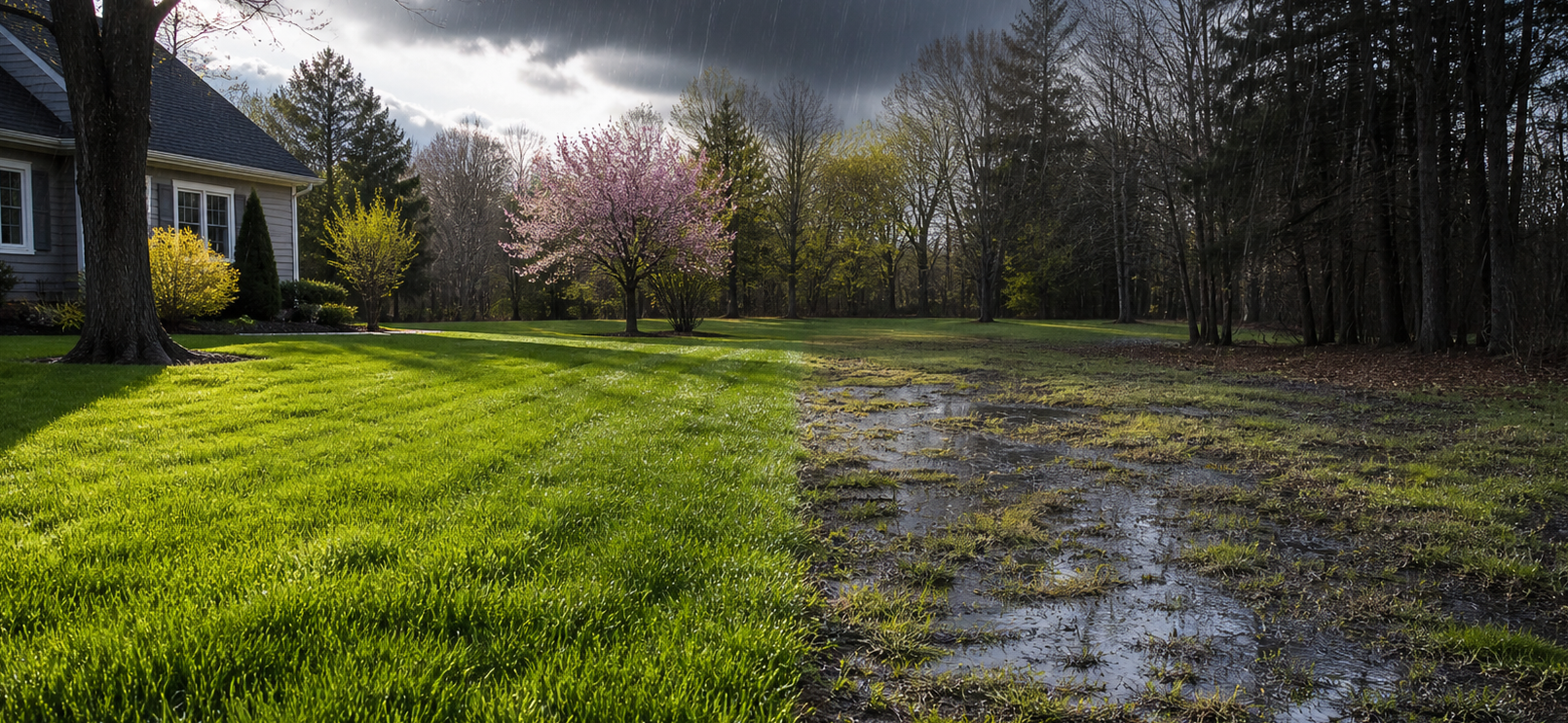
A section that already holds water poorly usually does not need more spring rain to catch up. It needs a better site condition than it currently has. When repeated April moisture keeps landing on those areas, the issue is not that spring rain failed. The issue is that the lawn was not equipped to benefit from that much moisture cleanly.
By May, those sections often start standing out more clearly.
They stay soft longer. They lag in color. They feel less stable underfoot. They may look thinner than the rest of the property or seem slower to enter the season. The surrounding lawn starts moving while those areas keep acting like spring is still stalled.
That is not random. It is the rain exposing where the property is least balanced.
April rain often helps stronger turf first
This is one of the more useful ways to understand what is happening.
Spring rain usually benefits the healthier, more stable parts of the lawn first. If a section already has better density, better drainage, and fewer structural limitations, it can use that moisture more effectively. It responds faster. It recovers more evenly. It starts building visible momentum sooner.
Weaker sections often do not.
That difference is why some properties look more uneven by May even though the whole lawn got the same rain. The stronger parts used the rain well. The weaker parts got exposed by it.
That is a more honest description of what spring moisture often does in this region.
Shade changes the way April rain affects the lawn
A shaded section of lawn rarely experiences April the same way an open sunny section does.
It stays cooler longer. It dries more slowly. It often carries spring moisture deeper into the season. That means April rain can create very different outcomes depending on where it lands. The open front lawn may begin responding well, while the shaded side yard or backyard still feels heavy and delayed.
That is one reason the lawn can look split by May.
Homeowners often assume the whole property should benefit equally from spring rain, but shade changes that equation fast. The problem is not the rain itself. The problem is that some parts of the lawn are already working with less light, slower drying, and a narrower margin for spring recovery.
April moisture makes that easier to see.
Rain does not solve thin turf by itself
Another common misunderstanding is that more spring rain will naturally help thin areas fill back in.
Sometimes it supports improvement. But if a section is thin because of wear, compaction, tree competition, weak density from last season, or edge stress near concrete, rainfall alone is not going to correct that condition. It may help the turf respond a little. It may help the stronger surrounding grass start moving. But it does not solve the underlying reason that area was weak.
By May, those sections often become easier to judge.
If the rest of the lawn is starting to move and the same thin area is still underperforming, the lawn is usually telling you that the issue is larger than moisture alone.
That is an important shift.
It means the lawn is no longer waiting on weather. It is showing where support is still needed.
Too much April rain can delay the lawn’s sense of momentum
Spring progress is not just about whether the lawn is alive.
It is also about whether the property starts feeling more settled from week to week. In a good spring transition, the lawn begins looking less paused and more directional. Color holds more consistently. Growth becomes more connected. Weak spots either begin improving or reveal themselves more clearly.
Too much April rain can interrupt that rhythm.
The lawn stays soft. Certain sections remain behind. Recovery feels uneven. The property looks like it should be moving, but parts of it still act like winter is not fully gone. That is why some lawns enter May looking greener in spots but still not particularly stable overall.
The rain helped some parts. It delayed others.
May usually reveals what April moisture really did
April is often too messy to read clearly.
Conditions keep shifting. Temperature swings continue. Rain patterns stack up. Some growth starts. Some stalls. It can be hard to tell whether the lawn is actually improving or just reacting temporarily to changing weather.
May makes that easier to interpret.
By then, the property starts showing which areas used April moisture productively and which areas did not. Strong sections begin settling in. Weak sections stay exposed. Wet zones become more obvious. Thin areas either start responding or keep falling behind. What looked like general spring unevenness in April often becomes a much clearer property pattern in May.
That is why the old phrase only tells part of the story.
The lawn does not just need rain, it needs structure
This is where LawnLogic’s positioning matters most.
Rain is a seasonal input. It is not a management plan. A lawn still needs the right timing, the right support, and the right level of control if that moisture is going to help the property move in the right direction. Otherwise the season starts dividing the lawn into areas that benefited and areas that fell further behind.
That is exactly what structured turf management is meant to reduce.
A more controlled lawn care season helps the property use spring conditions better. It supports the lawn before visible instability turns into recurring weakness. It keeps spring moisture from being the only thing shaping what the lawn becomes by May.
That is a very different standard than hoping April rain does the work by itself.
In this region, spring rain often separates stable lawn areas from unstable ones
That may be the clearest summary of all.
Around Rochester and nearby communities, April rain often acts like a sorting mechanism. It helps the more stable parts of the lawn move forward, while exposing the sections that were already under more pressure. The result is a property that may look greener overall, but also more revealing.
That is useful if you read it correctly.
The lawn is showing where drainage is weaker. Where turf density is thinner. Where shade is slowing recovery. Where spring softness is lingering too long. Where the season is building momentum and where it is not.
That is much more valuable than a generic belief that spring rain automatically improves everything.
What April showers actually mean by May
In Rochester, April showers do not just bring May flowers.
They usually bring clearer answers.
They show which parts of the lawn were ready to benefit from spring moisture and which parts were already less stable going into the season. They help stronger turf move. They expose wetter, thinner, slower, or weaker sections that still need more than weather to improve.
That is why spring here is usually more complicated than the phrase suggests.
Rain helps. But only when the lawn is in a position to use it well.
Frequently Asked Questions
Is April rain good for lawns in the Rochester area?
Usually, yes, but not equally across every section of the property. Lawns with stronger drainage and better turf stability often benefit more cleanly than lawns with wet spots, thin areas, or shade pressure.
Why does my lawn still look uneven in May after a rainy April?
Because spring rain often helps stronger areas first and exposes weaker ones more clearly. The lawn may be showing differences in drainage, density, shade, or overall site conditions.
Can too much April rain hurt a lawn?
It can create delays in the wrong areas. Repeated rain can keep soft sections too wet, slow recovery in shaded parts of the property, and make existing weak areas more noticeable by May.
Does spring rain fix thin lawn areas?
Not by itself. Rain can support recovery, but it does not solve compaction, wear, tree competition, weak density, or other structural reasons a lawn area may be thin.
Read what the rain is actually telling you
If your lawn looks greener in some places and more exposed in others by May, April rain probably did not create that difference. It revealed it. LawnLogic helps property owners understand which parts of the lawn are responding well, which areas are falling behind, and what it takes to bring more structure and stability to the season from there.
Explore More About Managing Your Lawn
Continue building your understanding of how structured lawn care supports long-term stability.