Sunny Lawn Areas Usually Recover Faster in Spring
Than Shaded Ones
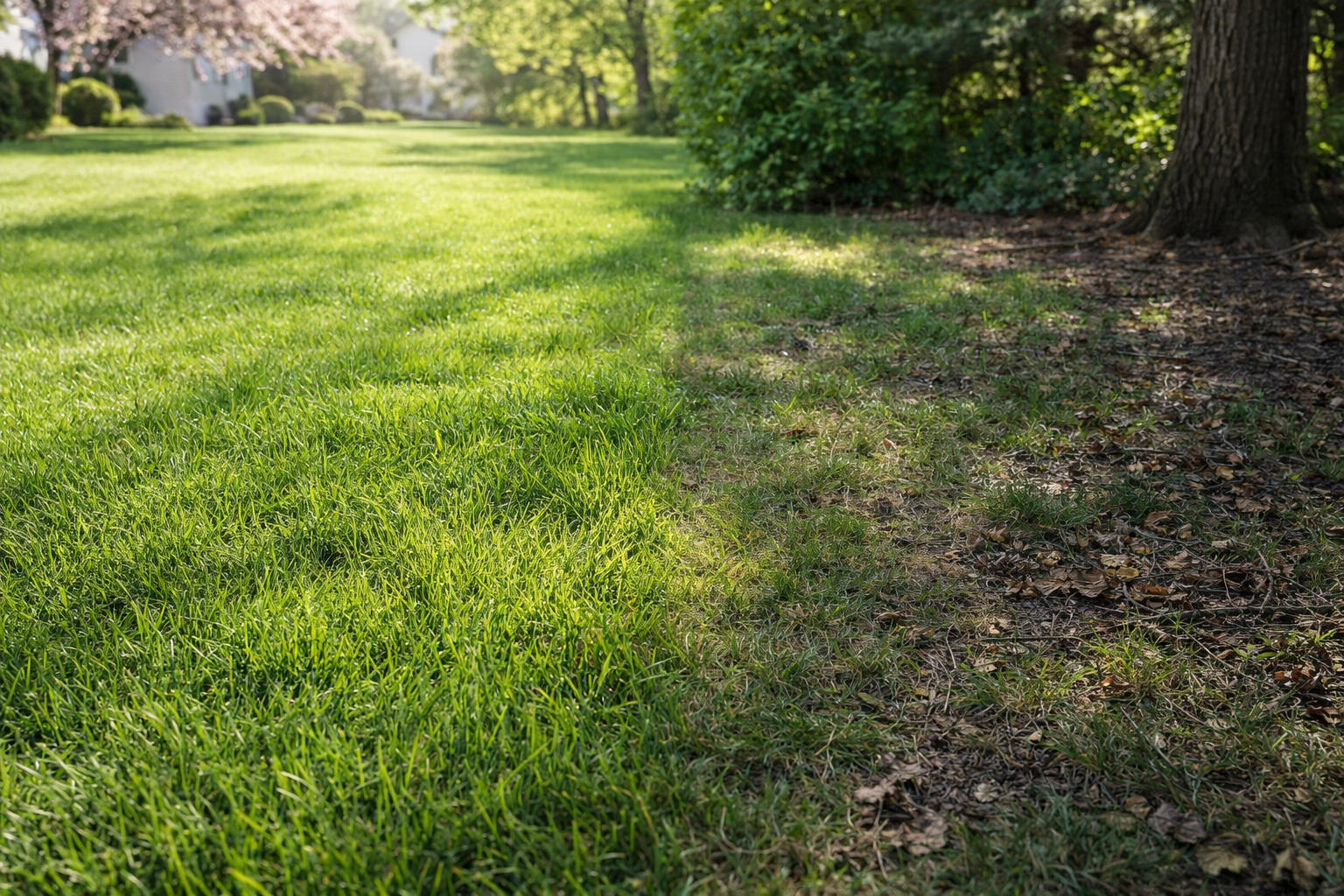
Some parts of the lawn look ready for the season before others.
One section starts greening up, filling in, and responding like spring has arrived. Another section still looks flat, slower, or slightly behind. In many cases, that contrast shows up between the sunnier parts of the yard and the areas that spend more of the day in shade.
That pattern is common, and it usually has a straightforward explanation.
Sunny lawn areas tend to recover faster in spring because they warm up sooner, dry out sooner, and move into active growth sooner. Shaded areas usually stay cooler longer, hold moisture longer, and take more time to respond. The lawn is not acting unpredictably. It is reacting to different site conditions across the property.
That is why spring recovery often looks uneven even when the whole lawn came through winter reasonably well.
Sun and shade create two different spring environments
A lawn does not recover as one perfectly uniform surface.
Even when the grass type is similar across the yard, the growing conditions are not always the same. Areas that receive stronger sun exposure usually begin the season with more warmth and more light, while shaded sections stay cooler and slower. Those differences affect how quickly the turf starts growing again.
That matters early in the season because spring recovery begins with conditions, not appearance.
The grass responds first to the environment around it. If one part of the lawn has more favorable conditions, it often starts moving sooner. If another part stays shaded, damp, or cool for longer, it usually lags behind.
This is one of the most common reasons a lawn looks uneven in spring.
Sunny areas usually warm up faster after winter
One of the biggest advantages of a sunny lawn area is earlier warming.
Sun exposed sections tend to absorb heat more quickly, especially after cold nights, spring rain, and lingering winter conditions. That allows the soil and the turf to move toward active growth sooner than sections that remain shaded for long parts of the day.
Once that process starts, the difference can become easy to see.
The sunny side may show earlier color, more noticeable growth, and a stronger overall response. The shaded side may still look like it is waiting for the season to catch up. That does not necessarily mean anything is wrong with it. It usually means it has not reached the same growing conditions yet.
In spring, even a modest difference in exposure can create a visible difference in recovery speed.
Shaded areas often stay cooler and slower for longer
Shade affects more than appearance.
A shaded section of lawn usually receives less direct sunlight, which slows how quickly that area warms up after winter. It can also delay how quickly the surface dries after snowmelt or spring rain. As a result, the turf in those sections often stays behind even when the open lawn is already starting to move.
That slower response is not unusual.
The grass in shaded areas is often living in a more restricted spring environment. It has less light to work with, cooler conditions, and a slower start overall. In some yards, that difference fades once the season settles in. In others, the shaded section stays somewhat behind for much longer because the site pressure remains in place.
That is why shade related delays should be read as site driven, not random.
Moisture behaves differently in sun and shade
Spring recovery is not just about temperature. It is also about how water moves through the property.
Sunny sections often dry down faster after wet weather. That can help the lawn move toward a more workable balance earlier in the season. Shaded areas, especially those with denser tree cover or limited airflow, may stay damp longer and respond more slowly as a result.
That moisture difference matters.
Grass usually recovers better when the soil is not staying cold and wet for too long. A shaded section that holds moisture longer can remain sluggish even if the turf is still healthy enough to recover. The area simply is not operating with the same conditions as the sunnier parts of the lawn.
This is one reason homeowners often feel like the shaded side is dragging behind for no obvious reason.
Tree cover often makes the difference even stronger
Shaded lawn areas are often influenced by more than just the absence of sun.
If the shade is being created by mature trees, that section of the yard may also be dealing with root competition, reduced airflow, and a more selective growing environment overall. In that case, the slower spring recovery is not just about lower light. It is about multiple pressures working together.
That can make the contrast more noticeable.
The open lawn may recover steadily while the tree lined area stays thinner, slower, or less responsive. Even when both sections are technically alive and viable, they are not functioning under the same conditions. The turf near trees often has a smaller margin for stress and less ability to rebound quickly.
That is why shade from trees often creates a more persistent spring gap than shade from a structure alone.
Early green up in sunny areas does not always mean they are healthier all season
This part is important.
The sunny section often looks stronger first because it moves earlier. But early recovery does not automatically mean it will be the strongest part of the lawn for the full season. In some cases, the same area that wakes up first is also the area that takes more summer stress once heat and dryness intensify.
So the sunny side should not automatically be treated as the standard.
It is simply responding sooner. The shaded side may still perform adequately later once conditions improve. The real question is not which section moves first. It is whether both sections settle into stable performance as the season develops.
That distinction helps prevent overreacting to normal spring differences.
Shaded areas often require a more realistic standard
A lot of frustration comes from expecting every part of the lawn to behave the same way.
That usually is not realistic on a property with mixed exposure. A shaded section does not always have the same recovery timeline, density potential, or seasonal pace as a fully sunny area. If the site conditions are meaningfully different, the lawn will reflect that.
That does not mean the shaded section cannot improve.
It means it should be understood on its own terms. A more realistic expectation helps separate a normal slower recovery from a true performance problem. If the shaded area is simply behind for a while, that may be normal. If it stays thin, patchy, or consistently weak well beyond spring, that points to a deeper imbalance.
Those are not the same situation.
Uneven spring recovery can reveal where the lawn is most vulnerable
Spring is one of the best times to notice which parts of the property are not functioning evenly.
The lawn tends to show its site differences clearly during recovery. Sunny areas often reveal where the property has stronger momentum early in the season. Shaded areas often reveal where the lawn has less margin for stress and a harder time getting established quickly.
That makes spring contrast useful.
It helps identify where the lawn is strongest, where it is slower, and where the property may need a more deliberate approach. A section that repeatedly falls behind every spring often becomes the same section that struggles more with density, weeds, or summer performance later on.
The lawn is showing you where the imbalance lives.
Slower shaded recovery is not always a problem, but repeated weakness is
A short delay in a shaded section is common.
Many lawns need extra time in lower light areas during spring, especially in Western NY where cold, wet conditions can already slow recovery. A temporary difference in color or growth pace does not automatically mean the turf is failing.
The concern grows when the shaded area keeps underperforming.
If that section stays thin, opens up easily, struggles to fill in, or keeps falling behind year after year, the issue is bigger than simple spring timing. In that case, the lawn is not just recovering slower. It is functioning at a disadvantage.
That is when the site conditions around that area need closer attention.
More seed is not always the answer in shaded lawn areas
When the shaded side of a yard looks weaker, seeding is often the first thing people think about.
Sometimes that is part of the solution, but not always the full answer. If the area is still dealing with reduced light, moisture imbalance, tree pressure, or weaker turf performance overall, new grass may still struggle once it is established.
That is why some shaded areas improve briefly, then thin back out again.
The problem was not just missing grass. The problem was that the site conditions were still making stability difficult. Seeding can help support a thinner section, but it works best when it is part of a broader understanding of what that area can realistically sustain.
Otherwise it often becomes a repeated patch rather than a lasting correction.
Program structure matters more on properties with mixed exposure
Lawns with both sunny and shaded sections usually benefit from a more deliberate management approach.
That is because the property does not move through the season evenly. Different areas respond at different speeds, face different pressures, and require a more structured understanding of what the lawn is doing over time. A one dimensional view of the yard often misses those differences.
This is where professional turf management becomes more valuable.
The goal is not to force every section into the same timeline. The goal is to support the lawn with a program that recognizes how different parts of the property behave and responds accordingly. That creates a better chance for the whole lawn to hold together more evenly across the season, even when site conditions are not uniform.
That is a more realistic path than expecting sun and shade to perform the same.
Why Rochester area lawns often show this difference so clearly
Western NY spring conditions make exposure differences easier to see.
Cold soil, lingering moisture, inconsistent early temperatures, and variable sunlight patterns can create a noticeable gap between open lawn and shaded lawn. One section may start moving as soon as conditions improve, while another stays cool and slower for much longer.
That is why this pattern is so common across the region.
The lawn is not responding unevenly for no reason. It is reacting to different spring environments across the same property, and the Greater Rochester area often exaggerates those differences.
What sun and shade differences usually tell you in spring
When sunny lawn areas recover faster in spring than shaded ones, the lawn is usually revealing a real site contrast.
The sunnier section has likely reached active growth conditions sooner. The shaded section is likely still dealing with lower light, cooler conditions, and slower recovery timing. In some cases, that difference is temporary. In others, it points to a section of the property that needs more deliberate support over time.
Either way, the pattern is worth paying attention to.
It helps explain why the lawn looks uneven early in the season, and it often gives a useful preview of which parts of the yard are likely to be stronger or more vulnerable as the year continues.
LawnLogic FAQ
Is it normal for shaded lawn areas to stay behind in spring?
Yes. Shaded areas often warm up slower, stay damp longer, and take more time to move into active growth. A slower start is common.
Does early recovery in sunny areas mean that part of the lawn is healthier?
Not always. It usually means that section reached favorable growing conditions sooner. It may still face more heat and dryness later in the season.
Will the shaded side catch up later?
Sometimes it will. If the difference is mostly seasonal timing, the gap may narrow as spring progresses. If the shaded area stays weak well beyond spring, there is usually a larger site issue involved.
Should shaded lawn areas be treated the same as sunny ones?
Not always. They often need to be evaluated with a different understanding of light, moisture, and overall turf performance. Treating the whole lawn as if every section functions the same can lead to weaker results.
Build a better plan for the areas that stay behind
If parts of your lawn recover slower every spring, the pattern usually points to more than timing alone. LawnLogic evaluates how different sections of the property are functioning so sunny and shaded areas can be managed with better structure, clearer expectations, and a more stable plan for the full season.
Explore More About Managing Your Lawn
Continue building your understanding of how structured lawn care supports long-term stability.