Why the Same Areas of Your Lawn Keep Thinning Out
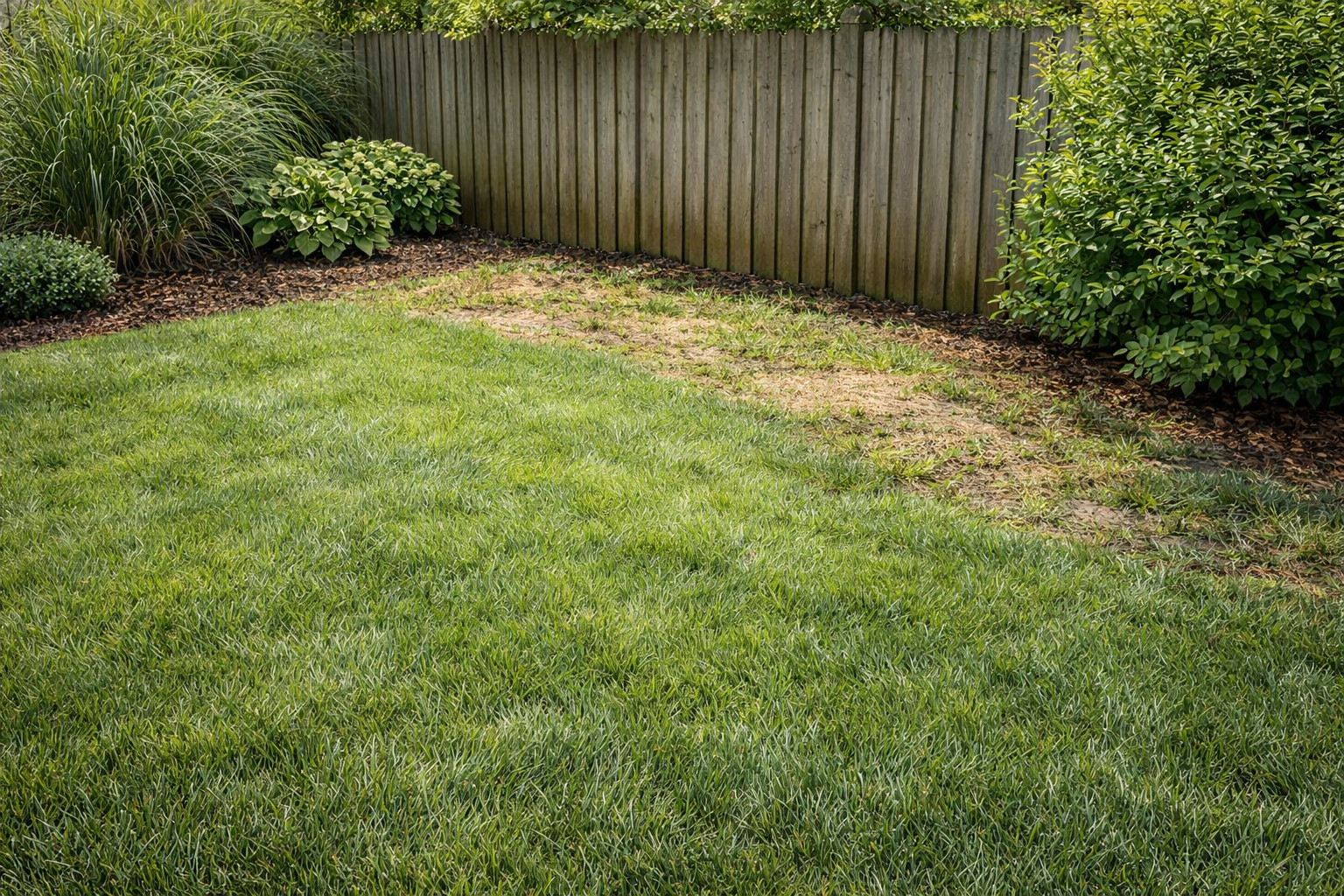
Some thin lawn areas are not random.
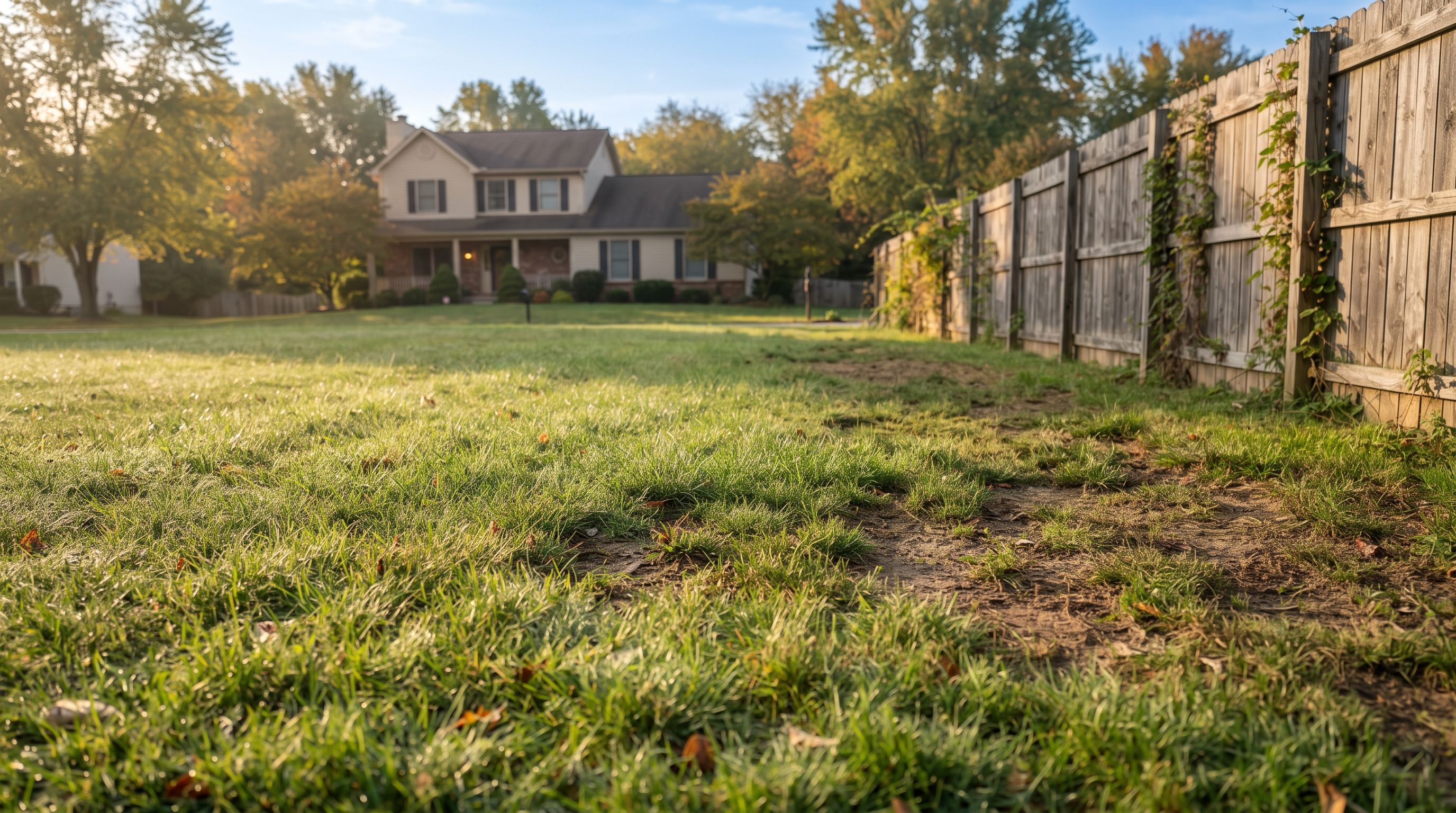
They show up in the same part of the yard year after year, even when the rest of the lawn looks relatively stable. Homeowners often assume those sections just need more seed, more fertilizer, or a little extra attention. In many cases, that is not the real issue.
Recurring thin areas are often tied to drainage patterns.
When water consistently moves through a property the same way, it creates repeated stress in the same sections of turf. That stress may not always look dramatic. It may show up as thinning along a slope, weak grass near a downspout, soggy ground in one corner, or patchy turf where water collects and sits longer than it should. Over time, those patterns weaken the lawn’s ability to stay full and even.
If the drainage issue is not recognized, the lawn usually stays stuck in a cycle. The area thins out, gets patched, improves briefly, and then declines again.
The goal is not just to treat the symptom. The goal is to understand why that part of the lawn keeps failing and move toward a correction that holds.
Thin turf often follows water movement
A lawn does not need to flood to have a drainage problem.
In many yards, the issue is more subtle. Water may be moving too quickly across the surface, staying too long in a low section, washing through a narrow strip, or repeatedly concentrating near hard surfaces, rooflines, and grade changes. When that happens often enough, the same turf sections stay under pressure.
Grass performs best when moisture levels are reasonably balanced. It needs water, but it also needs oxygen in the soil. When an area stays wet too long, root performance declines. When runoff keeps moving across the surface, seed can struggle to establish and existing turf can thin from repeated stress. In either case, the result can look the same to a homeowner: a lawn section that never seems to fully recover.
That is why recurring thin areas deserve a closer look before another round of surface-level fixes.
The drainage patterns that commonly create repeat problem areas
Not every drainage issue looks alike. Some create chronic wetness. Others create erosion, soil movement, or inconsistent moisture that makes turf hard to stabilize.
Water collecting in low spots
This is one of the most common patterns behind recurring thinning.
A slight dip in the yard may not seem important, but if water repeatedly settles there after rain or irrigation, the turf in that section can stay soft, wet, and weak. Even if standing water disappears within a day, repeated saturation can still reduce turf density over time.
These areas often look thin in spring, struggle through early summer, and may never match the rest of the lawn.
Runoff moving down a slope
Sloped lawns often have thin sections where water travels rather than where it sits.
As water moves downhill, it can strip away surface stability, reduce seed-to-soil contact in newly repaired areas, and create inconsistent moisture from top to bottom. The upper section may dry too quickly, while the lower section stays heavy and saturated. This creates a difficult environment for uniform turf performance.
When homeowners reseed those sections without correcting the water pattern, the result is usually temporary.
Downspout discharge concentrating water in one area
A downspout may be sending more water into the lawn than that section can reasonably handle.
This often creates a recurring weak zone near the discharge point or along the path where water flows away from it. In some yards, the issue appears as a narrow washed-out channel. In others, it creates a broad, thin area where the soil stays unstable after every heavy rain.
If the problem area begins near the house and continues outward, roof runoff should be part of the evaluation.
Compacted areas that trap moisture near the surface
Not all drainage problems come from the shape of the yard alone. Some come from how the soil behaves.
Compacted soil slows water movement into the ground. Instead of moving downward and dispersing properly, water lingers near the surface. The lawn may feel soft after rain, then bake hard as it dries. That repeated cycle is rough on turf roots and often leads to chronic thinning.
This is common in lawn sections with foot traffic, construction history, or naturally dense soil.
Hardscape edges redirecting water
Driveways, walkways, patios, and landscape borders can all influence where water goes.
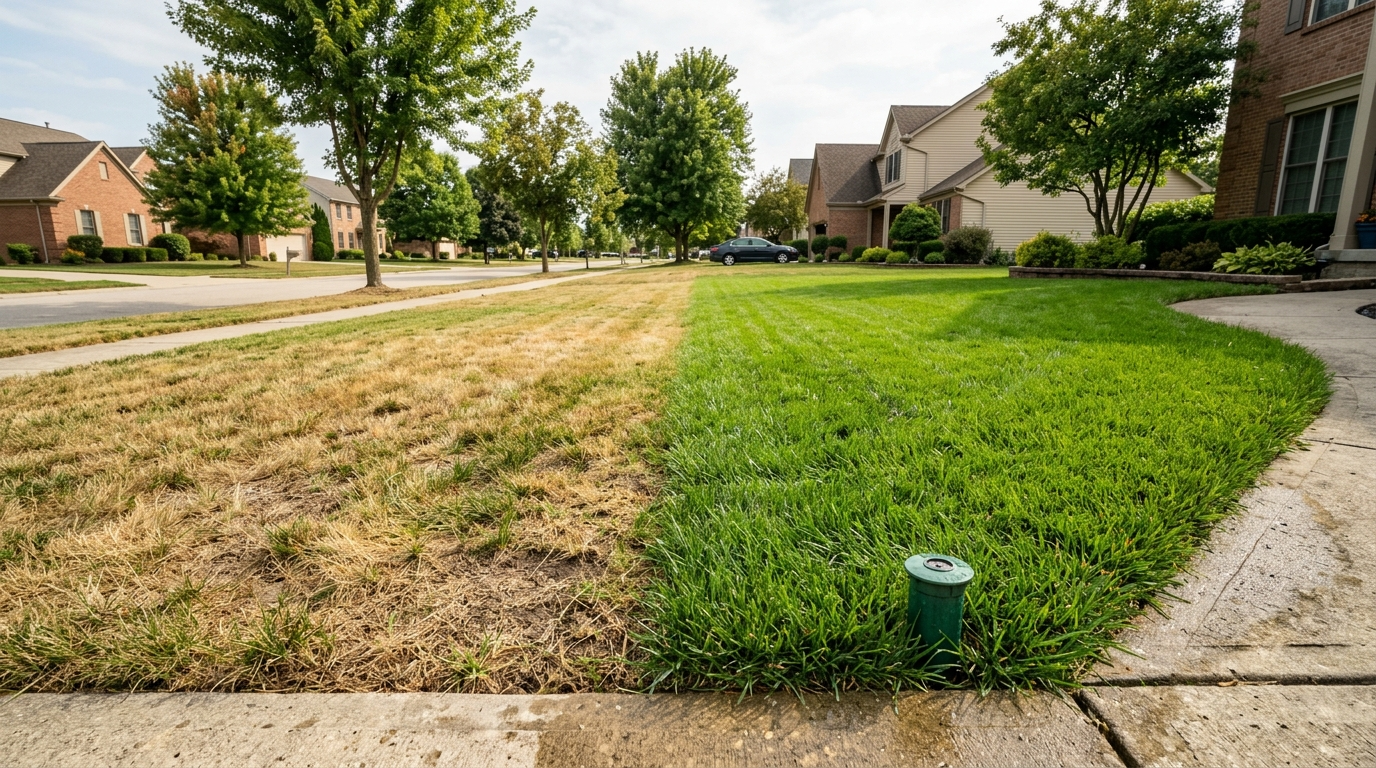
Sometimes they push runoff into a narrow lawn strip that was never meant to handle that volume. Other times they block natural flow and create wet pockets alongside the edge. These problem areas are easy to overlook because the lawn damage seems isolated, but the pattern often repeats after every rain.
When thin turf hugs a sidewalk, foundation edge, or patio line, drainage redirection is worth considering.
Shade and drainage working together
Some of the most persistent thin areas are caused by more than one factor.
A shaded section that also stays damp will usually struggle much more than a sunny area with the same moisture issue. Less sunlight slows drying, which means the soil stays wet longer and the turf has a harder time recovering. Homeowners often focus on the shade alone, but the drainage pattern is what makes the area fail repeatedly.
In those cases, the solution usually has to account for both conditions.
Why these areas do not improve with simple patching
Thin areas caused by drainage usually do not fail because seed was applied incorrectly.
They fail because the site conditions keep working against establishment and recovery.
You can add seed to a wet depression, but repeated saturation may keep it from developing into stable turf. You can fertilize a runoff-prone strip, but fertility does not stop water from moving soil or stressing roots. You can improve color for a short time, but better color is not the same thing as actual lawn stability.
This is why recurring thin areas often frustrate homeowners. They may appear to improve after each attempt, only to open back up after the next stretch of rain, summer stress, or seasonal transition.
Until the water pattern is addressed, the lawn is being asked to recover in the same failing environment.
How to tell whether drainage is part of the problem
You do not need a major flood event to start noticing a pattern.
There are usually signs that point to a drainage-related issue:
The same section thins every year
If one area repeatedly struggles while the rest of the lawn remains fairly consistent, the site conditions in that section are likely different.
Water lingers longer there after rain
Even if it is not ponding for days, a section that stays wet well after the rest of the lawn has dried deserves attention.
The area feels soft, slick, or unstable
Weak turf in drainage-affected sections often feels different when walked on. It may stay soft, spongy, or uneven.
Repairs do not hold
If seeding, fertilization, or seasonal improvement never seem to last in that part of the lawn, the surface treatment may be missing the underlying cause.
Turf quality changes along a visible path
Sometimes the thin area follows a line, a slope, a curve, or a route away from a downspout. That kind of shape usually points to water movement rather than random decline.
What the actual solution usually involves
The right solution depends on the pattern causing the problem.
That is important, because recurring thin areas are often overtreated with generic lawn products when they really need a more specific correction plan.
Step one is evaluating the water pattern
Before recommending seed or repair, the problem area should be assessed in context.
That means looking at grade, runoff direction, low spots, discharge points, hardscape influence, soil response, and how long the area stays wet relative to the rest of the lawn. Without that step, the repair is mostly guesswork.
A thin area is not just a bare patch. It is evidence that something in that section is not functioning the way it should.
Step two is deciding whether the issue is surface flow, saturation, or soil limitation
These problems are related, but they are not identical.
If water is moving across the surface too aggressively, the focus may be on redirecting or dispersing flow. If water is collecting in one section, the correction may involve improving drainage behavior in that area. If the soil is compacted and holding water near the top, the solution may involve improving how the soil accepts and processes moisture over time.
This is where a structured lawn assessment matters. Different causes can produce similar-looking symptoms, but they should not all be treated the same way.
Step three is repairing the turf after the site issue is addressed
Once the underlying cause has been reduced or corrected, the lawn can be repaired much more effectively.
That may involve targeted seeding, renovation, or a broader recovery plan depending on how much thinning has occurred. In some cases, the area only needs localized stabilization. In others, recurring failure has left the section too weak for a simple patch job.
Either way, turf repair works better when it follows correction instead of trying to replace it.
When lawn seeding alone is enough and when it is not
Homeowners naturally want the simplest fix.
Sometimes that works. If the drainage issue is minor and the thin area has not been failing for long, a targeted repair may be enough once the cause is identified and adjusted. But when the same spot has been opening up repeatedly for multiple seasons, seeding alone is usually not enough.
At that point, the lawn is telling you the site conditions are still unresolved.
That does not always mean a major drainage project is needed. It does mean the repair approach should be more deliberate than simply throwing down more seed and hoping the section finally takes.
Why recurring thin areas should be handled as a management issue
A lawn becomes more stable when recurring problems are evaluated as part of the whole property, not as isolated patches.
That is especially true with drainage-related thinning. Water movement affects root health, density, seed establishment, weed pressure, and overall lawn consistency. If one section keeps falling behind, it can influence how the entire yard looks and performs.
This is why structured turf management matters. The goal is not just to make a problem area look better for a few weeks. The goal is to understand the pattern, reduce the stress causing it, and rebuild that section in a way that holds.
That is the difference between repeated patching and actual correction.
The path forward when thin areas keep coming back
If a section of the lawn repeatedly thins out in the same place, it should not be treated like a random setback.
It should be treated like a repeatable site condition.
The right next step is to evaluate how water moves through that part of the property, determine what is keeping the turf unstable, and then build the repair around that finding. Sometimes that means improving soil performance. Sometimes it means correcting runoff concentration. Sometimes it means targeted seeding and renovation after the drainage pattern has been addressed.
What matters most is sequence.
First identify the reason the area keeps failing. Then correct what is contributing to the stress. Then repair the lawn in a way that gives that section a fair chance to stay full.
That is how recurring thin areas stop being recurring.
LawnLogic FAQ
Can poor drainage cause thin grass even without standing water?
Yes. A lawn does not need visible puddling to have a drainage-related problem. Repeated saturation, runoff movement, and slow drying can all weaken turf over time.
Why does grass keep thinning near my downspout?
Downspouts can concentrate large amounts of water into one section of the lawn. That repeated discharge may keep the soil unstable or overly wet, which makes turf density harder to maintain.
Will overseeding fix a drainage-related thin area?
It may improve appearance temporarily, but it often does not hold if the water pattern remains the same. Thin areas caused by drainage usually need the site condition addressed before the repair becomes durable.
How do I know whether the issue is drainage or compacted soil?
In many cases, both are involved. Compacted soil can worsen drainage by slowing water movement into the ground. A proper evaluation looks at water behavior and soil response together.
When should a thin lawn area be renovated instead of patched?
If the same section has failed repeatedly, has widespread thinning, or cannot hold repairs from one season to the next, a more complete corrective approach may be more effective than repeated patching.
Stop repairing the same section without fixing the reason it fails
Recurring thin lawn areas usually have a pattern behind them.
When that pattern is tied to drainage, repeated patching rarely solves the problem for long. The better approach is to identify how water is affecting the area, correct the condition that keeps stressing the turf, and then rebuild the section with a more deliberate repair plan.
That is how weak areas become stable instead of temporary.
Explore More About Managing Your Lawn
Continue building your understanding of how structured lawn care supports long-term stability.