When Spring Aeration Actually Makes Sense

Spring aeration gets recommended far too often.
For many lawns around the Greater Rochester Area spring is not the best time to aerate. That does not mean spring aeration is always wrong. It means it should be used deliberately, not automatically. When it is recommended without looking at lawn condition, soil behavior, weed pressure, and seasonal timing, it can create more disruption than improvement.
The better question is not whether spring aeration is good or bad.
The real question is when spring aeration actually makes sense.
Why aeration gets talked about so much in spring
Aeration is one of the most recognized lawn services because the concept is easy to understand. If the ground feels tight, water sits on the surface, or the lawn seems to struggle, it sounds logical to open the soil and loosen conditions that may be restricting the lawn.
That basic idea is not wrong.
Aeration can help reduce surface compaction, improve air movement in the root zone, support water penetration, and create better conditions for root development. It can also help lawns respond better to fertilization and seasonal recovery when it is used at the right time.
The problem is that spring is often treated like the default season for everything lawn related. Homeowners start seeing green return, winter damage becomes easier to notice, and any lawn that looks thin or uneven can make aeration feel like the obvious next step.
In reality, timing matters. Some lawns benefit from spring aeration. Others are better off waiting until fall. The difference comes down to what the lawn is dealing with and what result you are trying to produce.
What aeration is actually meant to solve
Aeration is not a reset button.
It is a corrective service used to address specific physical conditions in the lawn. Most commonly, that means compaction or restricted movement of air, water, and nutrients through the upper soil profile.
A lawn may be a good candidate for aeration when:
- The soil feels dense and hard
- Water runs off instead of soaking in evenly
- The lawn dries out quickly despite watering
- Turf growth is uneven across the yard
- The lawn struggles in high traffic areas
- Roots are developing shallow instead of deeper into the soil
- The surface feels tight and recovery is consistently slow
These problems are structural. They are not always visible from a distance, and they are not always fixed with fertilizer alone.
That is why aeration has value. It helps correct a physical limitation that can prevent the lawn from performing the way it should.
Why spring is not always the best timing
The main reason spring aeration is overused is simple. Fall usually offers a cleaner recovery window for cool season lawns.
In this region, most residential lawns are made up of cool season grasses. Those lawns typically recover more effectively when aeration is performed in late summer or fall, when grass is naturally moving into a stronger period of root development and weed pressure begins to ease off.
Spring introduces a few complications.
First, the lawn is already coming out of winter stress. Soil conditions can be uneven, surface moisture may still be high, and growth tends to be inconsistent from one property to another.
Second, spring is also prime weed season. Opening the soil during a period of strong weed germination can create more opportunity for unwanted growth, especially if timing is poor or the lawn already has thin areas.
Third, many lawns that look weak in spring are not necessarily compacted. They may be dealing with snow mold recovery, winter desiccation, plow edge damage, shallow rooting from past conditions, drainage issues, or simply slow seasonal green up. Aerating too quickly can mistake symptoms for the actual problem.
That is why spring aeration should be selective.
When spring aeration actually makes sense
There are situations where spring aeration is appropriate and genuinely useful. The key is that the lawn needs to be showing the right kind of problem, not just any problem.
Clear compaction from traffic
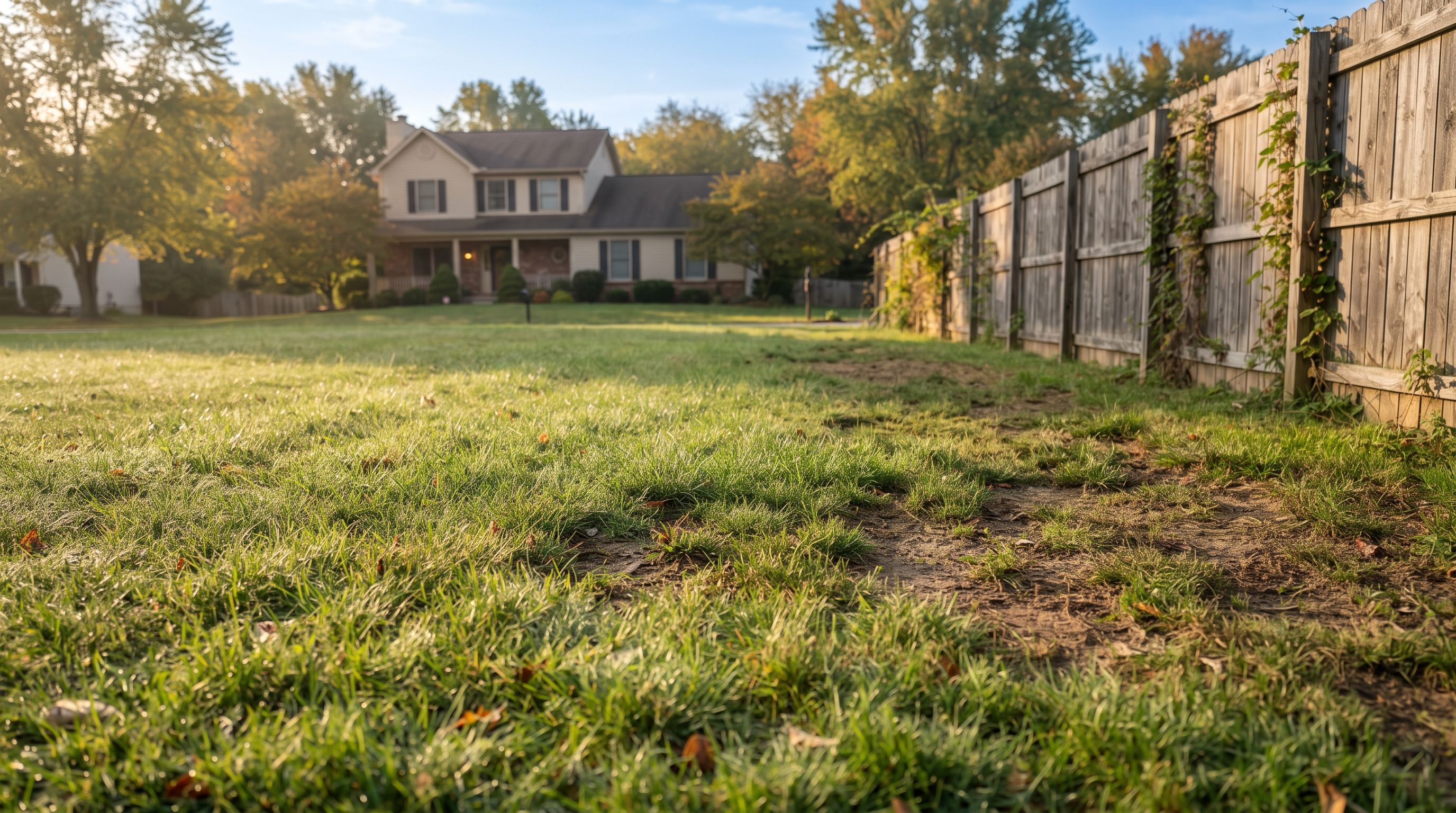
Some lawns take repeated pressure through winter and early spring. This is especially common near sidewalks, driveways, dog runs, play areas, mailboxes, or the routes people use every day when the ground is soft.
If those areas consistently stay thin, uneven, or slow to respond, spring aeration may make sense because the issue is not just seasonal weakness. The soil has physically tightened and needs relief.
This is one of the better reasons to aerate in spring because the pressure happened recently, the stress is visible, and the goal is correction.
Water is consistently sitting on the surface
If spring rain tends to pool instead of soak in, that can indicate a surface restriction that aeration may help relieve. This does not apply to every drainage problem. Some yards have grading issues that aeration will not fix. But when the issue is shallow surface sealing or upper soil compaction, spring aeration can improve infiltration and help the lawn function more normally.
This is particularly relevant when puddling is localized rather than spread across the entire property.
Growth is uneven and stalled in established turf
A lawn that greens up in patches while other areas remain weak can sometimes point to compaction or restricted rooting. If those weak zones are not explained by shade, pet damage, standing water, or obvious winter injury, aeration may be justified.
In that situation, the service is not being used because spring has arrived. It is being used because the lawn is showing a physical performance problem.
The lawn missed its fall correction window
Fall is often the better time for aeration, but not every lawn gets addressed on schedule. If a lawn clearly needed compaction relief the previous season and carried those same symptoms into spring, it may be better to correct the condition now rather than leave the soil restricted into summer.
That is especially true if the lawn is already showing weak density, runoff, or shallow performance in stressed areas.
Waiting for the better season is not always the right move when the current condition is already limiting the lawn.
Aeration is part of a broader recovery plan
Aeration works best when it supports a larger management strategy. In some cases, spring aeration makes sense because it is being used alongside fertilization, weed control timing, moisture management, and ongoing evaluation.
That kind of decision is very different from treating aeration like a one time seasonal box to check.
When the lawn is being looked at as a whole, spring aeration can be a smart corrective step rather than a generic recommendation.
When spring aeration usually does not make sense
Just because a lawn looks rough in spring does not mean it should be aerated.
There are several situations where spring aeration is often unnecessary or poorly timed.
The lawn is just slow to wake up
Some lawns green up faster than others. Soil temperature, sun exposure, moisture, and winter wear all affect spring appearance. A lawn that looks uneven in early spring may simply need time, nutrition, and stable growing conditions.
Aerating too early can create disruption where patience would have been the better response.
The real issue is weed pressure, not compaction
If the lawn is thin because weed pressure was not controlled properly, aeration is not the first answer. Opening the surface without controlling the weed environment can make the lawn harder to stabilize.
This is one reason broad seasonal planning matters more than isolated treatments.
The soil is still too wet
Working on saturated ground is rarely a good idea. When soil moisture is excessive, aeration can create messy disruption rather than clean improvement. Timing inside the spring season matters just as much as choosing spring in the first place.
The lawn is better suited for fall aeration and overseeding
If the primary goal is thickening the lawn, improving density, and introducing new seed, fall usually provides the stronger opportunity. That is especially true for cool season lawns in western New York.
In many cases, a lawn that looks thin in spring should be supported through the season and then corrected more aggressively in fall.
Spring aeration versus fall aeration
The simplest way to think about it is this:
- Spring aeration is usually corrective.
- Fall aeration is usually strategic.
Spring aeration tends to make the most sense when the lawn is showing an immediate physical issue that should not be ignored. Fall aeration tends to make the most sense when the goal is broader turf improvement, recovery, and strengthening heading into the next season.
That distinction matters.
If you are treating a compaction problem that is already limiting the lawn, spring may be the right choice.
If you are looking for the strongest overall timing for aeration and seed establishment, fall often has the advantage.
What homeowners often mistake for a need to aerate
A lot of spring aeration requests come from understandable observations that do not always point to compaction.
Common examples include:
- Lawn color is uneven after winter
- Snow mold scars are still visible
- The ground feels soft in some places and hard in others
- The grass looks flattened from snow cover
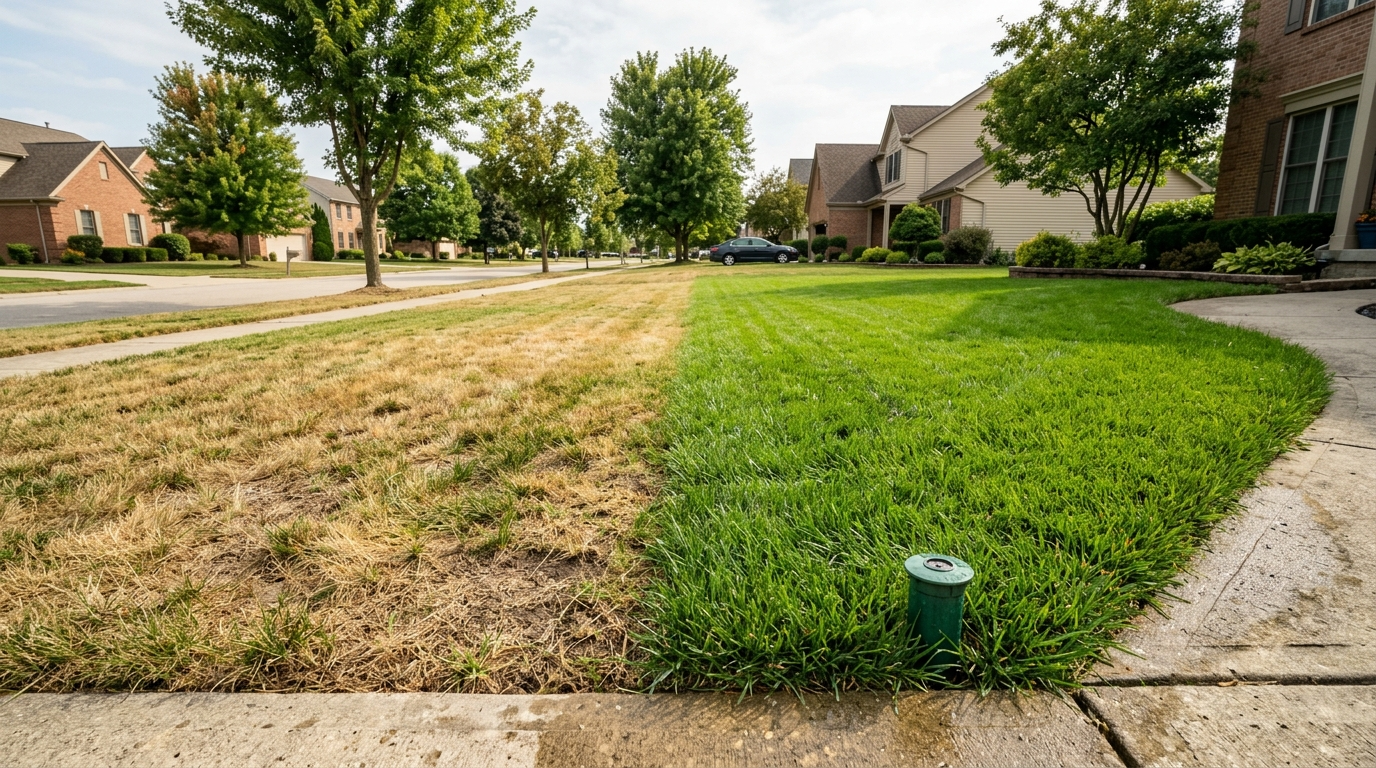
- Thin areas are appearing near the road edge
- The lawn looks weaker than a neighbor's lawn
- Watering did not produce fast improvement last year
These signs deserve attention, but they need interpretation before action.
A lawn can look poor for reasons that have little to do with soil compaction. That is why a useful recommendation starts with diagnosis, not a seasonal script.
How professionals decide whether spring aeration is warranted
A good aeration recommendation is based on lawn behavior, not habit.
That evaluation usually includes:
Surface condition
Is the lawn physically tight, sealed off, and resisting water movement, or is it simply slow to green up?
Traffic pattern
Are the weak areas tied to repeated use, winter pressure, pets, or concentrated foot traffic?
Moisture response
Does water move into the soil normally, or does it sit, run, or disappear unevenly?
Density pattern
Is the weakness random, or is it showing up in the same high stress zones every season?
Seasonal objective
Are you trying to relieve a current structural issue, or are you trying to set up the lawn for stronger long term thickening and recovery?
These questions help separate true need from routine assumption.
What spring aeration should be paired with
Aeration rarely delivers its best result when treated as a standalone event.
If spring aeration is appropriate, it should usually support a broader lawn care plan that may include:
- Seasonal fertilization to help the lawn recover and respond
- Weed control timed correctly for spring pressure
- Moisture management so the lawn is not pushed into stress
- Monitoring of thin or high traffic areas after treatment
- Fall follow up planning if more complete correction is needed later in the year
This is where homeowners often get frustrated. They assume aeration itself is the fix, when it is really one step in a broader process.
Lawns improve more predictably when they are managed, not when individual services are used in isolation.
The risk of treating spring aeration like a routine yearly service
Some properties do benefit from regular aeration intervals, but spring should not become an automatic annual habit without a reason.
Overusing the service or applying it at the wrong time can create unnecessary disruption, interfere with other priorities, and distract from the real cause of lawn instability.
A better approach is to ask:
What is the lawn showing right now?
If the answer points to compaction, restricted infiltration, and stressed traffic zones, spring aeration may be justified. If the answer points to weed pressure, seasonal inconsistency, or broader density issues, another path may be more effective.
Why timing matters more than the service itself
Spring aeration is not a universal lawn care move. It is a situational correction.
When the soil is tight, traffic has taken a toll, and the lawn is struggling to function normally, it can be the right call. When the lawn simply looks tired after winter, it is often better to diagnose carefully before disturbing the surface.
For cool season lawns, fall is often the better season for broader turf improvement. But that does not remove the value of spring aeration when compaction, runoff, or repeated stress are clearly limiting performance.
The important distinction is simple. Aeration should answer a specific condition. It should not be applied just because the calendar says spring.
The right recommendation depends on what the lawn is showing
Lawns do not improve because more services are applied to them.
They improve when the condition is identified correctly and the response matches the problem. Some spring lawns need compaction relief. Some need weed control, fertility, better seasonal management, or a fall recovery plan instead.
That is why spring aeration only makes sense in the right circumstances. Used deliberately, it can help restore function and improve performance. Used automatically, it can create disruption without solving the real issue.
Is spring aeration bad for a lawn?
Not necessarily. Spring aeration is not inherently bad, but it is often overused. It makes sense when the lawn is dealing with real compaction, poor water movement, or traffic stress. It makes less sense when the lawn is simply slow to recover from winter.
Is fall still the better time to aerate?
In many cases, yes. For cool season lawns, fall usually provides the better window for broader improvement, stronger recovery, and overseeding. Spring is more situational and should be used when the lawn is showing a condition that needs correction now.
Should you aerate every spring?
No. Aeration should not be automatic. A lawn should be evaluated based on soil condition, traffic, moisture response, and overall performance. Some lawns need it in spring, some are better served in fall, and some do not need it every year.
Does spring aeration help with puddling?
Sometimes. If puddling is caused by shallow compaction or a sealed surface, aeration may help improve infiltration. If the issue is grading or a deeper drainage problem, aeration alone will not solve it.
Can you seed after spring aeration?
You can, but that does not mean spring is always the best time for it. If the goal is stronger establishment and better long term density, fall is usually the better seeding window for cool season lawns.
LawnLogic FAQ
Explore More About Managing Your Lawn
Continue building your understanding of how structured lawn care supports long-term stability.