The Real Value of a Lawn Care Program in the Greater Rochester Area
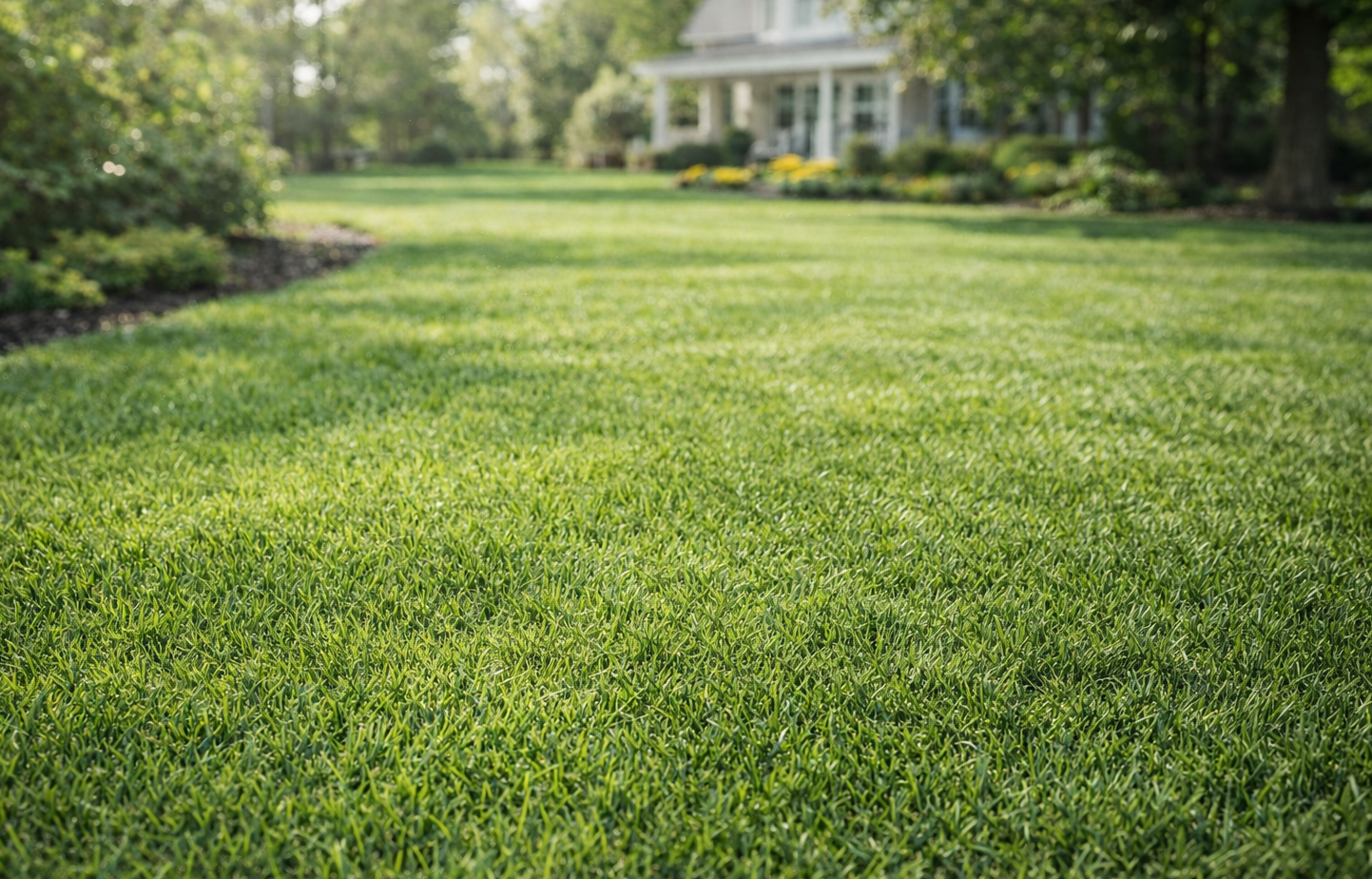
A lawn can look acceptable from the street and still feel off when you are actually out on it.
The color may be uneven. Certain areas may feel thinner than the rest of the yard. One section may keep falling behind no matter what time of year it is. Weeds may keep showing up around the edges, or in the same weak areas, even after they have been treated before. The lawn may never look completely neglected, but it also never feels fully settled.
That is where a lot of property owners in Western NY get stuck.
The lawn is not bad enough to ignore, but it is not stable enough to stop thinking about either. It keeps asking for attention. It keeps producing small problems. It keeps looking like something is just slightly off.
That is the real context behind the question of whether a lawn care program is worth it.
The value is not in paying for a few applications. The value is in moving the lawn out of a reactive cycle and into a managed seasonal structure that gives it a better chance to stay even, consistent, and easier to maintain.
Why Rochester area lawns often stay stuck in maintenance mode
Western NY lawns go through a lot in a single growing season.
Spring can start wet and inconsistent. Early weed pressure arrives fast. Soil conditions vary from one property to the next, and sometimes from one part of the yard to another. By summer, some lawns start to thin from stress while others hold moisture too long and become uneven in a different way. Areas with shade, tree competition, drainage issues, or weaker soil conditions rarely behave the same as open, healthier sections of turf.
That means lawns in this region usually do not improve from one good treatment alone.
They improve when the season is managed in the right sequence, with the right timing, and with enough consistency to support the lawn before the next problem starts taking shape. Without that structure, most properties end up in reaction mode. Fertilizer gets applied when the lawn already looks weak. Weed control gets considered once weeds are visible. Seeding gets discussed after turf has already opened up. Every decision comes later than it should.
A lawn care program is valuable because it changes that pattern.
Why comparing line items misses the real value
When people question the cost of a lawn care program, they usually compare it to a list of individual services.
They look at fertilizer, weed control, crabgrass prevention, aeration, or insect control as separate items and start doing the math that way. On paper, that seems reasonable. But lawns do not perform according to line items. They respond to management.
That distinction matters.
If a property receives a treatment at the wrong time, or receives the right treatment without enough follow through around it, the lawn may still struggle. If one issue is addressed while another is ignored, the result can still feel incomplete. If the lawn gets a temporary improvement but not enough seasonal support to hold it together, the same problems often come back.
So the real comparison is not program versus product.
It is structured turf management versus pieced together lawn treatment.
What a lawn care program actually provides over the course of a season
A professionally managed lawn care program creates continuity across the season.
Instead of making decisions one problem at a time, the lawn is managed through planned rounds, coordinated timing, and ongoing evaluation. That gives the property a better chance to stay ahead of weed pressure, nutrient decline, thinning, and seasonal stress before those issues become more visible.
That structure matters because most lawn problems build gradually.
Crabgrass pressure usually starts before most people are looking for it. Broadleaf weeds become easier to notice after they have already established. Thinning often begins before the lawn looks obviously weak from a distance. Insect pressure can reduce turf performance before the damage becomes clear. When a property is only being treated after symptoms become obvious, the lawn is already behind.
A program helps reduce that lag.
It also creates consistency, which is one of the most overlooked parts of lawn performance. Lawns rarely stabilize from occasional effort. They respond better when feeding, weed control, seasonal prevention, and corrective support are applied within a larger structure instead of as isolated decisions.
The difference between short term improvement and seasonal stability
This is where a lot of the confusion comes from.
A single treatment can make a lawn greener for a while. That does not necessarily mean the property is improving in a lasting way. Color can change faster than stability.
A more stable lawn is usually identified by things that matter more over time. The yard looks more even across the property. Thin areas stop reopening as quickly. Weed pressure becomes more controlled. The lawn feels denser and more settled during the season instead of fluctuating constantly. The property requires fewer reactive fixes because there is a stronger baseline holding it together.
That is the kind of improvement a lawn care program is designed to support.
The goal is not to create a brief visual spike and call it success. The goal is to improve the lawn’s ability to stay together through the season with fewer setbacks and less inconsistency.
When a lawn care program usually makes financial sense
A lawn care program is usually worth it when the property has moved beyond simple cosmetic concerns and started showing recurring patterns.
That may look like repeated weed breakthrough every year. It may look like grass that never seems to fill in evenly. It may be a lawn that greens up and fades unpredictably. It may be a yard with sections that always seem behind the rest of the property. It may be the frustration of feeling like the lawn is always close to looking right, but never fully gets there.
In those situations, the issue is often not a lack of effort. It is a lack of structure.
A program also tends to make sense when the owner does not want to spend the season making lawn decisions one by one. That includes deciding what product to use, when to apply it, what to do when weather changes the timing, how to respond when results are uneven, or how to tell whether the problem is nutritional, environmental, or weed related.
That kind of decision fatigue is real. A structured program reduces it.
When a lawn care program may not feel necessary
Not every property owner places the same value on lawn performance, and that is fine.
If someone is comfortable with a lawn that looks acceptable but not especially consistent, and they do not mind occasional weeds, seasonal fluctuation, or handling problems as they appear, a professional program may not feel necessary. The same is true for someone who genuinely wants to manage timing, product selection, and seasonal decisions on their own.
But even then, the question is still not just about cost.
It is about what level of lawn quality, consistency, and involvement the property owner wants to deal with over time. For many people, the value of a program becomes clearer once they realize they are not just paying for applications. They are paying for a more deliberate system that reduces the need to keep chasing problems across the season.
Why the structure of the program matters more than the word program
Not all lawn care programs provide the same value.
A program only makes sense if it is built around the actual needs of the lawn and delivered with enough structure to support the property throughout the season. If it is nothing more than a loose collection of visits, the value is limited. If there is no clear progression, no seasonal logic, and no effort to keep the lawn on track as conditions change, the word program does not mean much.
That is why homeowners should pay attention to how a provider thinks about lawn management.
Are they simply selling treatments, or are they managing the lawn through a seasonal framework? Do they treat the property like a sequence of isolated tasks, or like a system that needs to stay balanced over time? Do their services build on each other, or are they just listed next to each other?
Those questions usually tell you more than the price alone.
What real value looks like on an actual property
On a real lawn, value usually shows up in practical ways.
It shows up when the yard stops looking uneven from one section to the next. It shows up when weed pressure becomes less constant. It shows up when the lawn does not need as many last minute corrections. It shows up when thin areas become less recurring instead of remaining part of the property every year. It shows up when the lawn starts feeling more predictable and less fragile.
That kind of progress is easy to underestimate because it is not always dramatic in a single moment. It becomes clear over time.
The property asks for less reaction. The lawn holds together better. The season feels more controlled.
That is where the value is.
Why lawn care programs matter more in Western NY conditions
In Western NY, lawn performance often comes down to how well the property is managed through transition points.
Early spring preparation matters. Weed prevention timing matters. Nutrient planning matters. Soil support matters. Insect pressure matters. Corrective services matter when the lawn starts showing signs that basic treatment alone is not enough.
Because the region puts lawns through wet periods, pressure swings, and seasonal stress, the lawn usually benefits from a structured approach more than a one time fix. Properties that look easy from the outside often have underlying inconsistencies that only become obvious over the course of the season.
That is why a lawn care program can be especially valuable here. It brings order to conditions that are otherwise easy to manage too late.
Why a lawn care program is worth it for the right property
A lawn care program is worth it in Western NY when the goal is not just to make the lawn look better for a few weeks, but to keep it more stable across the full season.
That is the real value.
It is not just greener color. It is not just fewer weeds on one visit. It is not just the convenience of hiring someone else.
It is the benefit of having the lawn managed through a structure that supports timing, prevention, consistency, and follow through.
For properties that keep drifting into the same problems, that kind of structure is often what changes the lawn from something that is constantly being fixed into something that is actually being managed.
LawnLogic FAQ
Is a lawn care program better than booking individual services?
Usually, yes, if the goal is long term stability. Individual services can help in the moment, but a structured program does a better job of connecting timing, prevention, and follow through across the season.
How long does it take to see value from a lawn care program?
Some improvement can show up within the first season, especially with color and weed control. The deeper value usually becomes clearer over time as the lawn starts holding together more consistently and requiring fewer reactive fixes.
Are lawn care programs worth it for lawns that only have minor issues?
They can be, especially if those minor issues keep repeating. Small weed problems, light thinning, and uneven growth patterns often become more manageable when the lawn is supported through a full seasonal structure.
Does a lawn care program replace the need for corrective services?
Not always. Some lawns also need targeted support such as aeration, overseeding, nutsedge control, or renovation work. A good program creates the foundation, but some properties still need corrective work to fully stabilize problem areas.
Move the lawn out of a reactive cycle
If your lawn keeps slipping into the same problems every season, the issue is usually bigger than one treatment. A structured lawn care program helps bring consistency, timing, and control to the property so the lawn has a better chance to stay even, healthier, and easier to maintain over time.
Explore More About Managing Your Lawn
Continue building your understanding of how structured lawn care supports long-term stability.