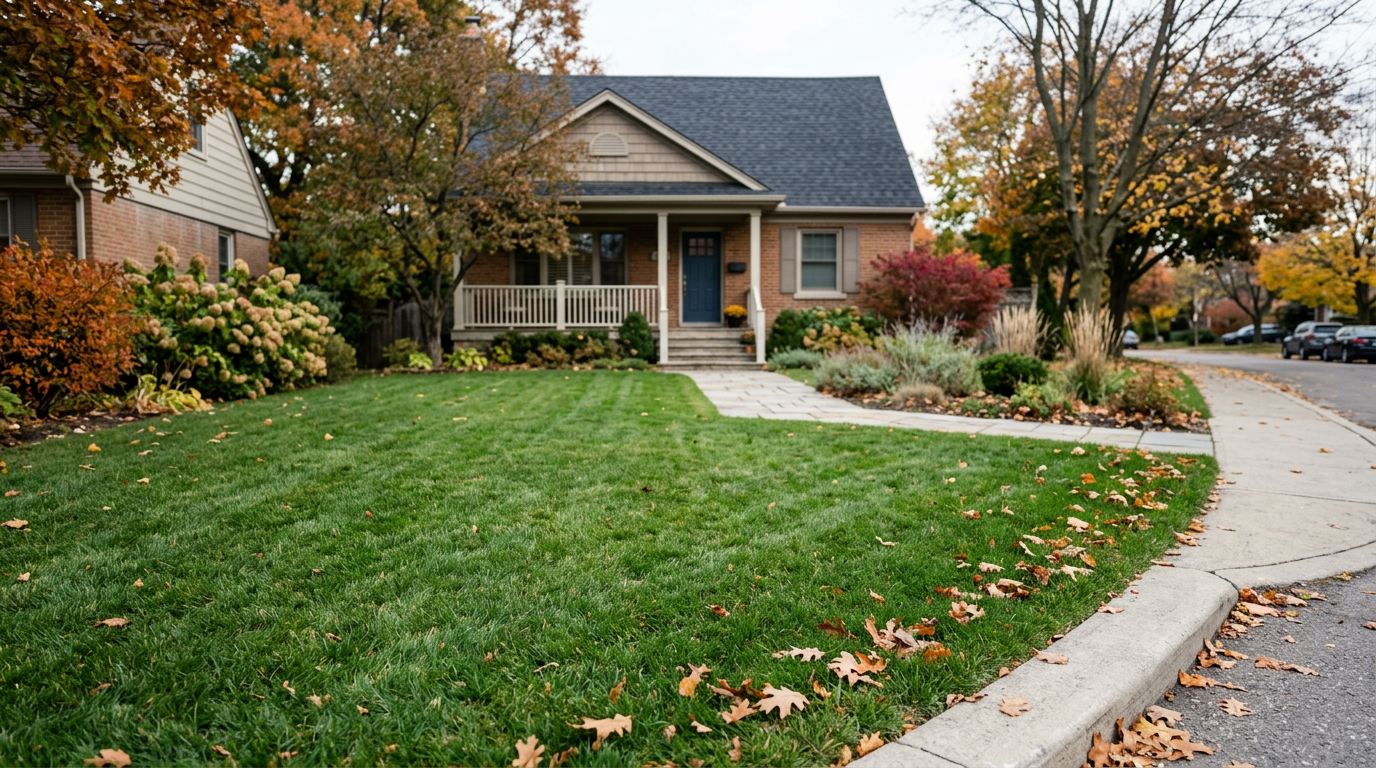
Learn to Spot Repeated Lawn Wear Before It Turns Into a Bigger Problem
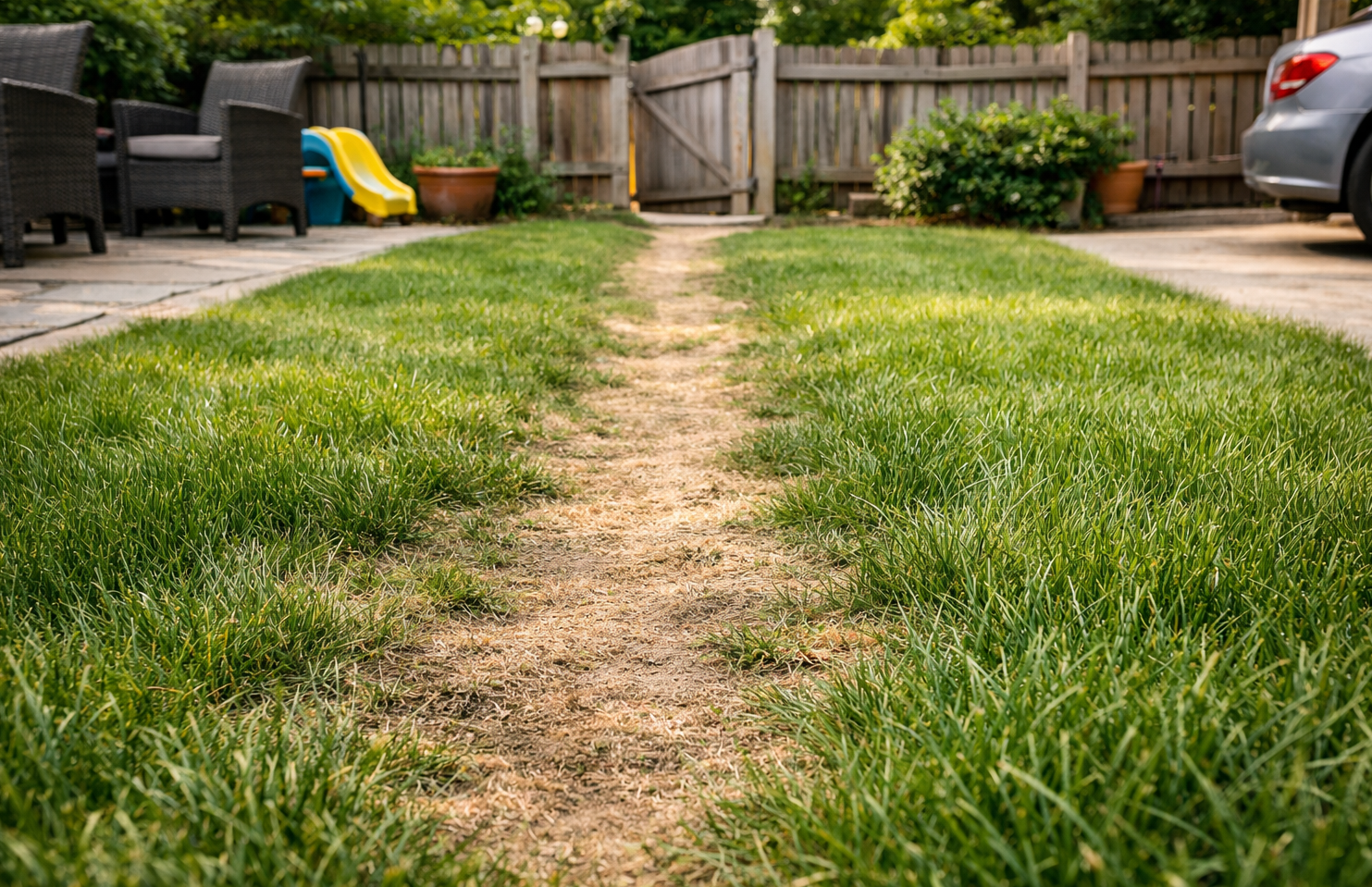
A lawn usually does not go from healthy to thin all at once.
In many cases, the first sign of trouble is not missing grass. It is repeated wear. The same strip starts looking flatter than the rest of the yard. One route across the lawn seems a little less full. A section near the driveway, patio, gate, or play area starts looking dull, pressed down, or slower to bounce back. The grass is still there, but it no longer looks like it is carrying stress the same way the rest of the lawn does.
That stage matters more than most homeowners realize.
Repeated wear patterns often show up before the turf actually thins out. They are an early sign that one part of the property is taking more pressure than the lawn can comfortably absorb over time. If that pressure keeps repeating, the area usually does not stay at the wear stage for long. It starts opening up, losing density, and becoming a more obvious problem.
That is why early wear is worth paying attention to.
Repeated lawn wear usually starts as a pattern, not a bare spot
Most turf wear does not begin with obvious damage.
It usually begins with a pattern. A path starts forming where people naturally cut across the yard. The lawn near a gate gets a little more compressed than the rest. The strip along the driveway gets more foot traffic getting in and out of vehicles. A backyard route between the patio and another part of the property starts looking slightly more worn than the surrounding turf.
At first, these areas may not look severe.
The grass might just seem flatter, slightly thinner in texture, or slower to stand back up after use. The color may be a little less even. The section may look more tired than the rest of the lawn, especially after rain, heat, or regular activity.
That is how repeated wear usually begins.
The lawn starts showing where pressure is collecting before it reaches the point of visible turf loss.
Flattened grass is often one of the first visible signs
One of the earliest signs of repeated lawn wear is flattening.
A section of turf that takes repeated foot traffic or regular movement often starts looking pressed down compared to the surrounding lawn. It may not look bare, but it also does not look upright, even, or fully settled. That difference can be easy to miss unless you are looking at the property as a whole.
Flattening matters because it often shows where the lawn is losing resilience.
Healthy turf can handle normal activity. But when the same area keeps getting used the same way, the grass starts showing stress before it disappears. It may stay matted down more often. It may take longer to recover after use. It may start looking slightly rougher or less uniform than the rest of the yard.
That is the lawn showing you where repeated pressure is starting to win.
Worn looking routes often develop before thinning begins
A lot of wear issues follow movement.
You can often see it in the routes people naturally take across the property. The lawn begins to reveal a preferred path even before the grass fully breaks down. That route may be subtle at first, but it usually becomes easier to see over time.
The turf may look slightly off color there. It may have a smoother, more pressed appearance. It may stop growing as evenly as the surrounding grass. After a while, the route becomes recognizable even when the lawn is freshly cut.
That is a sign that the area is under more repeated use than the rest of the property.
Once that pattern becomes established, thinning is often the next stage unless something changes.
The first issue is usually pressure, not grass quality
When a section of lawn starts looking worn, homeowners often assume that part of the yard just has weaker grass.
Sometimes the turf is more vulnerable there, but the first issue is often pressure. The lawn is being used more heavily in one specific way, often without anyone thinking much about it. The problem is not always a bad lawn. It is often a predictable traffic pattern being repeated often enough to wear the turf down.
That distinction matters.
If the real issue is repeated use, adding seed or fertilizer alone may only create a temporary improvement. The grass may look better for a while, but if the same pressure keeps landing in the same place, the pattern usually returns.
The lawn needs to be understood in terms of how the property is actually being used.
Entry and exit points are common early wear zones
Some parts of a property almost always show wear sooner than others.
Areas near gates, sidewalks, driveways, patios, steps, and play areas tend to take concentrated movement. Even if the rest of the yard gets regular use, these sections often absorb repeated starting and stopping, turning, cutting across, or direct foot placement.
That makes them common wear zones.
The turf there may begin to look pressed down, frayed, or less full before any other part of the lawn shows a problem. These are the places where homeowners should look first if they want to catch repeated wear early.
The lawn often tells the story at the edges of activity before it tells it in the middle of open space.
Repeated wear becomes more visible when the lawn is under stress
A lawn can sometimes absorb wear quietly when growing conditions are favorable.
But when the turf is already dealing with heat, dryness, excess moisture, shade, or compaction, repeated wear becomes easier to see. The grass has less margin for recovery, so the same amount of use starts leaving a more obvious mark.
That is why some patterns seem to appear suddenly.
In reality, the route or pressure point may have been there for a while, but the lawn only started revealing it once conditions got harder. A path that was manageable in strong growing weather may become much more noticeable during summer stress or after periods of heavy activity.
Wear is often a layered issue.
Traffic creates the pressure, but site conditions determine how quickly the turf starts failing under it.
Soil compaction often develops alongside repeated wear
Repeated lawn wear is not just about what happens to the blades of grass.
It also affects the soil underneath. When the same area gets stepped on over and over, the ground can become tighter and less forgiving. That makes it harder for the turf to recover, especially when the lawn is already trying to manage moisture swings, seasonal stress, or weaker growth conditions.
This is where a wear pattern can start becoming a structural problem.
The grass above ground may still be present, but the soil is becoming less supportive below it. Once that happens, the area usually starts struggling more consistently. Recovery slows down. Growth becomes less even. The turf becomes easier to wear down again.
That is one reason repeated wear should not be dismissed as a surface issue only.
Discoloration can show up before real thinning starts
Not all early wear looks like missing grass.
Sometimes the first sign is a strip or patch that looks a little off compared to the rest of the lawn. It may be slightly duller, a little less even in color, or slower to respond after mowing or rainfall. The grass is still there, but it does not have the same liveliness as the surrounding turf.
That kind of visual change often points to reduced performance before density loss becomes obvious.
The area may be carrying enough stress that it no longer behaves like the healthier parts of the lawn. It is not fully broken down yet, but it is no longer keeping up either.
That is often the stage where homeowners can still intervene before the section becomes a more obvious turf repair issue.
Repeated wear often leads to thinning in the same exact places
One of the clearest signs that wear is the real problem is repetition.
The same section starts looking rough every season. The same route across the lawn begins thinning first. The same area near a gate or patio keeps opening up. That consistency usually means the turf is not failing randomly. It is responding to repeated use in a repeated location.
That is important because it changes how the problem should be viewed.
This is not just an isolated weak patch. It is a pressure pattern. Until that pattern is recognized, the lawn often stays stuck in a cycle where the area gets improved, then worn back down again.
The location itself becomes the clue.
Seeding worn areas does not always solve the reason they keep failing
Seeding can absolutely help a worn section recover.
But if the same pressure keeps hitting the same spot, new grass may still struggle to hold up. That is why some worn paths or pressure zones respond briefly after repair, then start thinning again once regular use resumes.
The issue was not only that grass was missing.
The issue was that the area had become a repeated wear zone. Unless that is part of the evaluation, the repair can end up being temporary. The lawn may look improved for a short time, but it is still carrying the same underlying traffic pattern.
That is why worn areas often need more than just a patch.
They need a better understanding of how the lawn is being stressed.
Mowing can reveal wear patterns that are easy to miss otherwise
Fresh mowing often makes repeated wear easier to see.
A route that looked subtle beforehand may stand out once the lawn is cut evenly. Flattened strips, uneven growth, or sections that do not respond like the surrounding turf become more visible when the whole property is cleaned up.
This is a good time to observe the lawn closely.
Look for areas that still seem pressed down after mowing. Notice whether certain strips appear less dense or less upright than the rest. Pay attention to spots that seem to lag visually even when the lawn has just been serviced.
Those are often early indicators of repeated use starting to outpace recovery.
Shaded and narrow areas usually break down faster from wear
Not every part of the lawn handles pressure equally.
Shaded areas often have less recovery power to begin with. Narrow side yards, border strips, and sections near structures may already be operating with reduced airflow, weaker light, or tighter growing space. Add repeated traffic, and those areas usually start showing wear sooner than open sections.
That is why some routes become visible faster than others.
The same amount of movement that an open sunny lawn can tolerate may leave a clear mark in a tighter or more restricted part of the property. The issue is not just traffic volume. It is how much resilience that particular section of turf has available.
Wear becomes a bigger issue where the lawn already has less margin.
Early wear is easier to correct than advanced thinning
This is the practical reason to catch these patterns early.
Once turf has thinned heavily or opened up completely, the lawn usually needs more involved corrective work to recover. But when the issue is still in the wear stage, there is often a better chance to improve outcomes before the area becomes a larger repair problem.
That makes observation valuable.
A flattened route, a worn edge, or a recurring pressure strip may not look urgent, but it is often the stage right before more visible decline. If that section keeps taking the same use without enough resilience to support it, the turf usually keeps moving in the wrong direction.
The earlier that pattern is recognized, the more manageable it tends to be.
What repeated lawn wear is usually telling you
Repeated lawn wear usually means one part of the property is taking more pressure than it can comfortably recover from.
That pressure may come from foot traffic, entry and exit patterns, play activity, movement around the house, or repeated use around hardscape areas. The first signs are often subtle. Flattened grass. Dull color. A visible route. A section that looks a little more tired than it should.
Those signs matter because they often show up before the turf actually thins out.
The lawn is giving you an early warning. It is showing where resilience is starting to give way to repeated stress. Once that pattern becomes established, the area usually does not improve on its own.
It becomes a bigger problem by continuing to do exactly what it was already doing.
Why this matters so much on properties around Rochester
In the greater Rochester area, lawns often move through spring moisture, summer stress, and changing seasonal conditions that can make wear patterns stand out faster.
A route that seems minor in a strong stretch of growth can become much more obvious when the lawn is under pressure. Add shade, tighter soil, or recurring movement around the property, and worn areas can shift into visible thinning fairly quickly.
That is why repeated wear deserves attention here.
The lawn is often managing enough seasonal pressure already. Repeated use in the same location can be the extra factor that pushes one section from stable to vulnerable.
What to watch for before wear turns into turf loss
If you want to catch repeated wear early, look for signs that one part of the lawn is behaving differently from the rest.
Watch for flattened strips that stay pressed down. Look for routes that seem visible even when the lawn is freshly cut. Notice areas near gates, patios, sidewalks, and driveways that always appear a little rougher. Pay attention to spots that seem duller, slower to recover, or more compressed after normal activity.
Those are often the early signs.
They may not look severe yet, but they usually point to a section of turf that is already under more strain than the surrounding lawn.
LawnLogic FAQ
What is the first sign of repeated lawn wear?
It is often flattened grass, a visible path, or a section that looks more pressed down and less even than the rest of the lawn.
Does repeated foot traffic always cause thinning?
Not immediately. It usually causes wear first. Over time, if the same pressure continues and the turf cannot recover well enough, thinning often follows.
Can worn lawn areas recover on their own?
Sometimes lightly worn areas can improve when conditions are favorable and pressure decreases. But repeated wear zones often continue declining if the same use pattern stays in place.
Is seeding enough to fix repeated wear?
Not always. Seeding can help restore density, but if the same traffic pattern keeps stressing the same area, the problem often comes back.
Get ahead of the areas that keep taking pressure
If certain parts of your lawn always look worn before they look thin, that pattern is worth paying attention to. LawnLogic evaluates how different sections of a property are functioning so recurring wear zones can be identified earlier, managed more deliberately, and kept from turning into larger turf problems.
Explore More About Managing Your Lawn
Continue building your understanding of how structured lawn care supports long-term stability.