A Lawn That Feels Inconsistent Is
Usually a Sign Something Is Off
Most homeowners notice lawn problems with their eyes first.
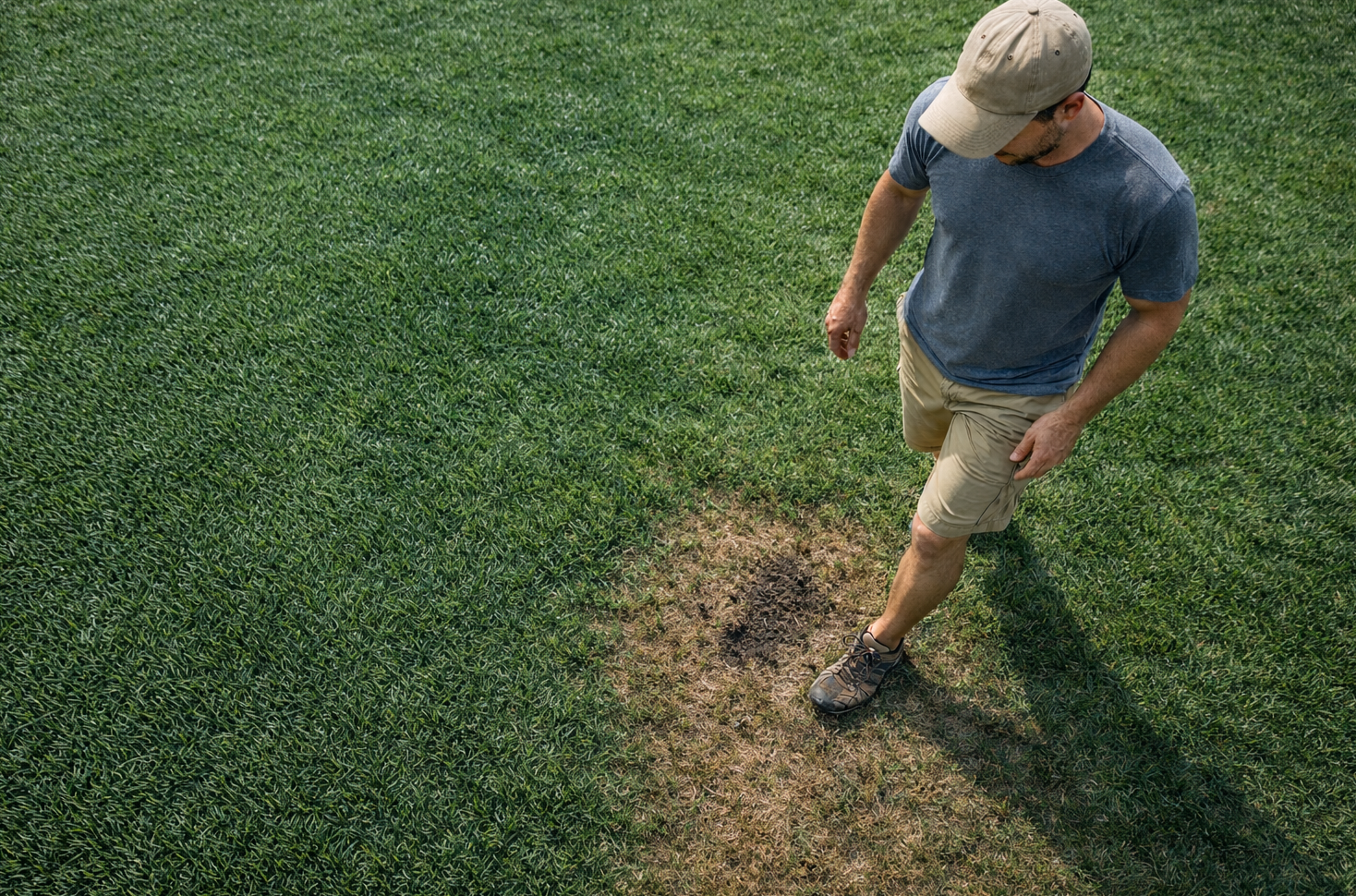
Thin spots stand out. Weeds are obvious. Color changes get attention quickly. But sometimes the lawn starts signaling trouble in a different way. It feels uneven as you move through it. One area feels firm and tight. Another feels softer, weaker, or less settled. The surface does not feel consistent from one section of the yard to the next.
That kind of inconsistency usually points to a deeper issue.
A lawn that feels uneven is often dealing with an underlying imbalance in how the soil, root zone, moisture pattern, or turf density is functioning across the property. The surface may still look decent in places, but the changing feel of the lawn often shows that conditions underneath are not as stable as they should be.
Surface inconsistency usually starts below the grass line
When a lawn feels different from one area to another, the problem is rarely random.
The grass at the surface is responding to conditions below it. If those conditions are not consistent, the lawn often reflects that through firmness, density, and overall feel. One section may stay tighter and harder. Another may feel spongier, looser, or more fragile. That difference usually means the lawn is not functioning evenly across the property.
This is one reason inconsistent firmness matters.
It can reveal instability before more obvious visual decline sets in. The lawn may still have color. It may still look fairly complete from a distance. But the uneven surface feel suggests that certain sections are not holding the same structural stability as others.
Hard and soft areas often point to different types of stress
A lawn that feels inconsistent does not always have one single cause.
Sometimes harder sections reflect tighter soil conditions, heavier use, or a lawn that has become too firm and restricted in certain areas. Softer sections may point to weaker density, excess moisture, thinning turf, or a less stable surface that is not holding together as well as it should.
What matters is not just whether the lawn feels hard or soft.
What matters is that it does not feel consistent.
When the surface changes noticeably across a property, it usually means the lawn is developing uneven support conditions. That can make the yard feel less settled, perform less evenly, and become more vulnerable to recurring issues over time.
A lawn can look decent and still feel structurally off
One reason this issue gets missed is that it does not always show up visually right away.
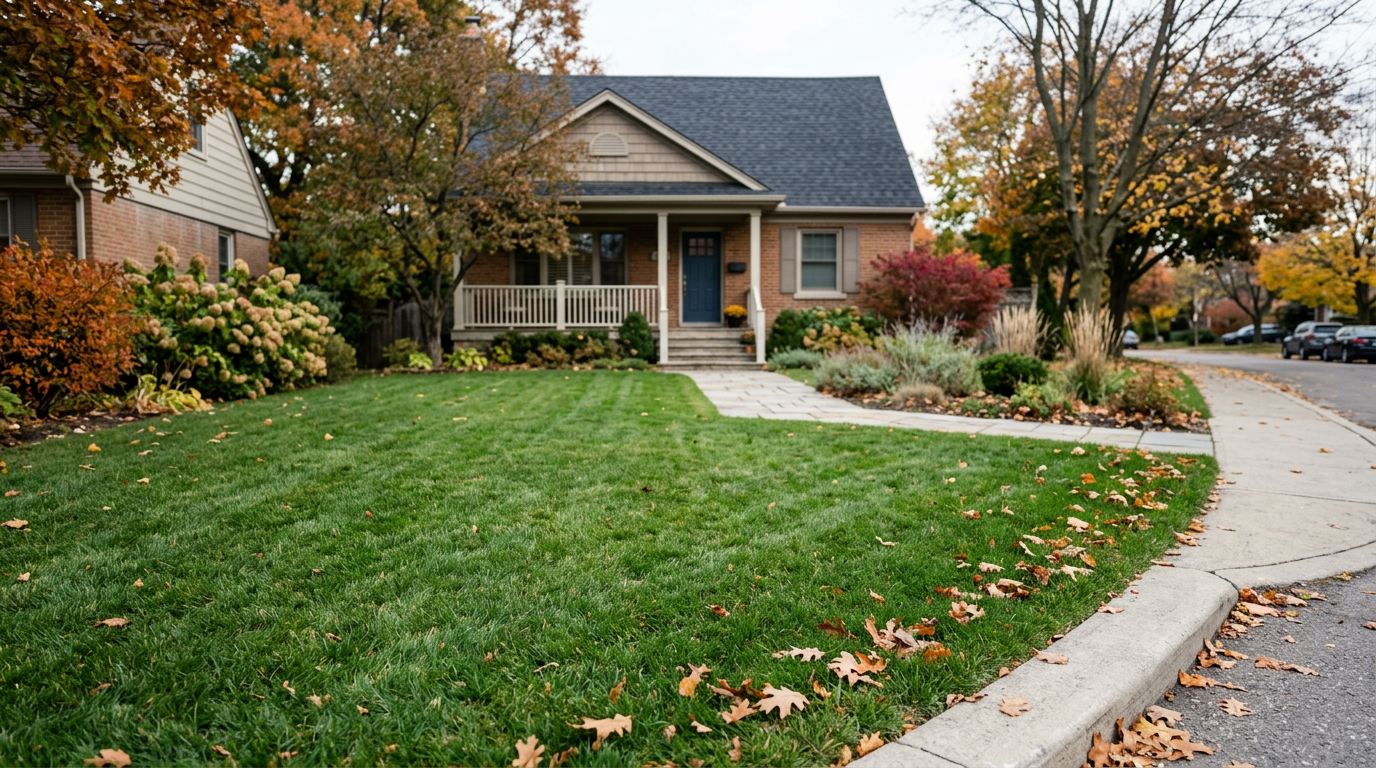
The lawn may still look fairly normal from the street. It may even look healthy in photos. But surface feel can reveal problems before they become obvious to the eye. A section that feels firmer than the rest, or one that feels looser and less stable, may be showing early signs that the property is not functioning as evenly as it should.
That is important because visual appearance alone does not tell the whole story.
A lawn that looks fine but feels inconsistent may already be drifting toward bigger issues. The imbalance may become more visible later through thinning, patchiness, uneven recovery, or recurring weak zones. The changing feel of the lawn is often the earlier clue.
Inconsistent firmness usually means the lawn is not performing evenly
A stable lawn tends to feel relatively consistent across the property.
That does not mean every square foot feels identical, but the surface generally holds together in a predictable way. When certain areas feel noticeably different, it often means those sections are responding to different underlying conditions.
That unevenness affects more than comfort.
It affects how the lawn holds moisture, how it responds to traffic, how well it recovers from stress, and how stable it stays through the season. The more uneven those underlying conditions become, the harder it is to keep the whole property performing the same way.
This is how lawns develop sections that always seem to lag behind. One area may stay firm and dense. Another may keep feeling weak, uneven, or less reliable. Over time, those differences usually become more visible.
Moisture patterns often play a role
One of the most common reasons a lawn feels inconsistent is that different parts of the property are holding moisture differently.
Some sections dry out faster. Some stay wetter longer. Some areas settle into a tighter, firmer condition, while others remain softer and less stable. When those patterns repeat, the surface feel of the lawn starts to change along with them.
This does not always mean the yard is dramatically wet or dry overall.
It means the lawn is not receiving or holding moisture in a balanced way across the property. That imbalance can affect turf density, surface strength, and how settled the lawn feels under normal use.
When a lawn has uneven moisture behavior, uneven firmness is often one of the first signs.
Density changes can make the lawn feel uneven too
Not all firmness differences come from the soil alone.
Sometimes the lawn feels inconsistent because turf density is inconsistent. A fuller, stronger section will usually feel more stable than an area where the grass has thinned, weakened, or lost uniform coverage. Even if the difference is subtle visually, it can be easier to notice by feel.
This matters because density is part of structural stability.
A lawn with stronger, more even coverage usually feels more settled. A lawn with weaker coverage often feels less supported, especially in sections that are already under pressure from traffic, moisture imbalance, or previous decline. That is how the surface starts feeling less uniform before the whole issue becomes obvious.
Traffic and repeated use can create uneven structure
Another common cause of inconsistent lawn feel is repeated use.
Some parts of a property naturally handle more foot traffic, more turning, more activity, or more routine wear. Over time, those patterns can change how the lawn feels from one section to another. One area may become tighter and more compressed. Another may become thinner and less stable as turf wears down.
These changes do not happen all at once.
They build gradually, which is why homeowners often notice the feel of the lawn changing before they can clearly point to a visible problem. The lawn starts to feel less even. Certain sections stop feeling as solid or settled as they once did. That is often a sign that the property is developing uneven structural pressure.
The real issue is the imbalance, not just the feel
If a lawn feels inconsistent, the important takeaway is not just that it feels different.
The important takeaway is that something underneath is not working evenly.
That could involve moisture movement, soil firmness, turf density, traffic wear, or a combination of several conditions at once. The changing surface feel is simply the way the lawn is signaling that those conditions are no longer balanced across the property.
This is why the issue should not be dismissed as cosmetic.
A lawn that feels uneven is often a lawn that is becoming harder to manage consistently. It may still look acceptable for now, but the imbalance usually becomes more visible if nothing is done to address the underlying cause.
Better lawn management starts with reading the signals correctly
A lot of homeowners try to solve lawn problems only after they become fully visible.
By then, the property may already be dealing with repeated thinning, recovery problems, or sections that never seem to perform like the rest of the yard. Surface inconsistency offers a chance to recognize that kind of imbalance earlier.
That only helps if the signal is read correctly.
If the lawn feels noticeably different from one area to another, that is usually not something to ignore. It is often one of the clearest signs that the property needs a closer look. The lawn may not be failing yet, but it is not functioning evenly either.
That distinction matters because a lawn that is out of balance tends to become more difficult to stabilize over time.
A more stable lawn usually feels more consistent
One of the clearest characteristics of a well-managed lawn is consistency.
The property feels more even across the yard. It responds more predictably. It holds together better under normal use. It is less likely to develop sections that feel weak, tight, spongy, or unstable compared to surrounding areas.
That kind of consistency usually comes from more than one treatment.
It comes from structured lawn management that supports density, moisture balance, seasonal stability, and corrective attention where the property is starting to drift out of line. In other words, the lawn becomes easier to manage because the deeper conditions underneath it are being managed better too.
LawnLogic FAQ
Is it normal for parts of a lawn to feel harder or softer than others?
Some minor variation can happen, but noticeable differences across the lawn usually suggest that the property is dealing with uneven soil conditions, moisture patterns, turf density, or repeated wear.
Can a lawn feel inconsistent even if it still looks healthy?
Yes. Surface feel often reveals imbalance before the lawn shows clear visual decline.
Does uneven lawn firmness mean there is a soil problem?
It can. Soil conditions are often part of the issue, but turf density, moisture behavior, and traffic patterns can also contribute.
Why does one part of my lawn feel soft while another feels firm?
That usually means those areas are functioning under different conditions. One section may be holding moisture differently, carrying weaker turf density, or experiencing a different level of surface pressure.
Should uneven lawn feel be taken seriously?
Yes. It often points to an underlying imbalance that can lead to more visible lawn issues over time.
Get the lawn back to a more even condition
A lawn that feels inconsistent is usually telling you something before the bigger problems fully show up. The sooner that imbalance is recognized, the easier it is to move the property back toward a more stable condition.
LawnLogic builds lawn care programs around structured turf management, targeted correction, and seasonally coordinated support so lawns stay more even, more stable, and easier to manage across the full property.
Explore More About Managing Your Lawn
Continue building your understanding of how structured lawn care supports long-term stability.