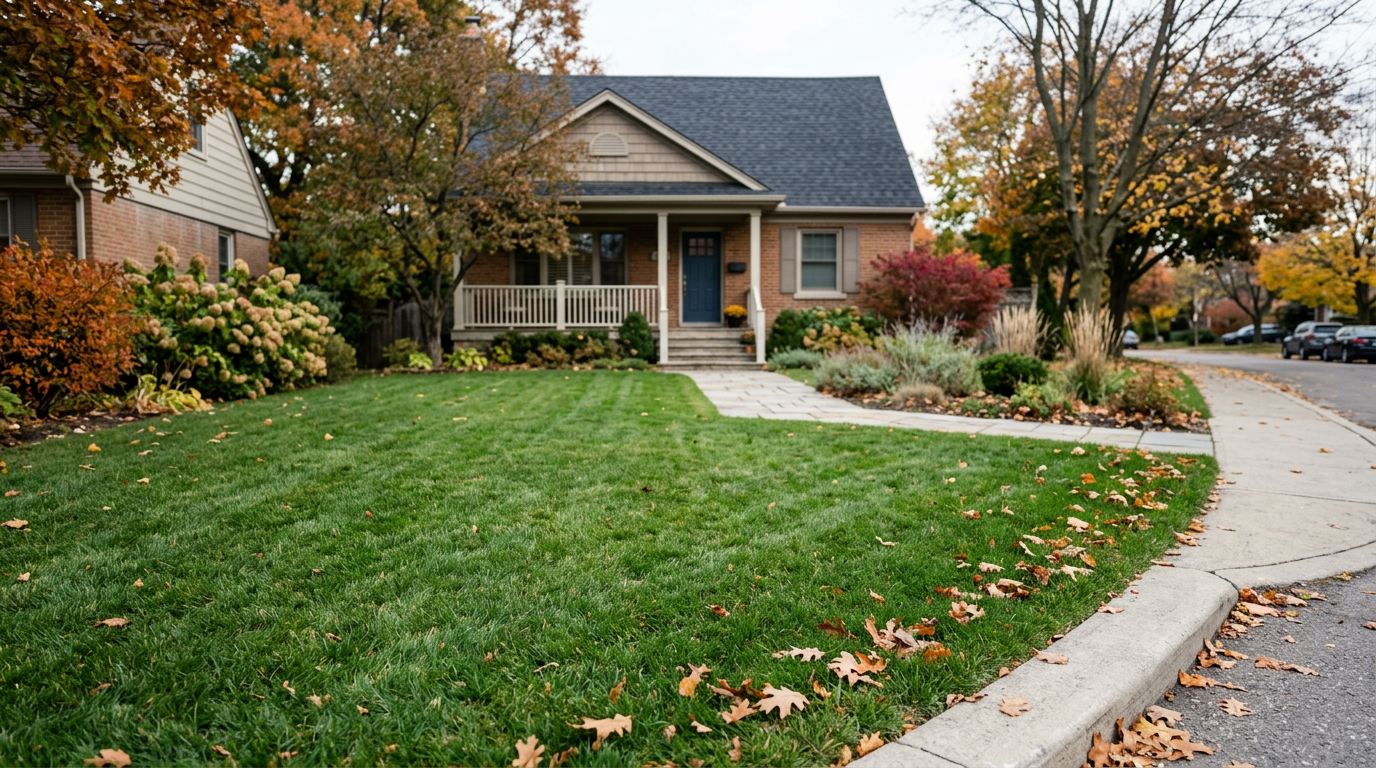
Why Crabgrass Shows Up in Some Lawns and Not Others
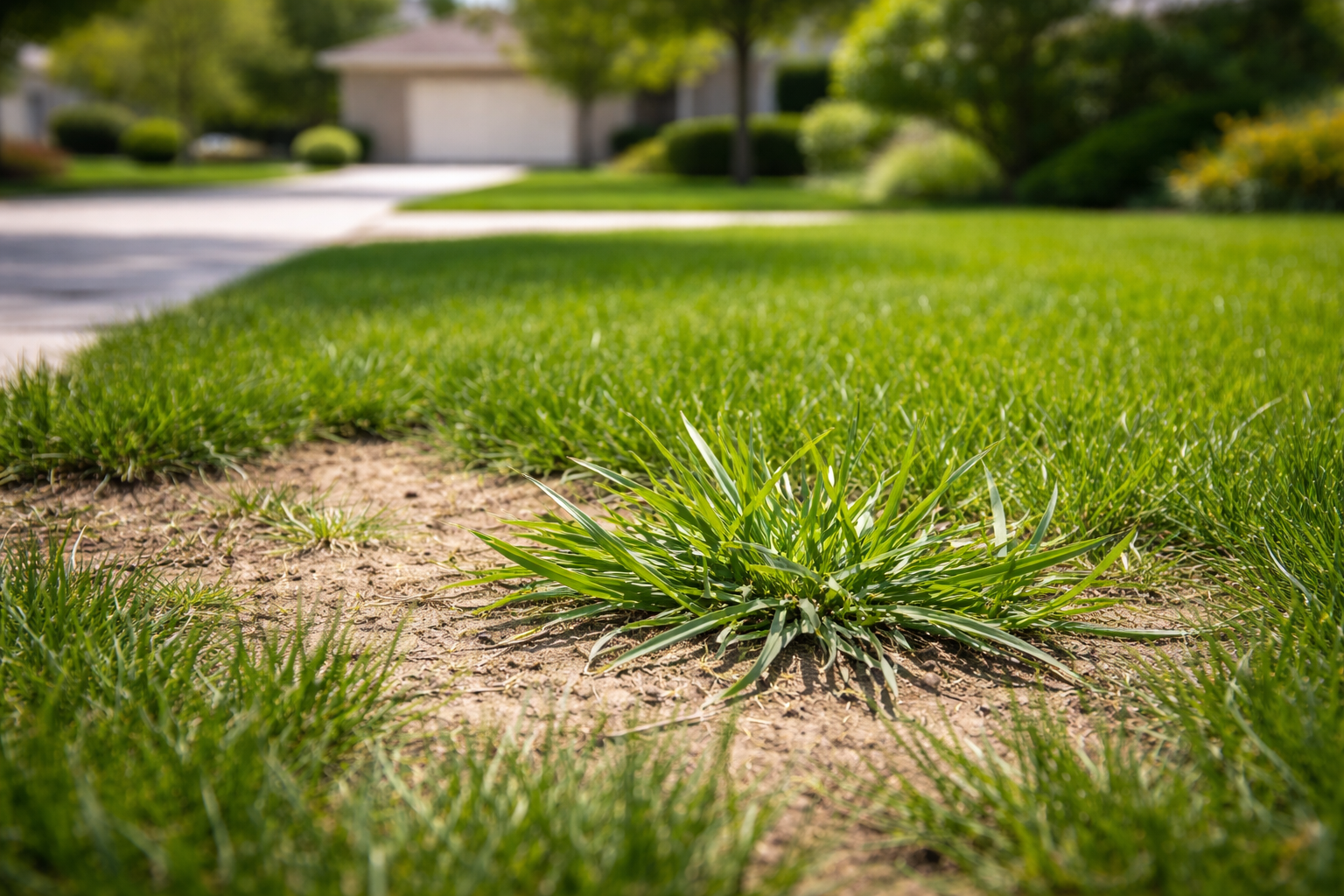
Most homeowners think crabgrass is just a weed problem. It is not.
Crabgrass is usually a condition problem first. It shows up where the lawn is open, stressed, thin, or exposed. It takes advantage of heat, light, weak density, and soil conditions that make it easier for unwanted growth to move in. That is why some lawns deal with crabgrass every year while others on the same street have far less of it.
The important point is this: crabgrass does not usually become a recurring issue by accident. It follows patterns. When those patterns are understood, prevention gets much more effective.
That matters in Western NY because crabgrass pressure is rarely about one bad week in summer. It is usually the result of what the lawn looked like before summer pressure arrived. If the turf was already open, weak, or poorly supported, crabgrass had room to establish itself.
For homeowners, that changes the conversation. Preventing crabgrass is not just about applying a product in spring. It is about reducing the environmental conditions that make the lawn vulnerable in the first place.
What crabgrass is actually responding to
Crabgrass is opportunistic.
It is not looking for a healthy, dense, stable lawn. It is looking for exposure. It responds well when sunlight reaches the soil, when turf coverage is weak, and when the lawn is struggling to compete consistently. If the yard has thin areas, stress patterns, worn sections, or open space between desirable grass plants, crabgrass sees that as opportunity.
This is why crabgrass tends to be worse in lawns that already have broader stability issues. It is often a symptom of an underperforming lawn, not just a random seasonal nuisance.
That is also why homeowners can feel like they are fighting the same battle every year. If the lawn remains vulnerable, the conditions that favor crabgrass remain in place.
The environmental conditions that favor crabgrass
Crabgrass does not need perfect conditions everywhere. It only needs enough of the right conditions in the right places.
Thin turf and open canopy
This is one of the biggest factors.
A dense lawn naturally blocks light from reaching the soil surface. That makes it harder for crabgrass to gain traction. When the turf thins out, even slightly, more sunlight reaches the lower part of the lawn and the surface becomes more exposed.
That exposure matters. Crabgrass thrives where it has room to establish. Thin turf gives it that room.
This is why crabgrass often appears in the same weak areas year after year. Those sections are not just unlucky. They are more open, less competitive, and easier to invade.
Excess sunlight at the soil surface
Crabgrass favors bright, open conditions.
Areas with full sun tend to experience more crabgrass pressure than areas with heavier shade, especially when the lawn is already thin or stressed. That does not mean sunny lawns cannot stay clean. It means they need stronger turf density and more consistent seasonal support to stay competitive.
A lawn in full sun is not automatically a crabgrass lawn. But if full sun is combined with weak coverage, heat stress, dry surface conditions, or poor spring prevention, the risk goes up fast.
Heat buildup
Crabgrass likes warm conditions.
As surface temperatures rise, lawns that are already struggling often become less competitive. Cool-season turf in Western NY can lose some momentum during hotter stretches, especially if it is thin, under stress, or not being managed well. Crabgrass is very effective at taking advantage of that slowdown.
This is why summer often seems to reveal the full extent of the problem. By then, the lawn is no longer just dealing with early-season vulnerability. It is also dealing with heat, stress, and the accumulated effect of any weakness that was already present.
Compacted or stressed soil
Compacted soil does not create crabgrass by itself, but it often contributes to the kind of lawn performance issues that make crabgrass more likely.
When soil feels tight and the lawn struggles to respond evenly, desirable turf often loses some of its ability to fill in and compete well. Growth becomes less consistent. Recovery slows down. Weak sections remain weak longer. That gives crabgrass more opportunity to move into exposed areas.
This is one reason lawns with ongoing soil performance issues often have repeat weed problems. The soil does not directly invite crabgrass, but it can keep the lawn from closing the door on it.
Low turf density from prior stress
Crabgrass often follows damage or decline.
If the lawn has dealt with insect activity, heavy thinning, drought stress, poor feeding, repeated weed pressure, or general instability, those conditions usually reduce density. Once the lawn opens up, crabgrass has a much better chance to establish.
This is why prevention has to start before crabgrass is visible. By the time it shows up clearly, the underlying weakness has often been present for a while.
Bare areas and edge exposure
Crabgrass loves exposed ground.
Bare spots, worn sections along driveways, hot strips near sidewalks, and open edges along hard surfaces often create ideal conditions. These areas heat up faster, dry out faster, and usually have less turf competition. That makes them highly favorable for breakthrough.
Homeowners often notice that crabgrass seems to cluster in these locations. That is not random. Those sections provide exactly the kind of exposure crabgrass prefers.
Inconsistent spring control
Environmental conditions matter, but timing matters too.
A lawn can have some vulnerability and still stay relatively clean if prevention is in place early enough and holds long enough. On the other hand, a lawn with marginal timing may start losing ground once pressure builds.
This is especially important when spring weather shifts or crabgrass pressure stretches deeper into the season. If preventive coverage is too light or breaks down too early, the lawn becomes much more dependent on turf density alone. Weak lawns usually lose that fight.
Why some lawns get hit harder than others
Two properties can sit in the same neighborhood and have very different crabgrass pressure.
That usually comes down to lawn stability.
One lawn may have stronger density, better spring management, and fewer exposed sections. The other may have thin turf, full sun, prior stress, and a history of open areas that never fully recover. Even if both properties receive some level of lawn care, they are not starting from the same position.
That is why crabgrass prevention cannot be reduced to a single treatment mindset. The lawn itself has to be part of the strategy.
A healthier, thicker lawn naturally resists more pressure. A weaker lawn needs more structured support to avoid becoming a recurring entry point for crabgrass.
Why crabgrass keeps coming back to the same spots
This is one of the most common homeowner frustrations.
- The same strip near the driveway.
- The same thin patch near the sidewalk.
- The same sunny section out front.
- The same weak area that never seems to stay thick.
Crabgrass returns to these locations because the conditions that favor it have not changed enough. The lawn may get temporary improvement, but the area is still exposed, stressed, or thin when pressure builds again.
That is why lasting prevention requires more than removal. It requires correction of the pattern.
If the lawn remains open in those areas, crabgrass will keep seeing the same opportunity.
How to prevent the conditions that favor crabgrass
Real crabgrass prevention starts with reducing vulnerability.
Build stronger turf density
A thicker lawn is one of the best defenses against crabgrass.
When desirable grass is dense and even, there is less light hitting the soil and less physical space for crabgrass to establish. That is why fertilization, weed control, and overall seasonal turf support matter so much. They are not separate from crabgrass prevention. They are part of it.
A lawn that stays fuller through spring and early summer is much harder for crabgrass to break into.
Use pre-emergent crabgrass control at the right time
Pre-emergent control is a key part of structured prevention.
The reason it matters is simple. Once crabgrass is visible, the lawn is already behind. Pre-emergent applications are designed to reduce breakthrough before the weed becomes established.
Timing matters here. Prevention has to be in place ahead of the pressure window, not after. In many lawns, especially those with a known history of crabgrass, that early preventive layer makes a major difference.
On more vulnerable properties, supplemental crabgrass prevention may also be needed to reinforce protection deeper into the season.
Improve the lawn's ability to compete
Crabgrass does best when the lawn is weak.
That means overall competition matters. A lawn that receives structured fertilizer applications, broadleaf weed control, and proper seasonal support is in a much better position to resist intrusion than a lawn that is constantly losing density.
Homeowners sometimes think of crabgrass prevention as separate from general lawn care. In reality, they work together. Good lawn care reduces the conditions that crabgrass depends on.
Address soil performance issues
If the lawn feels tight, stagnant, or slow to respond, soil support may need attention.
This does not mean every property has a serious soil problem. It means some lawns need more help moving water, air, and nutrients effectively so they can perform with more consistency. When that improves, the turf is often better able to fill in, recover, and hold stronger density.
That matters because crabgrass is much more comfortable in a lawn that stays open than one that is actively competing.
Reduce chronic thin areas
If certain sections repeatedly open up, those areas need to be treated as structural weak points, not just cosmetic imperfections.
That may mean improving overall care, reinforcing density, or using targeted support like aeration and overseeding where appropriate. The goal is not to hide the weak area temporarily. The goal is to make it less vulnerable the next time pressure builds.
Take problem areas seriously early
Driveway edges, sidewalk strips, sunny front lawns, and exposed corners are usually the first places to lose ground.
These sections should be watched closely because they often tell you where the lawn is most vulnerable. If they are already thin in spring, they are much more likely to become crabgrass zones by summer.
Prevention works best when those weak points are identified before they turn into visible outbreaks.
What not to do if you want less crabgrass:
Do not treat crabgrass like an isolated summer issue
By the time summer arrives, the lawn has already revealed whether it was prepared well enough. If prevention only begins after crabgrass appears, the property is already reacting instead of controlling.
Do not assume one application solves the whole problem
For some lawns, one well-timed pre-emergent application may go a long way. For others, especially high-pressure properties, prevention needs reinforcement through a broader program structure.
Do not ignore the role of lawn density
A lawn can receive weed control and still stay open enough for crabgrass to return. If the property is not building enough density, the problem will keep repeating.
Do not focus only on killing visible breakthrough
Post-emergent control may help reduce active crabgrass, but it does not correct the reasons it showed up. Without stronger prevention and better lawn competition, the same environmental pattern will likely return next season.
Why structured lawn care prevents more crabgrass than disconnected treatments
Crabgrass control works best when it is part of a broader lawn care program.
That is because prevention depends on more than a single product. It depends on timing, turf density, seasonal nutrient support, weed control, and the lawn's overall ability to stay stable through changing conditions. When those elements are managed together, the lawn has a much better chance to resist breakthrough.
This is where structured programs outperform one-off treatments.
They do not just address crabgrass in the moment. They create the conditions that make crabgrass less likely to show up in the first place.
At LawnLogic, crabgrass control is built into managed lawn care programs because it belongs inside a seasonal structure. The goal is not just to reduce visible weeds. The goal is to help the lawn stay thick, stable, and less vulnerable as the season develops.
Signs your lawn may be vulnerable to crabgrass this season
Homeowners can usually spot early warning signs before crabgrass becomes obvious.
The lawn has thin sections going into late spring
These areas are often the first to open up under pressure.
The property gets full sun for most of the day
That does not guarantee crabgrass, but it raises the importance of density and prevention.
The same hot edges break down every year
Recurring edge decline is a strong sign that those areas need more support.
The lawn looked greener in spring but never really thickened
Color without density can create a false sense of security. If the turf still feels open, crabgrass may still find room.
Previous crabgrass pressure was heavy
Lawns with a history of breakthrough usually need stronger prevention, not the same approach that already fell short.
Why prevention matters more than cleanup
Crabgrass is always harder to deal with once it is established.
At that point, the lawn is no longer just preventing entry. It is trying to compete against active invasion while also managing summer stress. That is a much weaker position.
Prevention changes that. It keeps the lawn from giving up space in the first place.
For homeowners, this usually leads to a better season overall. The yard stays cleaner, the turf remains more even, and there is less of that late-season frustration where certain sections suddenly look like they fell apart.
That is the value of prevention. It protects the lawn before visible decline becomes the main story.
LawnLogic FAQ
Why does crabgrass grow in some lawns more than others?
Crabgrass favors exposed, thin, sunny, stressed areas where the lawn is not competing well. The difference usually comes down to turf density, seasonal timing, and how vulnerable the property is when pressure builds.
Does full sun cause crabgrass?
Full sun does not cause crabgrass by itself, but it does make vulnerable areas more susceptible. When sunlight is combined with thin turf, heat buildup, and weak lawn density, crabgrass pressure usually increases.
Can a healthy lawn still get crabgrass?
Yes, but healthy dense lawns are generally much less vulnerable. The stronger the turf coverage and the better the seasonal prevention, the fewer opportunities crabgrass has to establish.
Why does crabgrass keep coming back to the same spots?
It usually returns where the same conditions remain in place. Thin edges, bare areas, hot strips, and recurring weak sections continue to provide the exposure crabgrass wants.
What is the best way to prevent crabgrass?
The best prevention combines properly timed pre-emergent control with a lawn care program that improves turf density, supports soil performance, and reduces the weak, open conditions crabgrass depends on.
Prevent crabgrass by making the lawn harder to invade
Crabgrass is usually a sign that the lawn gave it room. The strongest prevention comes from reducing that opportunity before summer pressure arrives. LawnLogic builds crabgrass control into structured lawn care programs that support density, reinforce seasonal timing, and help Western NY lawns stay more stable through the full season.
Explore More About Managing Your Lawn
Continue building your understanding of how structured lawn care supports long-term stability.