A Struggling Lawn Gives Grubs More Room to Do Damage
Most homeowners think grub damage starts with the grubs.
That is only part of the story.
Grubs can be present in more than one type of lawn, but the lawns that usually break down the fastest are the ones that were already dealing with stress before grub feeding became obvious. When turf is weak, uneven, or struggling to recover well, grub pressure has a much easier time turning into visible damage.
That is why grub problems often hit some properties harder than others.
It is not always because the lawn had more grubs. In many cases, it is because the lawn had less stability to begin with.
Grubs are more destructive when the lawn is already under pressure
A healthier lawn usually has a better chance to absorb some level of pressure without falling apart immediately.
A stressed lawn does not have that same margin.
When turf is already dealing with weak density, poor recovery, heat stress, inconsistent moisture, or other forms of instability, grub feeding tends to have a bigger effect. The lawn has less strength to work with, so the damage becomes visible faster and recovery becomes more difficult.
That is one reason grub problems can seem sudden.
The feeding may have been building below the surface, but once it reaches a lawn that is already stretched thin, the decline can become much easier to see.
The issue is not just grub presence. It is lawn vulnerability
Homeowners often assume the main question is whether grubs are there or not.
A better question is how vulnerable the lawn was before the feeding pressure increased.
That distinction matters because grub activity does not hit every property the same way. A lawn with better density and stronger overall stability may still be affected, but it often holds together better than a lawn that was already weakened. A lawn that was thin, stressed, or uneven has less room to absorb additional damage.
This is why grub issues are often worse in lawns that were already struggling.
The grubs are one problem. The lack of turf resilience is the other.
When those two conditions meet, the lawn usually declines faster.
Stressed lawns have less capacity to recover
One of the biggest differences between a stable lawn and a struggling lawn is recovery.
A stronger lawn can usually bounce back more effectively from seasonal pressure, wear, and other turf stress. A weaker lawn tends to stay behind. It loses ground faster and recovers more slowly.
That matters when grubs enter the picture.
Grub feeding adds another layer of strain to a lawn that may already be trying to hold on. If the property was already under pressure, the added damage often becomes harder to overcome. Areas start thinning faster. The surface begins loosening. Entire sections may look like they are falling apart all at once, when the truth is they were already vulnerable before the grub activity intensified.
Thin and weakened turf gives damage more room to spread
Grub damage rarely looks clean and isolated for very long in a weak lawn.
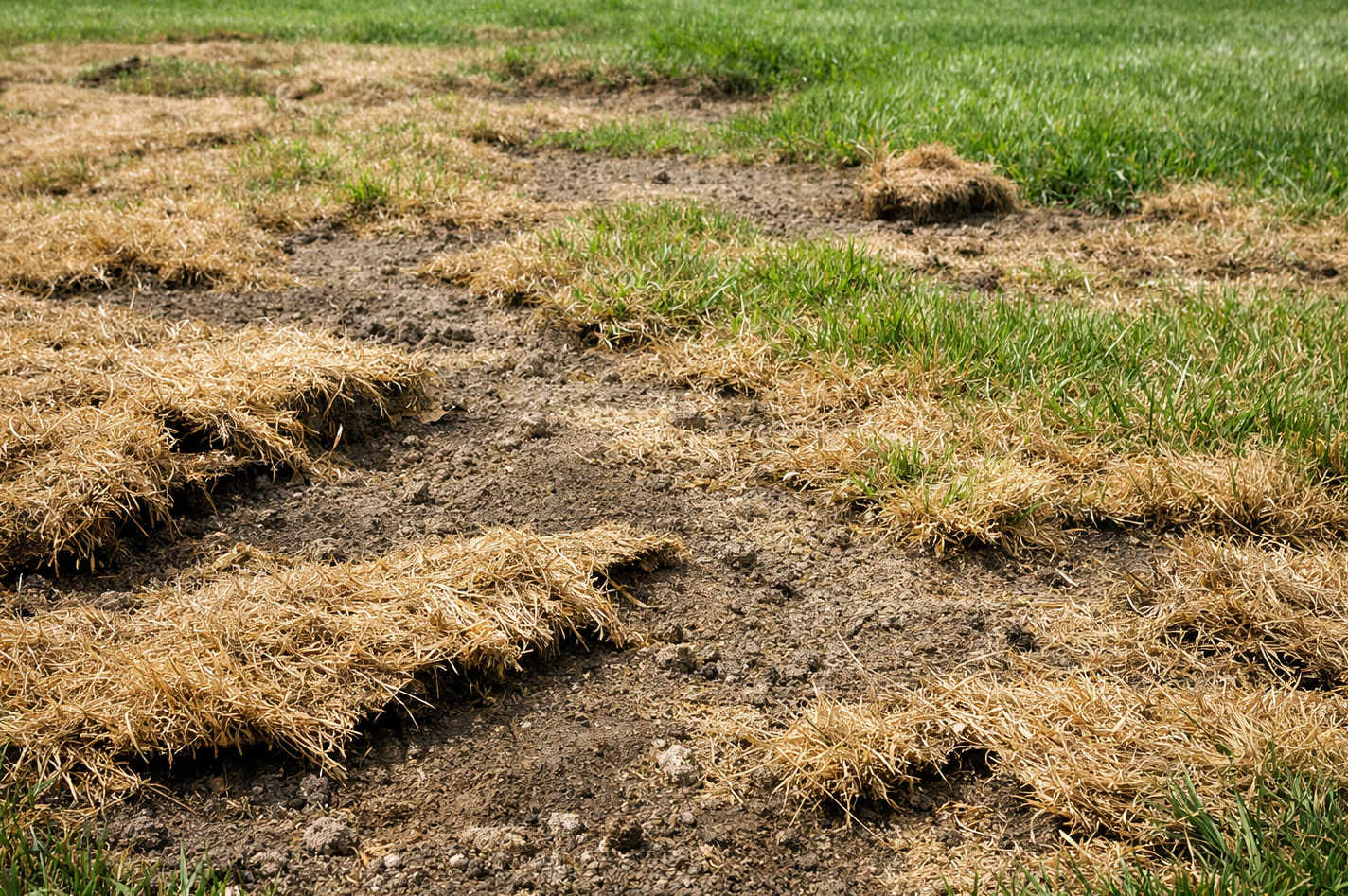
That is because a stressed lawn usually has less dense coverage protecting the property evenly. Once feeding begins below the surface, those weaker sections often start breaking down first. Thin areas widen. Loose sections become more obvious. The property loses the little stability it had left in those vulnerable spots.
This is one reason grub damage tends to look worse in struggling lawns.
The lawn is not just being damaged. It is being damaged in areas that were already easier to destabilize.
That creates a faster and more dramatic visible collapse than many homeowners expect.
Moisture stress often makes grub damage feel even worse
Many lawns dealing with grub issues are also dealing with uneven moisture conditions.
Some areas dry out faster. Some stay weak through heat. Some parts of the yard already have a harder time holding density through the tougher parts of the season. When grub feeding overlaps with that kind of stress, the lawn often has very little reserve strength left.
That does not mean grubs only show up in dry lawns or only show up in wet lawns.
It means lawns that are already having trouble managing stress are less equipped to tolerate additional root damage once grub pressure builds. The lawn starts slipping faster because multiple pressures are hitting at once.
For the homeowner, that often looks like a section of yard that suddenly gives out.
In reality, the lawn may have been moving toward that point for a while.
A stronger lawn does not make grubs harmless, but it changes the outcome
It is important not to overstate the point.
A healthy lawn is not immune to grub problems. Grubs can still cause real damage. But healthier turf usually has a better chance to hold together longer and recover more effectively than turf that was already weak.
That is the real difference.
A struggling lawn gives grub damage more leverage.
A stronger lawn gives the property more resistance.
This is one reason grub prevention belongs inside a broader lawn care strategy. The goal is not just to address the insect pressure. The goal is also to support the kind of lawn condition that makes the property less vulnerable when pressure shows up.
Grub damage is often worst where the lawn was already weakest
Homeowners often notice that grub damage seems to hit certain sections harder than others.
That pattern is usually telling.
The worst damage often shows up in areas that already had weaker turf performance, thinner growth, or recurring instability. Those sections were easier to break down before grub activity ever became visible. Once feeding pressure increased, they became the first places to collapse.
This is why grub problems so often look uneven across a property.
The insect pressure may be present across a wider area, but the lawn’s weakest sections are usually the first to show it. That can make the damage look unpredictable when it is actually following the lawn’s preexisting weak points.
Lawn stress creates a bigger problem than homeowners realize
A lot of homeowners treat lawn stress like a minor issue until something more visible happens.
The lawn is a little thin. Certain areas are slower to recover. Color is not perfectly even. The property feels slightly off, but not bad enough to demand immediate attention. Then a grub issue shows up and the whole situation seems to escalate quickly.
That is because stress lowers the lawn’s margin for error.
Once the lawn is no longer operating from a stable position, any additional pressure can hit harder. Grubs are just one example of that. Their feeding becomes more destructive because the turf no longer has enough strength to absorb the damage well.
This is one reason structured lawn care matters so much. It is not only about improving appearance. It is about reducing the number of openings where larger problems can take hold.
Grub control works best as part of a broader stability plan
When homeowners think about grub problems, they often think only in terms of insect control.
That is understandable, but incomplete.
A better long-term approach also looks at the condition of the lawn itself. If the property is repeatedly stressed, uneven, or thin, it stays more vulnerable even when grub pressure is addressed. That means the best outcome usually comes from combining prevention or treatment with broader efforts to stabilize the turf.
This is where professional turf management becomes more useful than single-issue thinking.
A treatment mindset asks how to stop the grubs.
A turf management mindset asks how to reduce grub pressure and improve the lawn’s ability to hold up when stress appears.
That second question leads to better results.
The bigger goal is not just killing grubs. It is reducing vulnerability
A lawn that stays weak will always be easier to damage.
That is the bigger takeaway.
Grubs do real harm, but the lawns that usually suffer the worst are the ones that were already under pressure before the feeding became obvious. That means the solution should not stop at identifying the insect issue. It should also include strengthening the property so it is less likely to break down under stress in the first place.
That is how a lawn becomes more resilient.
Not by pretending grubs are harmless, and not by treating turf stress like a side issue, but by recognizing that both problems work together to create the damage homeowners end up seeing.
LawnLogic FAQ
Do grubs prefer unhealthy lawns?
Grubs can show up in different types of lawns, but damage is often worse in lawns that are already stressed, thin, or struggling to recover well.
Why does grub damage seem worse in some yards than others?
One major reason is lawn condition. A weaker lawn has less ability to tolerate feeding damage and usually breaks down faster.
Can a healthy lawn still get grub damage?
Yes. A healthier lawn is not immune, but it often holds together better and recovers more effectively than a lawn that was already under stress.
Why does grub damage usually show up in the weakest parts of the lawn first?
Those sections are already less stable, so they tend to be the first areas to break down once grub feeding adds more pressure.
Is grub control enough on its own?
Not always. Grub control is important, but the best long-term results usually come when insect protection is paired with a lawn care program that improves overall turf stability.
Build a lawn that is less vulnerable to grub damage
Grub problems are harder on lawns that are already struggling. The more stable the turf is, the better chance it has to hold up when pressure appears.
LawnLogic builds lawn care programs around fertilization, weed control, seasonal support, and targeted grub protection so lawns stay stronger, more even, and less vulnerable to the kind of stress that makes grub damage worse.
Explore More About Managing Your Lawn
Continue building your understanding of how structured lawn care supports long-term stability.