What Healthy Lawn Recovery Looks Like Below the Surface
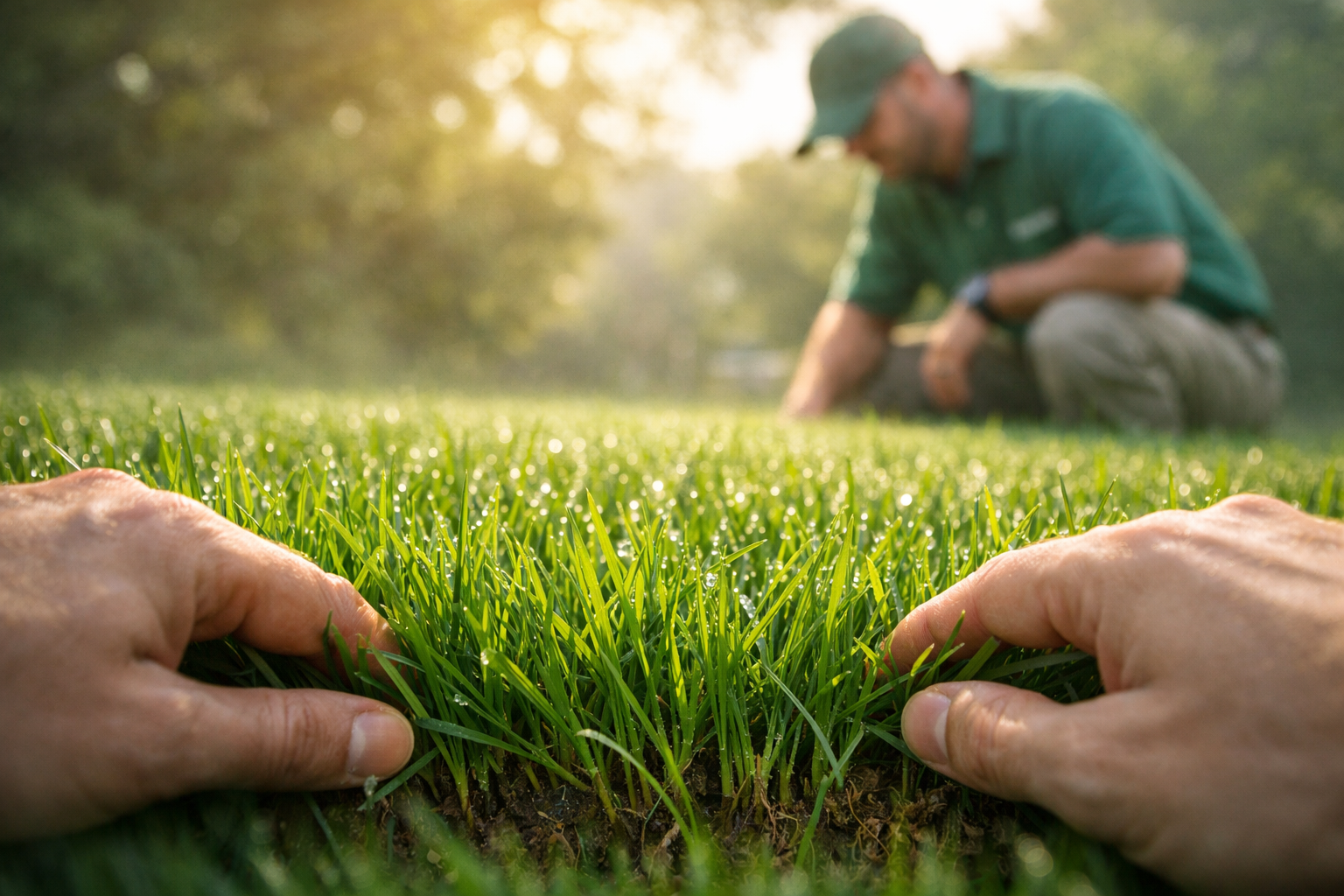
When a lawn starts improving, most homeowners look at the top growth first. They notice better color, thicker coverage, or fewer weak-looking areas. Those are useful signs, but they are not the earliest sign that the lawn is actually stabilizing.
That usually starts below the surface.
Healthy root reactivation is what happens when a lawn begins shifting from survival back into active recovery. The grass is not just staying alive. It is starting to rebuild support, take in nutrients more effectively, and respond more evenly across the yard. That is when the lawn has a better chance to hold improvement instead of just showing a brief cosmetic lift.
This matters because a lot of lawns in Western NY can look better for a short period without truly recovering. A flush of top growth can make the property look improved, but if the root system is still weak, the lawn often slips backward again once the weather changes or pressure increases.
That is why root reactivation matters. It is one of the clearest signs that a lawn is starting to function better, not just look better.
What root reactivation actually means
Root reactivation is the return of active root function after the lawn has been slowed down by stress, pressure, or poor growing conditions.
That stress can come from a lot of places. It may be a lawn coming out of winter with weak carryover. It may be a yard that has been underfed, compacted, thinned out by weeds, or held back by repeated seasonal stress. It may also be a lawn that has been alive, but not really progressing.
In simple terms, healthy root reactivation means the lawn is starting to work again. The grass is taking advantage of moisture better, responding to nutrients more effectively, and beginning to support stronger, more even growth above ground.
For homeowners, this is important because lasting lawn improvement does not begin with appearance alone. It begins when the lawn is strong enough to start rebuilding from below.
Why root recovery matters more than a quick color change
A greener lawn does not always mean a healthier lawn.
Color can improve quickly after fertilizer, cooler weather, or a stretch of favorable conditions. But that does not necessarily mean the lawn is more stable. It may just mean the top growth has responded before the root system has fully caught up.
That is where many homeowners get misled. The lawn looks better for a while, but the same issues return. Thin areas come back. Growth turns uneven again. Summer exposes weak sections. Parts of the yard that seemed to recover in spring still do not hold together later.
When healthy root reactivation is actually happening, the lawn usually starts showing more than just improved color. It begins responding with better consistency. It holds moisture better, recovers more evenly, and shows less of that stop-and-start pattern that weak lawns tend to have.
That is a much better sign of real recovery.
What causes roots to slow down in the first place
Most lawns do not lose root strength from one single event. It is usually the result of cumulative pressure.
A lawn may be dealing with poor seasonal timing, recurring weeds, insect stress, compacted soil, thatch buildup, inconsistent feeding, or repeated periods of stress without enough support to recover properly. Over time, the lawn stops progressing the way it should.
That is when root function tends to slow down.
The grass may still grow, but not evenly. It may still green up, but not hold density. It may still survive, but never really settle into a stable pattern.
In Western NY, that kind of slowdown is common because lawns move through several distinct seasonal phases. A yard can come out of spring looking decent, then struggle once pressure builds. If the underlying support is weak, those issues become easier to see as the season moves forward.
That is why root reactivation is not about one dramatic moment. It is about whether the lawn is finally starting to respond like a stronger system.
What healthy root reactivation looks like above ground
You cannot see roots directly during normal lawn care, but you can often see the signs of healthier root activity in how the yard starts behaving.
Growth becomes more even
One of the clearest signs of healthy recovery is when the lawn starts responding more consistently across the property. Areas that used to lag behind begin catching up. The yard looks less patchy and less unpredictable.
That does not mean every section becomes perfect at once. It means the lawn starts behaving like one property again instead of several different conditions stitched together.
The lawn stops looking good only in short bursts
Weak lawns often improve briefly, then fade again. Healthy root reactivation usually changes that pattern. The lawn starts holding improvement longer instead of peaking and dropping off.
This is one of the most meaningful signs for homeowners because it shows the lawn is gaining some stability rather than borrowing a temporary improvement.
Recovery after stress becomes less erratic
Lawns with weak root support often take longer to bounce back from stress. Areas stay dull longer, recover unevenly, or remain thin after the rest of the yard improves.
As roots become more active, the lawn usually handles normal stress better. Recovery becomes less scattered, and weak zones do not stand out as sharply for as long.
Density starts improving with less randomness
When the lawn begins thickening in a more coordinated way, that often points to stronger support below the surface. A yard that used to look open, thin, or loose in certain sections may begin filling in more evenly as overall performance improves.
Again, this is not instant. It is progressive. But it is a meaningful change.
What healthy root reactivation does not look like
It is just as important to know what does not qualify as real root recovery.
A fast green-up by itself
A lawn can turn greener without becoming more stable. Top growth responds faster than deeper improvement. If the yard looks better for two weeks but then returns to the same uneven pattern, that is not strong evidence of healthy reactivation.
One strong area while the rest of the lawn lags
Sometimes one section of the property improves quickly while others stay thin or inconsistent. That may reflect better conditions in that area, not broader recovery across the lawn.
Healthy reactivation usually shows up as increasing consistency, not isolated improvement.
Heavy top growth with weak overall stability
A lawn that grows fast but still breaks down easily is not necessarily in a good place. Fast growth is not the same as balanced recovery. In some cases, it just means the grass is pushing top growth without building better long-term support.
The same recurring issues coming back unchanged
If weeds keep filling the same spaces, if the same thin areas keep reopening, or if the lawn keeps falling apart at the same point in the season, root reactivation may be limited or incomplete.
A recovering lawn should start changing those patterns over time.
What conditions help roots reactivate in a healthy way
Roots do not reactivate well just because the lawn wants to improve. The conditions around the lawn have to support that recovery.
Consistent nutrient support
A lawn needs enough feeding to rebuild without being pushed in the wrong direction. Proper nutrition helps the grass resume balanced activity rather than just forcing a shallow cosmetic response.
Better soil movement
When the soil feels tight, sluggish, or sealed up, the lawn often struggles to respond evenly. Improving movement through the soil profile can help the lawn begin functioning more normally again.
This is one reason soil support matters so much in structured lawn care. A lawn that cannot move water and nutrients well is often limited before the season even gets going.
Reduced competitive pressure
Weeds, excessive thatch, and repeated stress all compete with the lawn's recovery. When that pressure is reduced, roots have a better chance to resume active function and support stronger turf performance.
Seasonal timing that matches how lawns actually recover
Recovery is not random. Lawns respond differently depending on where they are in the season. Healthy root reactivation is much more likely when the lawn is being supported at the right times rather than treated as if every application does the same job.
That is part of why structured lawn care programs outperform disconnected treatments. They give the lawn a better chance to recover in sequence instead of relying on occasional fixes.
Why some lawns reactivate better than others
Not every lawn starts from the same position.
Some properties already have a decent foundation. They may be a little stressed or uneven, but they still have enough underlying strength to respond once conditions improve.
Other lawns have been fighting the same instability for years. They may have repeated thinning, recurring weed intrusion, compacted areas, poor consistency, or sections that never seem to recover at the same pace as the rest of the yard.
Those lawns can still improve, but the process is usually slower and more dependent on broader support.
This is where homeowners often need to reset expectations. Healthy root reactivation is not always dramatic. On more stressed properties, it may first show up as reduced inconsistency rather than a sudden transformation. The lawn may begin holding together better before it starts looking dramatically better.
That still matters. In many cases, that is the first real sign that the property is moving in the right direction.
How structured lawn care supports root reactivation
Healthy root recovery usually happens best when the lawn is being managed, not just treated.
A structured lawn care program creates the conditions for recovery by coordinating fertilizer, weed control, crabgrass prevention, insect protection where needed, and soil support across the full season. Each part plays a role in reducing the pressure that keeps the lawn from stabilizing.
That matters because roots do not reactivate well in a lawn that is constantly losing ground elsewhere. If weeds are opening space, if insect pressure is reducing density, or if the soil is holding the lawn back, recovery stays limited.
This is why better lawn care programs tend to produce better long-term results. They are not just applying products. They are building a more stable environment for the lawn to respond.
At LawnLogic, that is how lawn care is structured. The goal is not to create a temporary visual lift. The goal is to manage the property in a way that supports better stability over time, including the kind of below-surface recovery that helps the lawn stay stronger through the season.
Signs your lawn may be starting to reactivate below the surface
For a homeowner, the most useful signs are practical.
The lawn starts responding more evenly after service
Instead of one area improving while another stays behind, the property begins moving in a more coordinated direction.
Thin areas stop getting worse as quickly
Even before they fully fill in, weak sections may start stabilizing rather than continuing to lose ground.
The lawn holds its look better between visits
This is a major sign of improving support. The yard does not just peak after treatment and then slip backward right away.
Weed pressure becomes less opportunistic
When the lawn starts competing better, weeds often lose some of the open space they were exploiting.
The property feels less fragile overall
Homeowners usually notice this before they can fully explain it. The lawn simply seems less reactive, less patchy, and less prone to looking off every time conditions shift.
Why this matters for long-term lawn stability
A lawn that only improves on the surface is hard to maintain.
It needs more correction, shows more inconsistency, and tends to slip backward whenever conditions become less favorable. That is exhausting for homeowners because it creates the sense that the yard is always one step away from looking rough again.
Healthy root reactivation helps break that cycle.
When the lawn starts functioning better below the surface, it becomes easier for the property to stay even, recover from stress, and carry improvement forward. That does not mean the yard becomes problem-free. It means the lawn is no longer relying only on surface-level response to get through the season.
That is a much stronger position for any property.
Why homeowners should care about root recovery even if they cannot see it
Most of what determines lawn stability is not immediately visible.
Homeowners see the result, but they do not always see the cause. They notice thinning, uneven color, weeds, slow recovery, or sections that never seem to match the rest of the yard. Very often, those are symptoms of a lawn that has not regained healthy support below the surface.
That is why root recovery matters so much. It affects how the lawn holds up, not just how it looks in a single moment.
If the goal is a yard that feels more consistent, looks more maintained, and stops needing the same repeated fixes, then healthy root reactivation is one of the most important parts of the process.
LawnLogic FAQ
What is root reactivation in a lawn?
Root reactivation is when the lawn begins returning to active recovery below the surface after stress, slowdown, or weak seasonal performance. It is a sign the grass is starting to function better, not just look better temporarily.
Can a lawn look better without real root recovery?
Yes. A lawn can green up or push top growth without becoming more stable. That is why appearance alone does not always tell the full story.
How can homeowners tell if roots are recovering?
The best signs are practical. The lawn starts responding more evenly, holding improvement longer, and showing less of the same repeated weak patterns across the season.
Why do some lawns take longer to recover than others?
Some properties start with more underlying stability. Others have years of recurring pressure, thinning, weed intrusion, soil limitation, or seasonal breakdown that slow the recovery process.
Does lawn care affect root recovery?
Yes. Structured lawn care helps create the conditions that support healthier recovery by coordinating nutrient support, weed control, prevention, soil support, and seasonal timing.
Build the kind of lawn improvement that actually holds
A healthier lawn is not just greener for a week. It is more stable across the season because the property is recovering in a more complete way. LawnLogic builds lawn care programs to support that kind of improvement, with structured seasonal management that helps lawns in Western NY recover, hold together, and perform more consistently over time.
Explore More About Managing Your Lawn
Continue building your understanding of how structured lawn care supports long-term stability.