The Hidden Reason Your Lawn Is Not Responding to Fertilizer
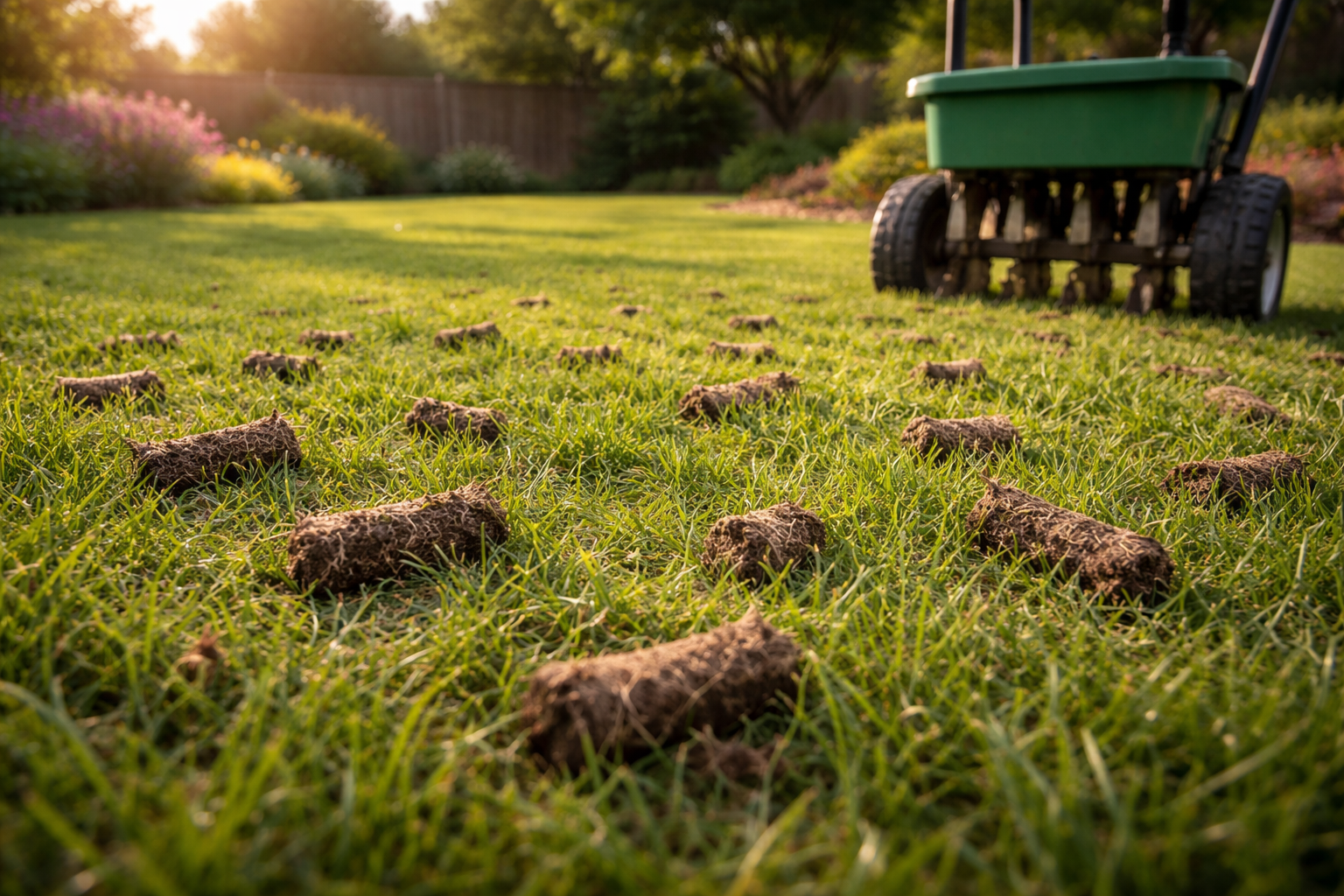
A lot of homeowners assume fertilizer is supposed to solve the problem on its own.
If the lawn looks weak, thin, or uneven, the first instinct is often to feed it. Sometimes that helps. Sometimes the response is disappointing. The lawn gets some color, but not much improvement. Or it seems to react briefly and then stalls again.
When that happens, the issue is not always the fertilizer itself.
In many lawns, the real problem is soil compaction.
Compacted soil limits how well the lawn can use what it is given. Nutrients may be present, but the lawn is not in a strong position to access them efficiently or respond the way it should. That is one reason some properties stay stuck in a cycle of feeding the lawn without seeing stable improvement.
Fertilizer only helps when the lawn can actually use it
Fertilizer gets a lot of attention because it is one of the most visible parts of lawn care.
It is easy to understand. Nutrients go down, the lawn should improve, and the result should show up in the yard. But fertilizer does not work in isolation. It depends on the condition of the soil and the condition of the root zone underneath the lawn.
If that growing environment is tight and restricted, the lawn cannot respond the same way it would in looser, healthier soil.
That is what makes compaction such an important issue.
It changes the conditions that allow nutrients to move, roots to function, and turf to grow evenly. So even when the fertilizer program is sound, the lawn may still underperform because the soil is working against it.
What soil compaction actually changes
Compaction happens when soil becomes too dense and compressed.
That can happen from repeated foot traffic, mowing patterns, equipment movement, construction activity, or simply the way certain soils settle over time. Many lawns in this region develop compacted areas gradually, especially in sections that stay heavily used or struggle to dry out evenly.
When the soil tightens up, the lawn starts losing space where normal root activity should happen.
That matters because the root zone is where the lawn takes in water and nutrients. It is also where the lawn needs enough openness to stay active and keep growing with consistency. When the soil becomes too firm, the lawn is left trying to function in a space that is less supportive and less efficient.
The result is not always dramatic at first. It often looks like a lawn that just never responds quite the way it should.
Why nutrients become less effective in compacted soil
When homeowners think about fertilizer performance, they usually focus on the product.
They do not usually think about whether the soil is allowing the lawn to use that product efficiently. But that is a major part of the equation.
In compacted soil, the lawn has a harder time maintaining the kind of root activity that supports strong nutrient uptake. The turf may still take in some of what is applied, but the overall response is often weaker, slower, or less stable.
This is why fertilized lawns can still look underfed.
The issue is not always that nutrients were missing. Sometimes the issue is that the lawn was not operating in a condition where those nutrients could produce the result the homeowner expected.
That is what makes compaction so frustrating. It can quietly reduce the effectiveness of an otherwise solid lawn care program.
Why a greener response is not always a full response
Sometimes a compacted lawn does react to fertilizer.
The color may improve. Growth may pick up for a period. But that does not always mean the lawn is using nutrients efficiently in a way that supports long term stability.
A short visible response can make it seem like the problem has been solved when the deeper limitation is still in place. The lawn improves on the surface, but the underlying restriction remains. That often leads to a familiar pattern. The lawn looks better briefly, then levels off, weakens again, or never fills in the way it should.
This is one reason compaction gets overlooked.
The lawn is not completely unresponsive. It just is not responding as well as it could.
That difference matters because homeowners may keep trying to fix the issue by feeding the lawn more, when the real need is to improve the soil conditions that make feeding more effective in the first place.
Why compaction often leads to uneven lawn performance
Compaction rarely affects an entire property in a perfectly uniform way.
It tends to show up in patterns. Near walkways. Around driveways. Along mowing paths. In backyards with frequent use. In areas where the soil stays heavy and tight. In sections where construction activity or repeated traffic changed the ground over time.
That is why nutrient response often looks uneven across a lawn.
One section may green up and hold fairly well. Another may remain thinner, weaker, or slower to recover. Homeowners often read that as a fertilizer inconsistency, but many times the bigger issue is that certain parts of the lawn are operating in much more restrictive soil conditions than others.
When the soil environment differs from one part of the property to the next, the lawn does not use nutrients with the same efficiency everywhere.
That is how compaction contributes to patchy lawn performance even when the entire yard is being treated.
Why roots are part of the problem
A lawn cannot make efficient use of nutrients without active, functional roots.
Roots do more than anchor the turf. They are central to how the lawn accesses water and nutrients over time. When soil is compacted, roots often have a harder time functioning in a way that supports steady, balanced turf performance.
That does not always mean the lawn dies off immediately. More often, it means the lawn stays limited.
It may remain thin in high pressure sections. It may struggle during stressful weather. It may respond to treatment, but not hold that response very long. It may keep falling behind healthier sections of the property.
In other words, the lawn does not need more input alone. It needs a better environment to use those inputs well.
That is the hidden issue behind a lot of disappointing fertilizer results.
Why more fertilizer is usually not the answer
When a lawn seems underwhelming after treatment, many homeowners assume it needs more.
More fertilizer feels like the obvious move. If the lawn did not improve enough, add more nutrients and try again. But if compaction is limiting performance, that approach often creates frustration instead of progress.
The lawn may show some reaction, but the same restriction is still sitting underneath it. The property stays stuck in a cycle where inputs continue, but the overall efficiency stays lower than it should. The lawn never fully catches up because the soil condition was never addressed.
This is where professional lawn care needs to shift from simple feeding to actual turf management.
The question is not just what to apply next. The question is what is reducing the lawn’s ability to benefit from what is already being applied.
How compaction affects the value of a lawn care program
A structured lawn care program works best when the lawn is in a position to respond to it.
That includes fertilization, weed control, seasonal support, and any corrective services that help improve stability. When compaction is present, the value of those services can be reduced because the lawn is not operating at full efficiency.
That does not mean the program is wrong. It means the property may need another layer of support to get better results from it.
This is why compaction should not be treated as a side issue.
It affects how the lawn uses nutrients, how well it recovers, how evenly it grows, and how stable it stays through the season. If the root zone is restricted, everything above it becomes harder to manage well.
What homeowners should take from this
If the lawn is not responding to fertilizer the way you expected, it does not automatically mean the fertilizer was poor or the program is failing.
It may mean the soil is too compacted for the lawn to use nutrients efficiently.
That is an important distinction because it changes the solution.
Instead of assuming the answer is more product, the better approach is to evaluate whether the lawn has a soil condition that is limiting how well it can respond. Once that issue is identified, the property can move toward a more complete correction instead of staying in a loop of repeated inputs and inconsistent results.
A lawn that cannot use nutrients well will always be harder to improve.
A lawn with better soil conditions is easier to stabilize, easier to strengthen, and more likely to respond the way homeowners want.
Why this matters in professional turf management
Good lawn care is not just about applying the right materials.
It is about recognizing what is preventing those materials from working as effectively as they should. That is where structured turf management is different from basic treatment thinking.
A treatment mindset sees a weak lawn and adds fertilizer. A turf management mindset asks why the lawn is not responding properly in the first place. That difference leads to better decisions.
If compaction is part of the problem, the lawn usually needs more than another application. It needs a plan that supports both nutrition and the soil conditions that make nutrition more effective.
That is how a lawn gets out of the cycle of short term response and starts moving toward more stable performance.
LawnLogic FAQ
Can soil compaction make fertilizer less effective?
Yes. Compacted soil can reduce how efficiently the lawn uses nutrients, which often leads to weaker or less consistent response after fertilization.
Why does my lawn still look weak after fertilizer?
The issue may not be the fertilizer alone. If the soil is compacted, the lawn may not be in a strong position to use nutrients properly.
Does a compacted lawn still respond to fertilizer at all?
Sometimes it does, but the response is often incomplete. The lawn may green up or grow for a short period without gaining the stability or density homeowners expect.
Should I just add more fertilizer if the lawn is not improving?
Not necessarily. If compaction is limiting nutrient efficiency, adding more fertilizer may not solve the real issue.
How do you improve a lawn that has compacted soil?
That depends on the condition of the property, but the first step is recognizing compaction as a limiting factor and building the lawn care plan around both nutrient support and soil improvement.
Get more out of every lawn care application
When a lawn is not responding well, the answer is not always more fertilizer. Sometimes the bigger issue is the condition of the soil underneath it.
LawnLogic builds lawn care programs around structured seasonal support, including fertilization, corrective services, and targeted lawn improvement strategies that help properties respond more evenly and perform more reliably over time.
Explore More About Managing Your Lawn
Continue building your understanding of how structured lawn care supports long-term stability.