What Homeowners Miss When Comparing Lawn Care Services
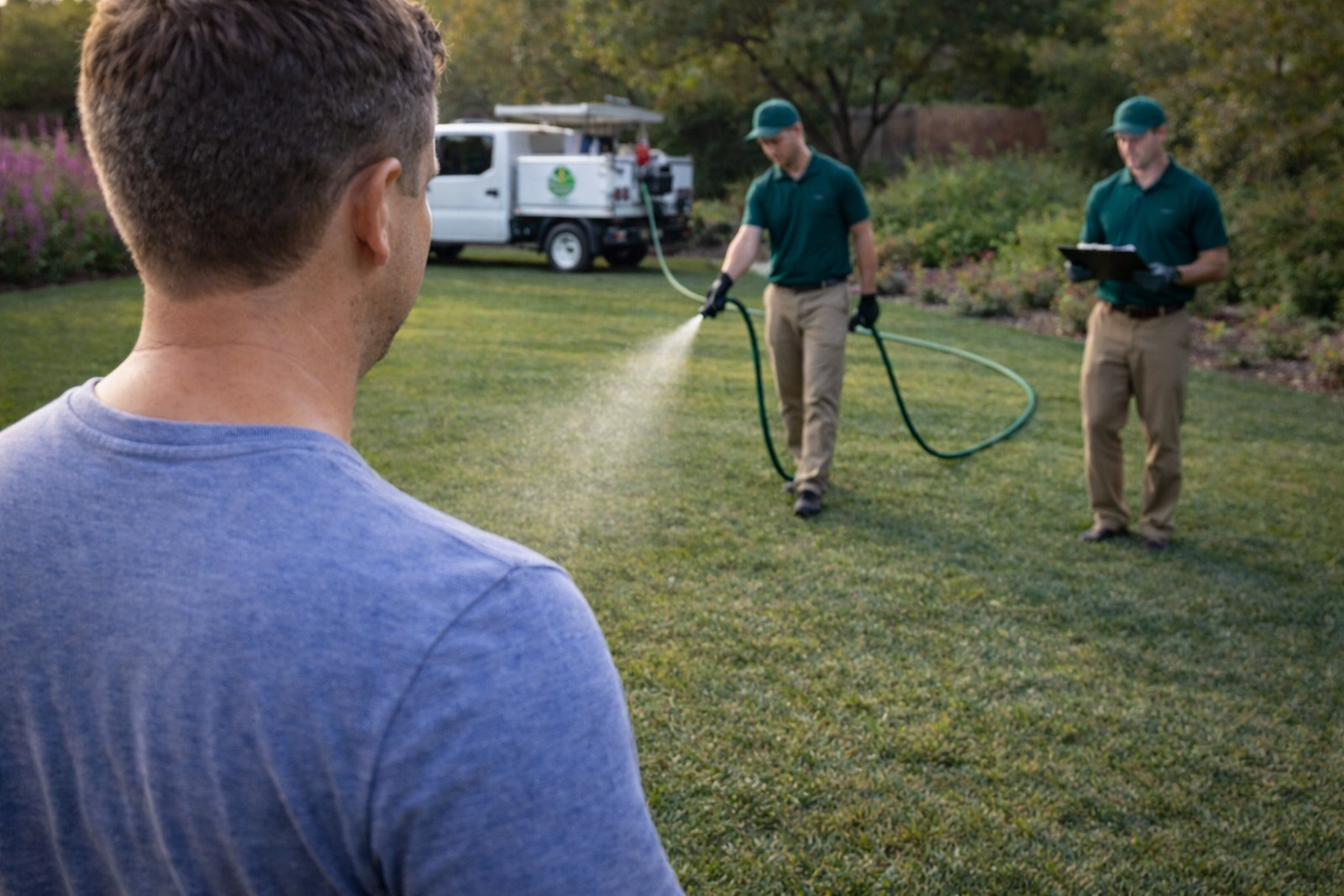
A lot of homeowners compare lawn care services by looking at the surface level details.
How many visits are included. What the price is. Whether weed control is listed. Whether fertilizer is part of the program. Those are reasonable things to look at, but they do not tell the full story.
The bigger difference is usually not what shows up in a simple checklist.
It is how the lawn is being managed.
That is what many homeowners miss when comparing lawn care services. Two companies can both say they provide fertilization and weed control, but the quality of the program can still be very different depending on how those services are timed, layered, adjusted, and carried through the season.
That difference is what separates basic treatment schedules from real lawn care management.
Lawn care is not just a list of applications
A lot of service comparisons start and stop with what is being applied.
Homeowners look for fertilizer, crabgrass control, weed control, maybe grub protection, and then try to judge which option looks like the better value. On paper, that seems logical.
But lawn care is not just a series of products.
It is a seasonal management process.
The real question is not only whether certain applications are included. The real question is whether those applications are being delivered in a way that supports lawn stability over time. Timing matters. Layering matters. Follow-through matters. The role each round plays within the larger season matters.
A lawn care company can include the right categories on a service list and still run a weak program if those pieces are not being managed in a structured way.
The cheapest comparison is often the least useful comparison
Price is always part of the decision.
That is normal. Homeowners should understand what they are paying for. But lawn care becomes hard to compare properly when price is treated as the main indicator of value without looking at what the program is actually doing.
A lower priced service may appear to cover the basics while leaving out important layers of support. It may rely on simpler treatment schedules, narrower coverage, or less complete seasonal planning. That is not always obvious at first glance, especially when every company uses similar words to describe what they do.
This is where homeowners often get pulled into comparing services too narrowly.
They compare the visible line items without comparing the management quality behind those line items. A lawn care program should not be judged only by how inexpensive it is or how many applications are listed. It should be judged by how well it is designed to keep the lawn stable, responsive, and manageable through the full season.
Fertilizer and weed control are not the whole story
Many homeowners think professional lawn care is basically fertilizer plus weed control.
Those are major parts of it, but they are not the whole picture.
A well-managed lawn care program should account for how the property changes through the season, how pressure shifts from spring into summer and fall, and how different conditions affect turf performance from one round to the next. It should create continuity.
That continuity is what gets overlooked in a simple service comparison.
The lawn is not static. It does not need the exact same kind of support at every point in the year. A strong program recognizes that and adjusts the seasonal approach accordingly. That is why better lawn care is usually more coordinated than homeowners expect.
You are not just paying for products to be applied. You are paying for the lawn to be supported in a more deliberate way over time.
Good lawn care should reduce instability, not just create short term improvement
One of the easiest ways to misread a lawn care service is to judge it by whether the yard looks better right after an application.
Short term improvement matters, but it is not the full measure of quality.
A lawn can green up quickly and still remain unstable. It can show temporary improvement and still struggle with recurring thin areas, repeated weed pressure, or uneven performance across the property. That is why a professional lawn care service should be doing more than creating visible reaction.
It should be reducing instability.
That means supporting thicker growth where the lawn tends to weaken, reinforcing coverage where weeds try to move in, helping the property stay more even across changing weather conditions, and managing the season in a way that limits repeated setbacks.
When homeowners compare services, this is one of the biggest differences they miss. They see the application, but not the larger objective behind it.
Program structure matters more than many homeowners realize
A real lawn care program is built with progression.
Each round should support the next. Early season work should set up what happens later. Mid-season applications should reinforce stability rather than just react to problems. Late season rounds should help the lawn finish the year in a stronger position than where it started.
Without that structure, lawn care becomes a series of disconnected visits.
That is where many programs fall short. The service may sound fine on paper, but if the rounds are not working together, the lawn gets treated instead of managed.
That distinction matters because lawns tend to perform better when support is coordinated. The property becomes easier to stabilize, easier to keep even, and less likely to drift into the same recurring issues.
This is why homeowners should look beyond whether a service includes certain treatments and ask whether the company is actually managing the lawn as a season-long system.
Not every property needs the same level of support
Another thing homeowners often miss is that lawn care should not look identical for every property.
Some lawns need a basic level of seasonal management to stay in decent shape. Others need broader support because they are more vulnerable to weed pressure, insect activity, recurring thinning, or soil-related limitations. That is why better lawn care providers build layered program options instead of treating every property exactly the same.
This is not about selling more for the sake of selling more.
It is about matching the level of support to the condition of the lawn.
When service options are structured properly, homeowners can see the difference between foundational care, expanded protection, and higher levels of corrective support. That creates a better decision than simply choosing whichever option looks cheapest or has the longest list of words next to it.
A lawn care company should be evaluating, not just applying
One of the biggest gaps in weak lawn care service is that it becomes mechanical.
The company arrives, applies something, leaves, and repeats the process later.
Professional lawn care should be more controlled than that.
It should involve ongoing evaluation of how the lawn is responding, what pressures are showing up, where stability is holding, and where additional attention may be needed. Even when the overall program structure stays consistent, the service should still reflect observation and judgment.
That is part of what homeowners are really paying for.
Not just a technician who can spread material, but a provider who understands how the lawn is progressing through the season and how different services fit together to support better outcomes.
This is one of the least visible parts of lawn care, which is exactly why it gets missed during comparisons.
Comparing services by visits alone does not tell you enough
Homeowners often ask how many visits are included.
That is a fair question, but it is not a complete one.
Visit count matters less than what each visit is meant to accomplish and how those visits work together. A program with fewer but better structured rounds may outperform a program with more visits that are poorly coordinated or too shallow in scope.
The same goes for included services.
A company can list many items in a program description without making it clear how those items are timed, how they support each other, or how they strengthen the lawn beyond a short term reaction. That is why homeowners should be careful not to treat service comparisons like product bundle comparisons.
Lawn care is more layered than that.
The real value is in managed consistency
The strongest lawn care programs usually do not stand out because they sound flashy.
They stand out because they create consistency.
The lawn stays more even. It holds color better through the season. It recovers more reliably. It deals with weeds and other pressures with less disruption. It becomes easier to maintain because the program is reducing volatility instead of constantly reacting to it.
That consistency is where the real value lives.
A homeowner may not notice every technical decision behind that result, but they notice the outcome. The lawn looks more controlled. It feels less stuck in a cycle. It requires fewer guesswork fixes between service rounds.
That is what a well-managed program is supposed to do.
What homeowners should ask when comparing lawn care services
When comparing providers, homeowners should look past the basic checklist and focus on how the service is structured.
They should look for whether the company offers a real program instead of disconnected treatments. They should look for whether the support builds through the season. They should look for whether the provider appears to be managing lawn performance rather than just selling applications.
A better comparison is not just:
What do I get?
A better comparison is:
How is this lawn being managed?
That question usually reveals more than price or visit count ever will.
Why this matters before you hire anyone
Once a lawn care company is chosen, the season tends to follow the structure of that decision.
If the service is shallow, reactive, or loosely managed, the lawn often reflects that. It may improve in spots while staying inconsistent overall. It may look decent at times without becoming truly stable. It may require more correction later because the original support was not structured well enough.
On the other hand, when the service is built around seasonal management, layered support, and deliberate program structure, the lawn usually has a better chance to stay full, even, and responsive across the year.
That is why service comparison matters so much.
The right lawn care company is not just offering treatments.
They are setting the direction of how the property will be managed.
LawnLogic FAQ
What should homeowners compare besides price in a lawn care service?
They should compare program structure, seasonal coordination, service layering, and whether the company appears to be managing lawn performance instead of simply applying treatments.
Is professional lawn care just fertilizer and weed control?
No. Those are major parts of it, but a stronger lawn care program also includes timing, progression through the season, evaluation, and broader support for lawn stability.
Why do lawn care services look similar on paper?
Many companies use similar service language, which makes programs seem more alike than they really are. The real difference is usually in how the services are managed and coordinated.
Does more visits always mean better lawn care?
Not necessarily. What matters more is what each round is designed to accomplish and how the visits work together through the season.
What is the biggest mistake homeowners make when comparing lawn care services?
One of the biggest mistakes is comparing lawn care like a simple product bundle instead of comparing how the lawn will actually be managed over time.
Choose a lawn care program that is built to manage the season
A stronger lawn usually comes from more than a few scheduled applications. It comes from a program that is structured to support stability, consistency, and better lawn performance across the full season.
LawnLogic builds lawn care programs around coordinated fertilization, weed control, seasonal layering, and managed turf support so homeowners get more than treatments. They get a lawn that is being professionally managed over time.
Explore More About Managing Your Lawn
Continue building your understanding of how structured lawn care supports long-term stability.