Why Flea and Tick Pressure Peaks in July, Not Spring
You treated in May. You checked the box. Then, sometime in late July, your child comes inside with a tick on their arm or your dog picks one up in the backyard, and you find yourself wondering what went wrong. The answer is not that you did something incorrectly. The answer is that spring applications of flea and tick control are often timed to the calendar, not to when populations actually peak in Monroe County. By July, the biology has moved well past where a single May application can still reach.
The standard advice most homeowners receive frames flea and tick control as a spring preparation task. Treat early, stay protected all season. That framing leaves out the one detail that changes everything: July is the most active month for tick and flea exposure in Western New York. A single spring treatment was never designed to carry that far.
A May Application Has Limits the Calendar Does Not
Most flea and tick products applied in May are designed to address early-season activity. Ticks in their nymph stage are small, difficult to detect, and most active during warm, humid stretches that begin building in late May but reach their peak in June and July. Fleas follow a similar pattern. Eggs laid in cooler spring soil develop into larvae, then pupae, then fully reproductive adults as temperatures climb and humidity settles in. By mid-July, a flea population can be cycling through multiple generations at once.
A single application from ten or twelve weeks earlier is no longer delivering the same level of protection it provided in spring. The product has dissipated. The population has grown. That timing gap is real, and it explains why homeowners who followed the standard advice in May are still finding pests in July.
Where Pests Concentrate on a Residential Property
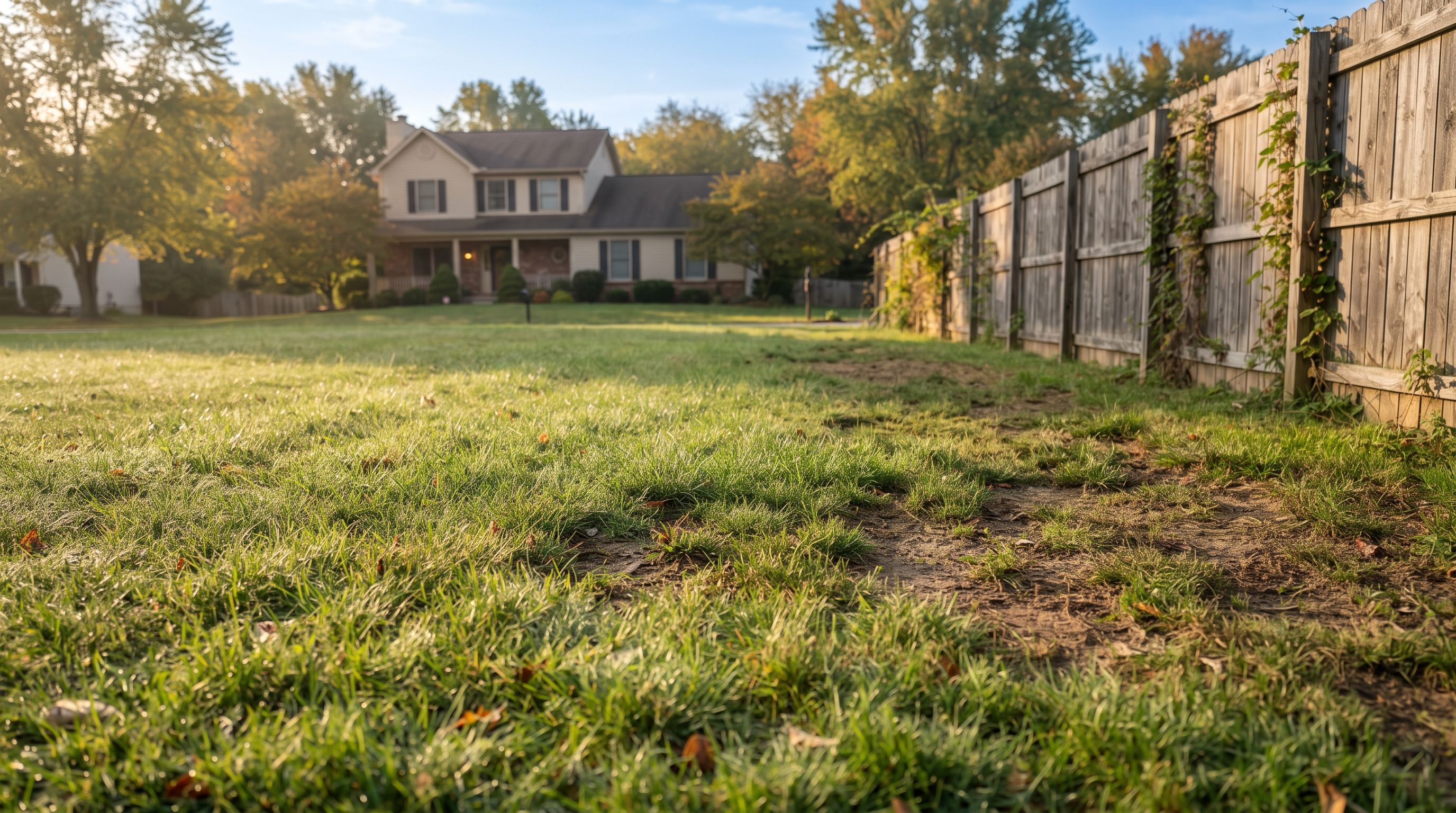
Ticks and fleas do not distribute evenly across a lawn. They concentrate in specific conditions: shaded edges along fence lines, leaf debris that carried over from fall, overgrown border areas, and dense ornamental plantings. Open turf in full sun dries out quickly enough that it offers little shelter. These pests need humidity and cover to survive.
The heaviest pressure consistently appears at the transition zones between maintained lawn and natural edges. A property that backs up to a treeline or has shrub beds along the perimeter will carry significantly more activity than an open, well-maintained lawn with no adjacent cover. This is not a question of lawn quality. It is a question of habitat, and managing flea and tick pressure on a residential property requires focused attention to those perimeter zones specifically.
For more context on how pressure originates at these zones, the post on why flea and tick pressure starts at property edges covers the structural reasons behind this pattern in more detail.
July Is a Different Problem Than May Was
What you are dealing with in late July is not a lingering spring problem. It is a mid-season population that has matured on its own schedule. Nymph-stage ticks that hatched in late spring have developed into adults. Flea populations that were dormant in the pupal stage when you treated in May have since hatched and begun reproducing. These are different life stages than what a May application was targeting.
That distinction matters because the response needs to match the timing. A mid-season application targets active adults and works differently than a preventive one. Waiting until next spring to reset the approach means accepting three more months of exposure through August and September, both of which carry meaningful tick activity in this region.
What Structured Management Addresses That a Single Treatment Cannot
The pattern we encounter most often is a homeowner who hired a company for a one-time flea and tick treatment, or received it as a seasonal add-on with no follow-up scheduled. When July arrives and pressure peaks, there is nothing left to bridge the gap.
Structured management distributes protection across the season in a way that accounts for these population cycles. This is part of why flea and tick control at LawnLogic is not positioned as a single event. It is coordinated with the rest of the property's seasonal plan. If your yard is also receiving mosquito control or barrier pest control, those services reinforce each other at the property perimeter. The goal is maintained protection through the months when pressure is actually high, not just in the weeks before it builds.
Questions We Hear When Homeowners Find a Tick in July
I treated in spring. Why is this still happening?
A spring application was the right call. The issue is that tick biology does not follow a calendar-based schedule. Nymph-stage ticks mature through June and July regardless of what was applied in May. A mid-season application is not a sign that the first one failed. It is a recognition that protection needs to extend through the peak, not just precede it.
Is it too late to treat in July?
No. July is one of the most effective times to treat because populations are active and concentrated. Applying product against a known active population delivers measurable results within a reasonable window. Waiting until next spring does not resolve the current exposure. It simply defers the decision.
Do I need to treat the whole lawn or just the edges?
Perimeter and transition zones carry the heaviest pressure and receive focused attention. That said, pets and children move across the full lawn, so a complete application anchored at those high-pressure zones provides more reliable protection than treating edges alone.
What if I had a treatment done and still found a tick on my child?
This is the question most people are afraid to ask directly. A single prior treatment does not mean the service failed. It means the protection window closed before peak pressure arrived. Tick activity in July can be significant even on properties that were treated correctly in spring. The right response is a mid-season application timed to current conditions, not a conclusion that treatment does not work.
Start with a Property Review, Then a Plan
If you found a tick in July and want to understand what level of protection your property currently has, the right next step is a direct conversation. LawnLogic serves residential properties throughout Monroe County with structured flea and tick management that accounts for mid-season population peaks, not just spring setup.
Contact us through the website to schedule a property review and get a clear picture of where your current protection stands and what it takes to carry it through the rest of the season.
Explore More About Managing Your Lawn
Continue building your understanding of how structured lawn care supports long-term stability.