What Unmowed Leaves Are Actually Doing to Your Lawn Right Now
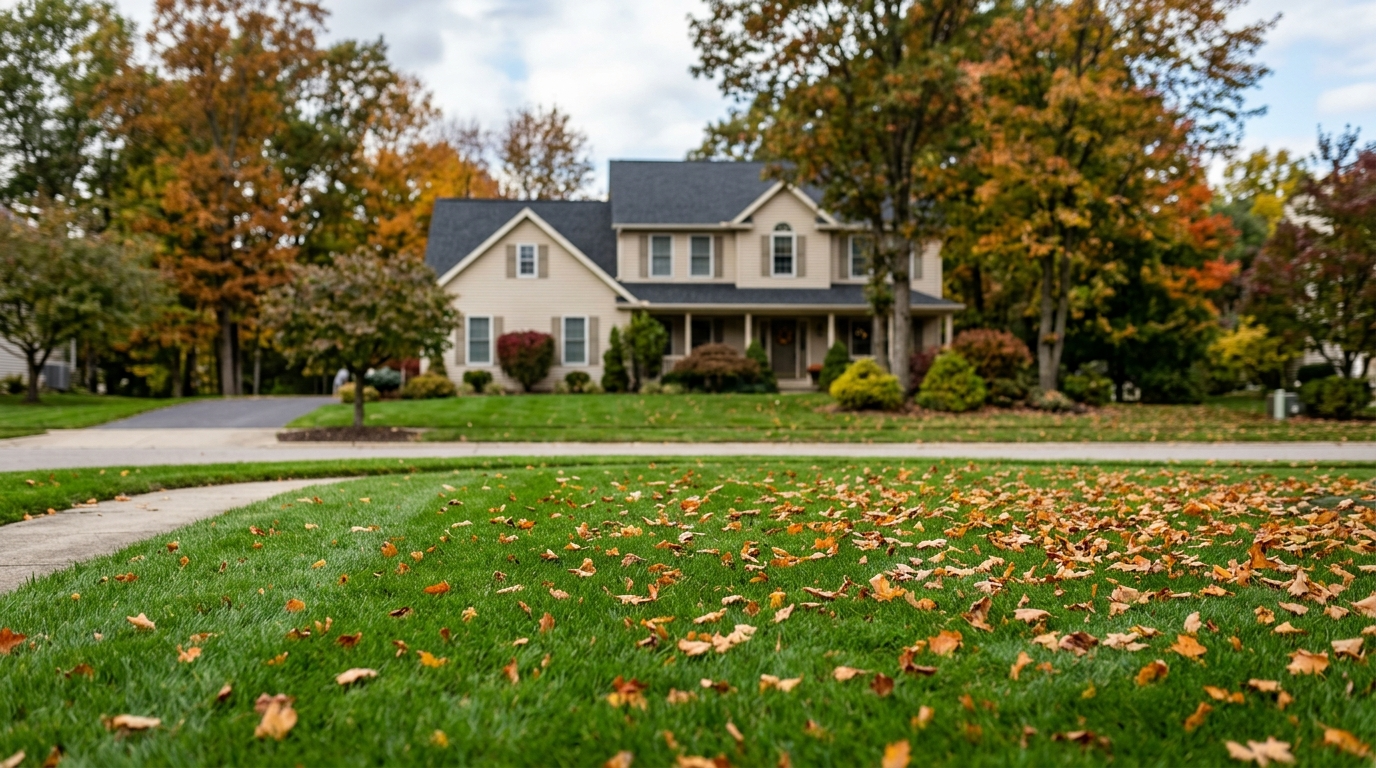
Most homeowners treat fallen leaves as a curb appeal problem. Get them off the lawn before the neighbors notice, bag them up before the HOA complains, and move on. That framing misses the actual problem entirely. The damage leaves cause to cool-season grass has nothing to do with how the lawn looks in October. It has everything to do with what the grass cannot do while those leaves are sitting on top of it.
For properties across Monroe County, NY, fall is a critical window for turf management. The grass is still actively recovering from summer, building root strength before the ground freezes. That process requires light, airflow, and soil that can breathe. A layer of matted leaves blocks all three. By the time yellow patches appear in spring, the damage is already weeks old.
What Happens When Leaves Get Wet and Stay There
Dry leaves seem harmless. They blow around, scatter with foot traffic, and feel temporary. Then it rains. Wet leaves compress against each other and against the grass surface. A few days of that compression creates a physical seal over the lawn. Light stops reaching the grass blades. Moisture gets trapped between the leaf mat and the soil. The grass cannot dry out between weather events.
This is the condition that causes real harm. Not the leaves themselves. The environment those leaves create once they have been rained on and left in place.
The Weeks That Set Up Spring Damage
Cool-season grasses in this region, including Kentucky bluegrass and tall fescue, go through a hardening process in late fall. The grass slows its top growth and shifts energy into the root zone to prepare for dormancy. It is not dramatic or visible. It happens quietly in October and early November.
This is the exact window when leaf accumulation causes the most disruption. A matted leaf layer sitting across the surface during those weeks does not just block light. It creates sustained moisture conditions that weaken grass crowns and invite fungal activity. The grass enters winter already compromised.
We regularly see lawns in spring where the damage pattern maps almost exactly to where large tree canopies dropped leaves. The thin, yellowish areas are not random. They track the fall leaf cover. Homeowners often assume the problem started in spring or came from a bad product application. The cause is typically several months older than that.
When Fungal Activity Becomes a Real Risk
When moisture stays trapped against grass crowns for extended periods in cool temperatures, the conditions for fungal development become favorable. This is not about one heavy rain event. It is about sustained trapped moisture across multiple weeks.
Gray snow mold is one pattern seen in this region after winters where leaf accumulation was heavy. The fungus develops under snow cover when conditions were already set during fall. When snow melts in late winter or early spring, the affected areas appear matted, discolored, and slow to recover. Some of those areas require direct intervention to come back.
If your lawn shows that kind of damage next spring, lawn seeding and renovation may be part of the path forward. The more useful approach, though, is addressing the conditions before they develop.
One Big Cleanup Is the Wrong Strategy
A common pattern: one thorough leaf cleanup in late November after all the leaves have fallen. This feels efficient. One big effort, done for the season. The problem is that significant accumulation has already been sitting on the lawn for four to six weeks by that point.
The better approach is interval clearing. Move leaves off the lawn during the active fall drop, not after it finishes. Two or three passes through October and into early November keep accumulation from compressing and protect the grass during the hardening period.
Mulch mowing works well for light, scattered leaf cover. A thin layer of shredded leaves worked into the surface causes no harm and breaks down relatively quickly. That approach fails, however, when leaf volume is heavy enough to create layering. When the canopy is dense or the drop is fast, mulching alone is not enough.
What Spring Damage Signals About Fall Decisions
Thin or bare areas in spring that owners attribute to winter damage or a bad product application are frequently weakened in fall when leaf coverage sat too long. Winter finishes the job, but fall sets the conditions.
Trying to address that damage with overseeding in spring is possible, but spring seeding in this region faces real obstacles: soil temperature timing, weed competition, and summer stress working against newly germinated areas. Fall seeding consistently outperforms spring seeding. When fall leaf management fails, the repair opportunity also shifts to a less favorable season.
Structured turf programs account for this sequencing. The aeration and overseeding window in early fall exists precisely because the grass can establish before winter, but only if conditions are protected afterward.
Questions Homeowners Ask When They See This Pattern
My leaves are mostly mulched by the mower. Is that fine?
For light coverage, yes. Thin, well-shredded leaf material breaks down and causes no harm. The issue is scale. If your mower is leaving a visible layer of shredded material across the lawn surface after mowing, that is too much volume. You are creating a lighter version of the same compression problem, and the effect accumulates across multiple mowings.
I have done a leaf cleanup every fall for years and never noticed any of this. Why does it matter now?
Some years the timing works out. Leaves fall late, temperatures drop fast, and the compression window is shorter. Other years, leaves accumulate earlier, October rainfall is heavier, and the lawn spends more time under a wet mat. The damage does not always show clearly until spring, and even then it is easy to attribute to winter. The problem rarely announces itself at the time it is actually happening.
I cannot manage multiple cleanups this fall. What is the realistic minimum?
Two passes through the season is far better than one late cleanup. If you can only manage one, prioritize getting it done before mid-November. After that point, the hardening period is mostly complete and the risk drops. One cleanup in late October protects more than one in late November, even if the yard looks messier in the meantime.
What if I just wait and see how the lawn looks in spring before deciding anything?
That is the most common approach, and it is the one that consistently leads to higher repair costs. Spring damage from fall leaf accumulation often requires seeding and sometimes renovation work, both of which are less effective in spring than in fall. Waiting to see the damage means the best corrective window has already passed. Fertilization alone will not stabilize an area that lost light and airflow the previous fall.
Fall Leaf Management Is Part of a Larger Program
Leaf management is not a separate chore from lawn care. It is part of the same structured approach that determines how the lawn performs the following season. Properties that protect the fall hardening window consistently arrive in spring in better condition and require less corrective work.
LawnLogic manages turf programs across Monroe County, NY through coordinated seasonal rounds designed to address each phase of the lawn's annual cycle. Reach out to schedule a property evaluation. We will assess where your lawn stands now, identify what the fall window requires, and build a plan that carries through to spring.
Explore More About Managing Your Lawn
Continue building your understanding of how structured lawn care supports long-term stability.