The Lawn You'll Struggle With Next April Was Decided Last October
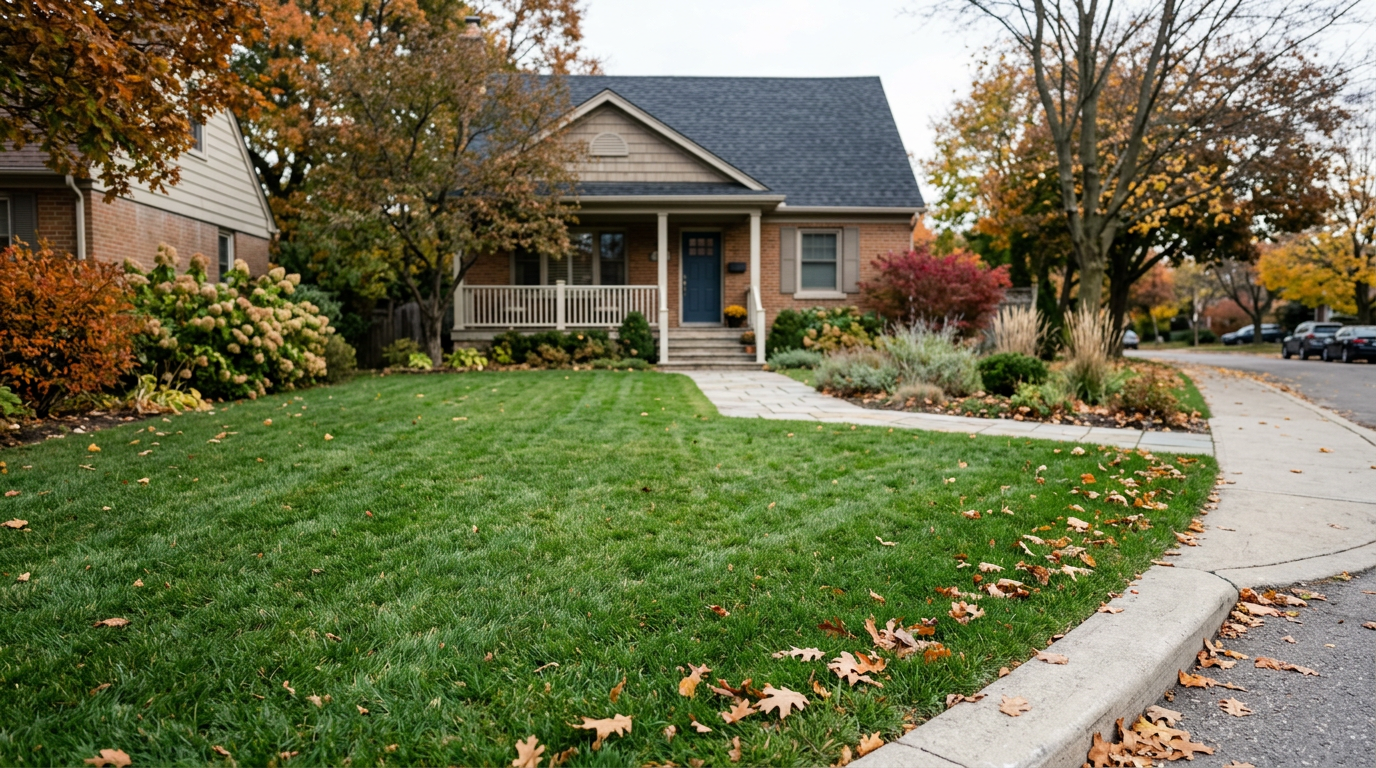
Most homeowners assume the lawn shuts down completely once temperatures drop and growth stops. That assumption is what leads to thin, slow-recovering turf every April. The grass may look dormant, but the root system is still active through much of October and into November, quietly storing the reserves it will draw from when cold-soil recovery begins in spring. Skipping fall fertilization does not just delay a feeding. It sends the plant into winter short on what it needs to survive and recover. For properties across Monroe County, lawn fertilization in the fall is one of the highest-return decisions in the entire season.
The question most homeowners are asking right now is a practical one: is it too late, or is there still time to do something useful? The honest answer depends on where the season actually stands, not just what the calendar says.
What the Plant Is Doing When It Looks Like It Has Stopped
Grass does not power down at the same moment it stops visibly growing. Above-ground growth slows as days shorten and temperatures drop, but root activity continues well past that point. The plant shifts its energy inward, moving carbohydrates and nutrients from the shoot tissue into the root system where they can be stored.
This storage phase is critical. The reserves built during fall are what the plant pulls from in early spring, before soil temperatures are warm enough to support nutrient uptake from the ground. A lawn that goes into winter with adequate reserves wakes up with energy already available. A lawn that skips fall feeding enters that same cold period depleted, with nothing in reserve to draw from.
The result shows up clearly by mid-April. Lawns that were properly supported in fall tend to break dormancy more uniformly and begin filling in faster. Lawns that were not tend to look patchy, slow, and uneven through much of spring. That uneven recovery is often what drives homeowners to call us in May, when the real cause was a decision made the previous October.
The Timing Window Is Narrower Than Most People Expect
Fall feeding is not equally effective throughout the entire fall season. The goal is to apply nutrients while soil temperatures are still warm enough to support root absorption, but after top growth has slowed enough that the plant is directing energy downward rather than pushing new shoot growth.
In Monroe County, that window typically sits between late September and mid-to-late October. Soil holds warmth longer than the air does, which means root activity continues well after nights turn cold. Once the ground freezes consistently, absorption stops. Any application made after that point sits on the surface until spring, where it can move with snowmelt and runoff rather than being taken up by the plant.
Missing this window by a week or two is manageable. Missing it by a month means waiting until next fall to address the root reserve problem. That distinction matters.
A Tired Looking October Lawn Is Often Telling You Something Specific
When a lawn looks washed out, thin, or dull in October, most homeowners assume it is just the season changing. Sometimes that is accurate. But a lawn that looks worse heading into fall than it did in July is often reflecting a season-long accumulation of stress without adequate nutritional support.
We regularly see properties where summer stretched the turf harder than it could handle, between heat, drought, and traffic. Without a fall feeding to help the plant recover and store reserves, the lawn enters winter in an already-compromised state. Those lawns consistently show more winter damage, slower spring recovery, and larger bare areas by the time conditions are right for overseeding.
A tired lawn in October is not just an aesthetic observation. It is a signal that the root system needs support before the ground closes.
What a Depleted Root System Actually Costs You in Spring
This is the part that rarely gets explained clearly. When turf goes into winter with depleted carbohydrate and nutrient reserves, the root system has less to sustain it through the cold period. Root dieback increases. Stress tolerance drops. The plant becomes more vulnerable to winter injury from temperature fluctuation, ice cover, and compaction.
By the time soil temperatures rise again in April, a depleted root system has to rebuild before it can push meaningful recovery. That rebuilding takes time and favorable conditions. In a year with a slow spring, that delay compounds. The lawn looks like it is struggling through May not because of what happened in March, but because of what did not happen the previous October.
Structured fertilization that accounts for fall application addresses this at the source. It is not about green color in November. It is about root capacity in April.
Whether It Is Still Worth Acting Depends on One Factor
Ground temperature, not air temperature, is the deciding variable. If the soil is still unfrozen and you are inside the October window, a fall application will still be absorbed and will contribute meaningfully to winter reserve building.
If the window has already closed, the honest answer is that a late surface application will not accomplish what a properly timed fall feeding would have. The more useful path at that point is to plan the following season with a structured program that accounts for fall nutrition as a managed component rather than an afterthought.
The basic program includes seasonal fertilizer applications coordinated across the year, including fall. The premium program adds organic nutrients and soil conditioner to further support root system stability heading into and out of winter.
What Homeowners Ask Before They Book Fall Service
Is it worth fertilizing if my lawn is already going dormant?
Dormant-looking grass at the surface is not the same as an inactive root system. If soil temperatures are still above freezing, a fall application is still useful. The visual response may be minimal, but the root reserve benefit is real. That is the actual goal of a fall feeding, not surface color.
My lawn looked fine all summer. Why is it dull now?
A lawn can perform reasonably well through the growing season and still be underfed by fall. Summer stress, irrigation patterns, and soil depletion all accumulate over time. If you have not had a fall application in the last few years, what you are seeing now is likely the compounding effect of that pattern.
I fertilized in August. Does that count for fall?
No. A mid-summer application supports active growth during the growing season. It does not produce the same effect as a late-season application timed for root storage. The plant behaves differently in August than it does in October, and the timing of nutrition matters as much as the application itself.
I heard you should not fertilize after the first frost. Is that true?
Surface frost does not close the window. Ground frost does. Soil holds warmth well into fall, often weeks after the first surface frost. The rule to follow is soil temperature, not air temperature or calendar date.
If I missed this window and sign up for a program, will next spring actually look different?
Yes, but the full difference takes a complete seasonal cycle to show. The spring after a properly timed fall feeding looks noticeably more uniform and fills in faster. The spring after a missed fall feeding often requires corrective work, overseeding, or additional applications just to reach baseline. One missed fall compounds. One properly managed fall does too, in the other direction. See our post on early spring lawn care first steps after winter for how spring management connects to fall preparation.
Start the Conversation Before the Ground Closes
If you are inside the window, now is the time to act. If the window has already closed, the better move is to set up a structured program that treats fall nutrition as a planned component of year-round turf management, not something to address when the lawn already looks tired.
LawnLogic provides structured lawn care programs for residential properties throughout Monroe County and surrounding areas. Contact us to discuss where your lawn stands. A managed approach accounts for the full seasonal cycle, including the fall applications that determine how your lawn performs the following spring.
Explore More About Managing Your Lawn
Continue building your understanding of how structured lawn care supports long-term stability.