Your Lawn Can Look Fine in October and Still Fail in Spring

A lawn that looks acceptable going into fall is not a lawn that is ready for spring. It is a lawn that has been given a pass by cooler temperatures. The surface holds its color. Growth slows down. Stress from August disappears. Homeowners evaluating lawn care programs in Rochester NY reach October and see a lawn that looks reasonable, and they ask the same question: is there any point in continuing, or is it safe to stop and pick back up in April?
What you skip in fall often determines what you spend in May.
Surface Appearance in Fall Tells You Almost Nothing About Root Health
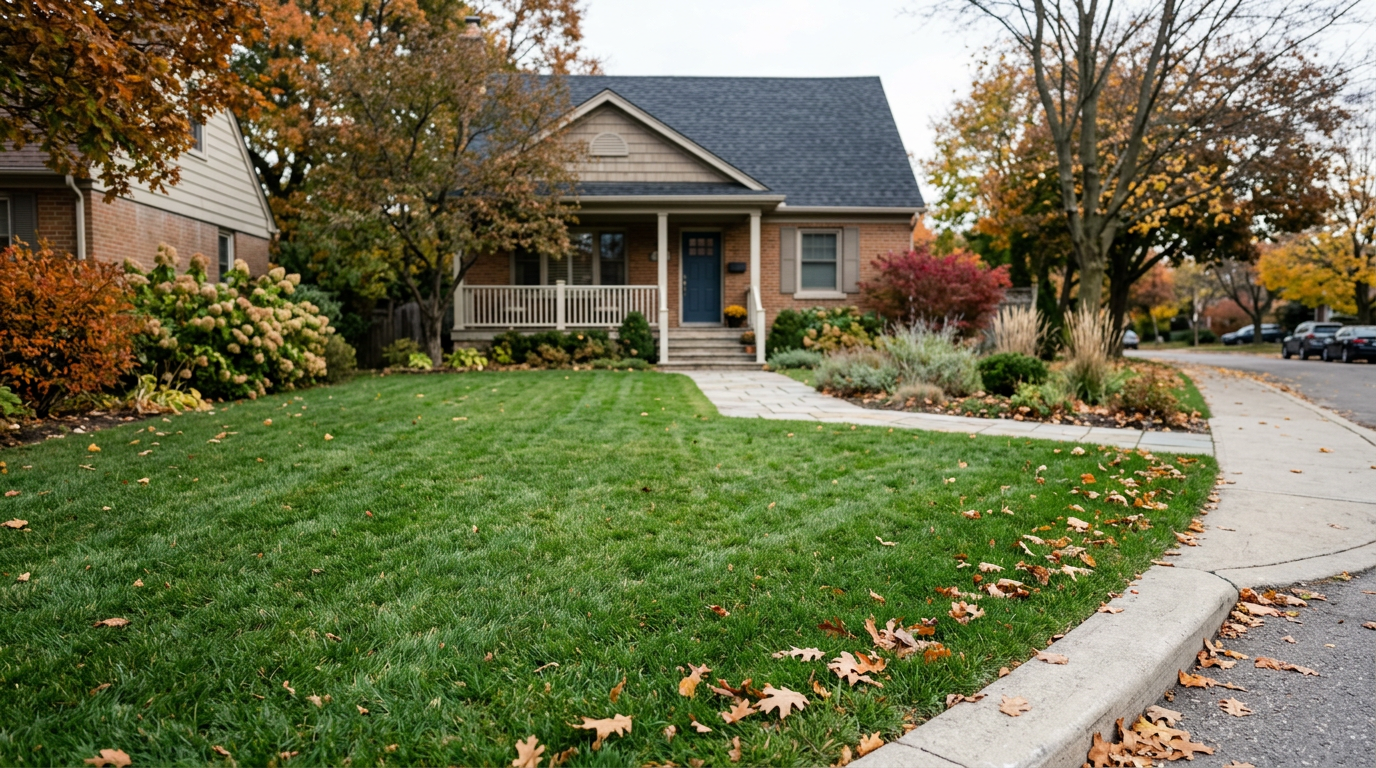
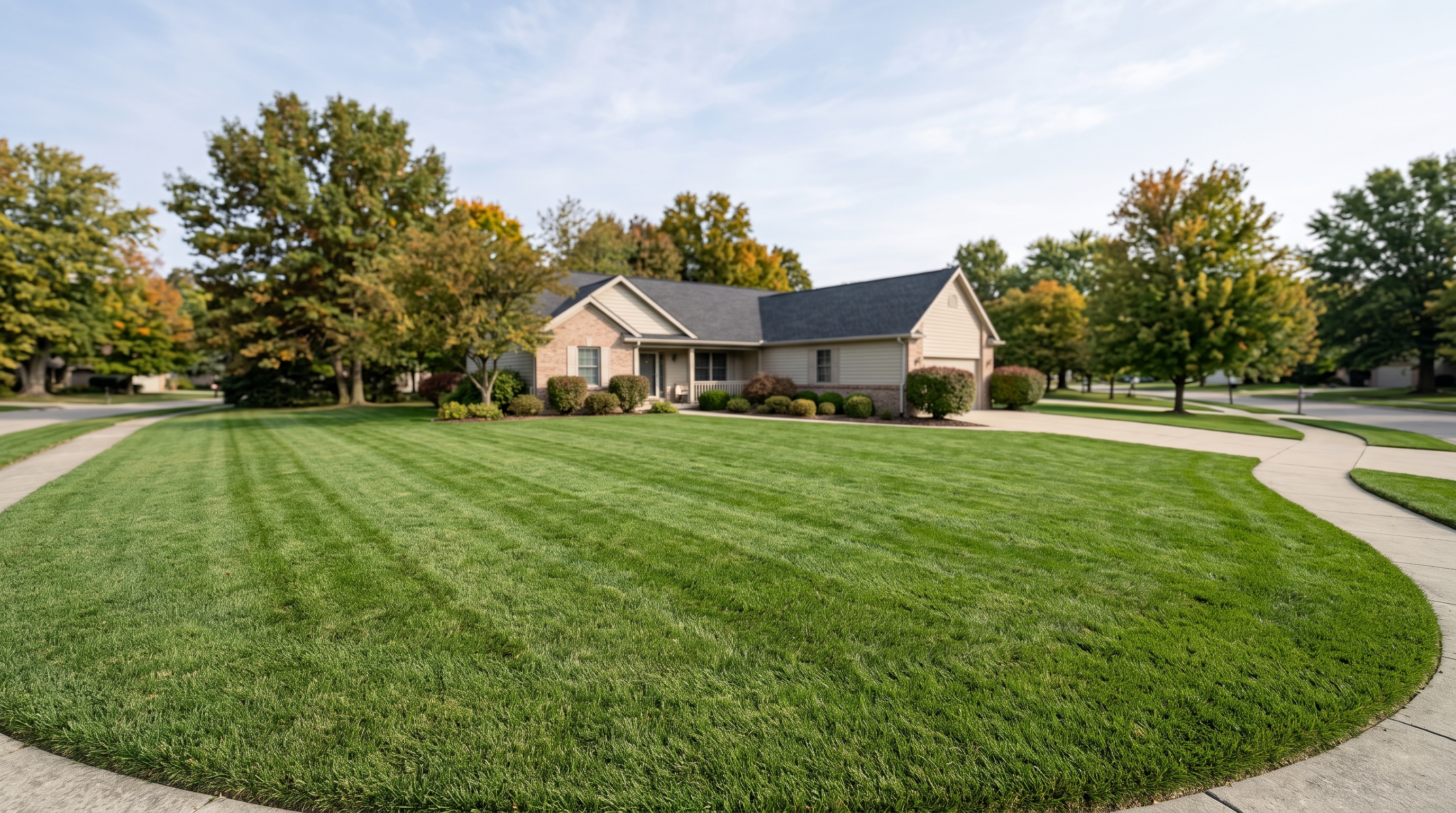
Grass color persists well into October in this region. Cooler temperatures reduce stress, which makes the lawn appear more stable than it actually was during the heat of August. That visual stability leads homeowners to conclude the lawn is in good condition when it is entering dormancy in a compromised state.
The real indicators of turf health are not visible. Root depth, soil compaction, organic matter content, and stand density are what actually matter going into winter. A lawn can hold its color through October while the root system is shallow, the soil is compacted, and thin areas are only being masked by the same cooling temperatures that reduced summer stress. None of those conditions improve on their own over winter. They carry forward.
What the Soil Is Doing While the Surface Looks Stable
Soil compaction does not resolve over winter. A lawn that struggled through a dry August likely experienced compaction-related stress. The roots were shallow. Water moved across the surface instead of into the soil profile. The lawn survived because temperatures dropped, not because conditions improved.
Lawn aeration applied in fall creates channels that allow the soil to accept water and support root development before dormancy sets in. When that step is skipped, the soil enters winter in the same compressed state. Come spring, the first flush of growth is drawing on a root system that never had the opportunity to extend.
That is why lawns that appeared fine in October often look thin and uneven by the second week of May.
We regularly see this pattern on properties that come to us after skipping fall service. The homeowner expected the lawn to come out of winter in the same condition it went in. Instead, they find thin areas that have widened, weed pressure concentrated exactly where the stand was light, and a lawn that is slow to recover and visually uneven through most of the spring growing period.
Thin Areas in October Become Weed Entry Points in April
A lawn does not go into winter with uniform density across the entire yard. There are almost always areas that are lighter, whether from summer traffic, shade stress, or soil inconsistency. Those areas may not be obvious when growth slows in fall, but the grass is thinner there and the soil is more exposed.
Weeds exploit exactly those gaps. Crabgrass control applied in spring depends on timing and on surface conditions. Where the stand is thin going into spring, pre-emergent barriers are less effective because the soil is more exposed and germination pressure is higher.
The lawns that show the most crabgrass by June are almost always the ones that entered spring with the weakest stand density. That density problem did not start in spring. It was already present in October.
Weed control applied during the growing season addresses what has already emerged. The more effective approach is to arrive in spring with a dense, well-rooted stand that limits the opportunity for germination in the first place. That density is built through fall management, not reactive spring treatment.
Skipping Fall Service Creates a Problem That Takes a Full Season to Correct
When a lawn enters spring in a compromised condition, the first priority becomes stabilization rather than improvement. The lawn spends the spring growing period recovering ground it should not have lost. Corrective steps take time. Overseeding thin areas in spring carries a lower success rate than fall seeding because of temperature volatility and competition from weed germination. The window to correct root-level problems without full renovation is narrow.
A structured program maintains the lawn in conditions where it does not need to recover from October neglect every spring. That is the operational difference between a managed program and seasonal treatments applied only when problems are visible.
If you are evaluating what level of structure your lawn needs, the basic, enhanced, and premium programs at LawnLogic are built around exactly this principle: continuity through fall positions the lawn to perform in spring without requiring corrective intervention.
What Rochester Homeowners Ask Before Pausing Fall Service
Q: My lawn looked fine all summer. Why would I need to do anything in fall? That is one of the most common positions we hear in September. A lawn that held up through summer did its job. But summer performance and fall readiness are not the same condition. The root system, the soil profile, and the stand density all need to be in a managed state before dormancy sets in. A good summer does not carry that forward automatically.
Q: Can I just restart in April and catch up? You can restart in April, but you cannot recreate what fall management provides. Root development, soil conditioning, and stand density are not produced through spring applications. Spring service builds on what fall left behind. If fall was skipped, spring service begins from a lower baseline, and that gap shows through most of the growing season.
Q: I skipped fall service last year and my lawn came back. Why would this year be any different? Some lawns survive a skipped fall and recover well enough that the loss is not obvious. Others do not, and the homeowner spends the spring chasing problems they do not fully understand. The issue is that you are not comparing the lawn you have to the lawn you could have. A lawn that came back after a skipped fall still spent the first half of spring in recovery. It still had more weed pressure in May. It still started the season from a lower position. The recovery just looked acceptable enough that the cost went unnoticed.
Q: What if my lawn only has a few thin spots? Does it still matter? Thin spots in fall are the areas to watch most carefully. They are the first places weeds establish in spring and the last places to recover. A few thin spots in October can represent a significant portion of the lawn's visible surface by April.
A Lawn That Carries Through Fall Does Not Have to Recover in Spring
The purpose of a managed lawn care program is not to react to problems. It is to maintain conditions that prevent problems from establishing in the first place. Fall is not the end of the season. It is the final phase of preparation for the one that follows.
LawnLogic delivers structured, coordinated turf management across Monroe County and select areas of Wayne and Ontario Counties. If your lawn looked acceptable this fall and you are unsure what that actually means for next spring, this is the right time to have that conversation.
Contact LawnLogic to schedule a review of your current program or to start one before the season closes. You will get a direct assessment of where your lawn stands now and what it needs to perform next spring without starting from a deficit.
Explore More About Managing Your Lawn
Continue building your understanding of how structured lawn care supports long-term stability.