Why Spring Fertilization Should Support the Lawn, Not Push It
The body content of your post goes here. To edit this text, click on it and Spring makes a lot of homeowners want to do something fast.
The lawn is starting to move again. Some areas are greening up. Others still look slow. After a long winter, it is easy to look at the yard and think the goal should be simple. Push it forward. Get it green. Get it growing. Make it look alive again as quickly as possible.
That is where spring fertilization often gets misunderstood.
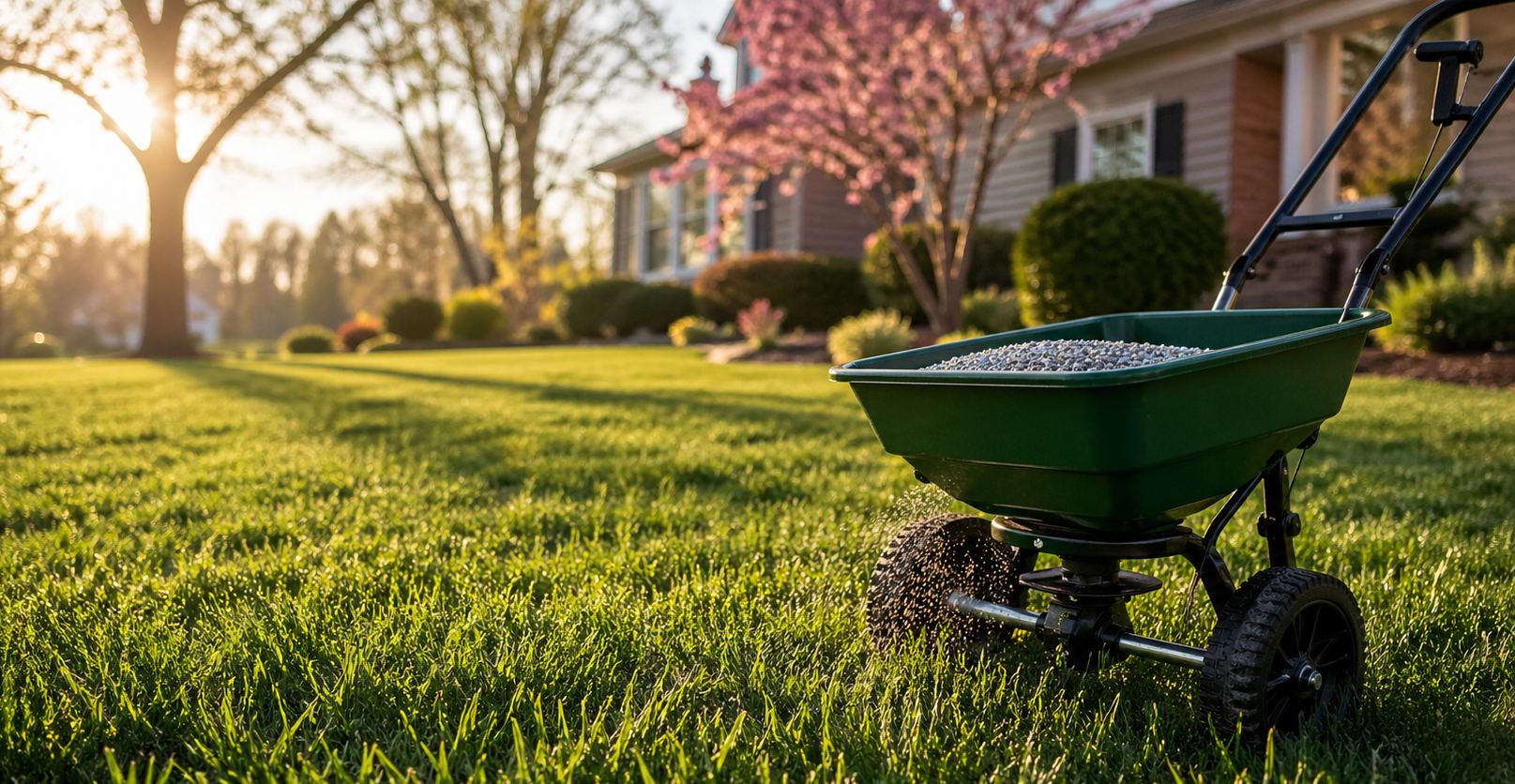
A good spring fertilization plan is not supposed to force the lawn into an aggressive visual response. It is supposed to support the lawn as it moves out of winter and into the growing season with better balance, better consistency, and a stronger foundation for what comes next.
That distinction matters.
When fertilization is used to support the lawn, it helps build a more stable season. When it is used to push the lawn too hard, it can create a short term response that looks promising early but leaves the property more uneven, more reactive, and harder to manage later.
Spring fertilization is not supposed to be a race to the darkest green lawn
One of the most common mistakes in spring lawn care is treating color like the whole goal.
A lawn that greens up fast can look impressive for a while. But early color alone does not tell you whether the turf is actually becoming more stable. In many cases, the lawn is still working through uneven moisture, inconsistent recovery, variable soil conditions, and weak areas left behind by winter. If the only objective is a fast visual result, fertilization can end up chasing appearance instead of supporting performance.
That is not the same thing.
A more controlled spring fertilization approach is meant to help the lawn start moving in the right direction, not simply react with the fastest possible top growth. The property should be building strength, not just showing color.
The lawn is still transitioning when spring fertilization begins to matter
By the time homeowners start thinking seriously about fertilizer, the lawn is often still in transition.
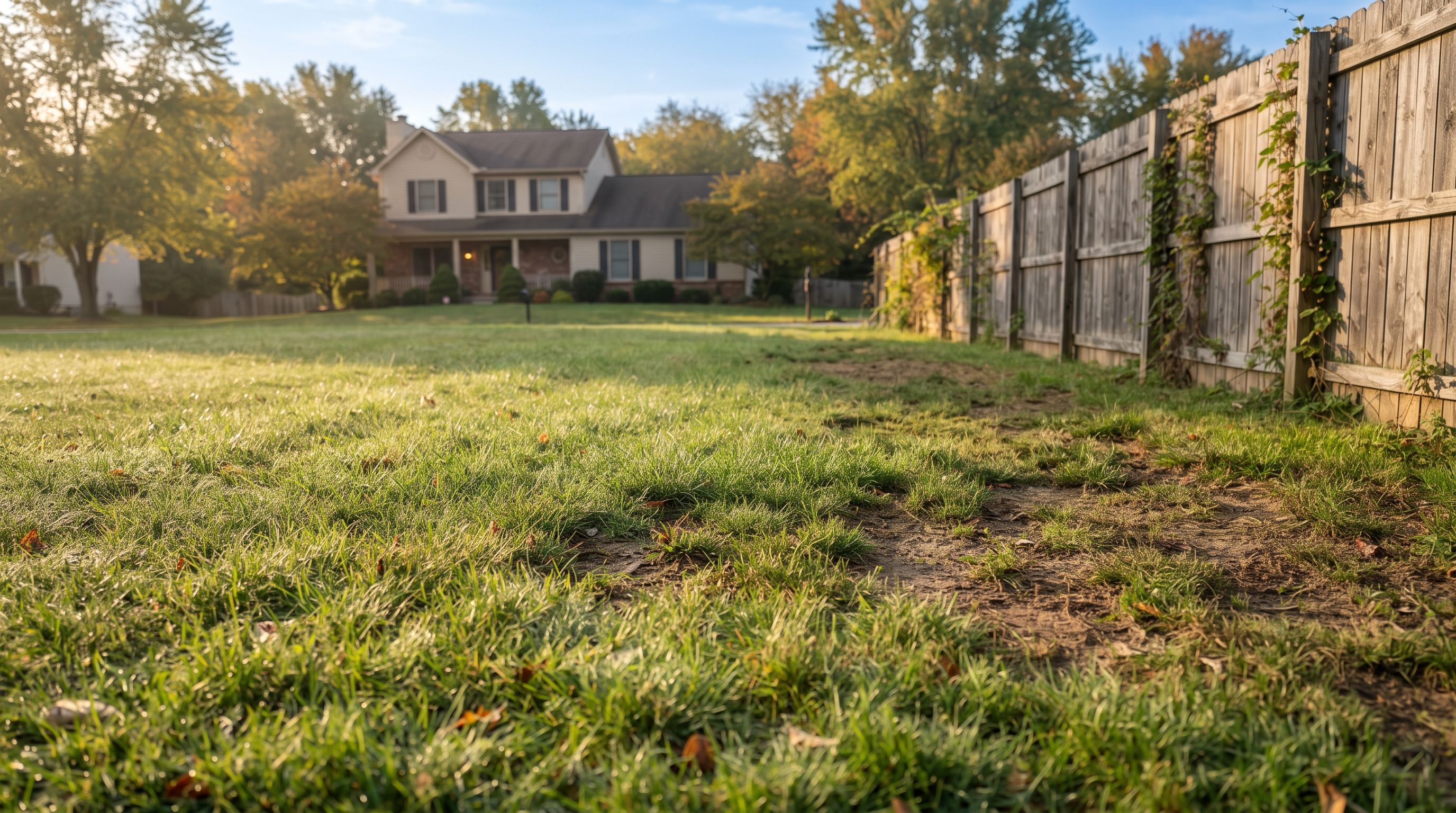
Some sections are moving. Some are slower. Sunny parts of the yard may look ahead of shaded ones. Wetter areas may still feel heavy. The grass may be waking up, but that does not mean the entire property is ready to respond the same way all at once.
That is why spring fertilization needs restraint.
The lawn is not a finished system at that point. It is a property coming out of winter and trying to settle into the season. Fertilization should help that process, not overwhelm it. A measured approach gives the lawn support while it is still stabilizing. A push approach often ignores the fact that the yard is still uneven and not fully ready for aggressive growth pressure.
Supportive fertilization works with the lawn’s condition
A supportive spring fertilization plan starts from the condition of the lawn itself.
It asks what the property needs to move more evenly into the season. It accounts for how the lawn came through winter, how quickly different sections are recovering, and whether the turf is showing stable momentum or just brief visual activity. That kind of approach treats fertilization as part of management, not as a standalone event.
This is a much better fit for real lawn performance.
Lawns across the Greater Rochester area and nearby communities along Lake Ontario rarely enter spring under perfectly even conditions. Some carry more moisture. Some have weaker edges. Some have recurring thin areas. Some have sections near trees or hardscape that never respond quite like the open lawn. A fertilization plan that supports the lawn pays attention to that reality instead of pretending the whole yard is ready to be pushed at the same pace.
Pushing the lawn too hard in spring can create a shallow kind of progress
The problem with push oriented spring fertilization is that it can make the lawn look ahead of itself.
Color improves quickly. Growth speeds up. The property looks like it is making strong progress. But that does not always mean the lawn is actually settling into a stronger seasonal position. Sometimes it simply means the top growth reacted faster than the rest of the lawn was ready to support.
That kind of progress can be misleading.
A lawn that gets pushed too aggressively in spring may look better before it is actually more stable. Weak sections are still weak. Wet areas are still wet. Compacted ground is still compacted. Thin edges are still under pressure. The fertilization did not solve those conditions. It only made the surface response more noticeable for a while.
That is why early visual success is not always real seasonal success.
Spring fertilization should help the lawn grow into the season, not leap ahead of it
A good lawn season builds in sequence.
Recovery begins. Conditions stabilize. The lawn starts moving more evenly. Then the turf can keep building toward stronger density, better consistency, and more reliable seasonal performance. Fertilization should support that sequence.
It should not try to skip it.
When the lawn is pushed too early or too heavily, the season can feel ahead visually while still being weak structurally. That often leads to more inconsistency later, especially once the property starts facing stronger weed pressure, surface insect activity, traffic, heat, or moisture swings.
A supportive fertilization plan respects the pace of the season. It helps the lawn move forward without pretending that spring is more settled than it really is.
A pale spring lawn is not always asking to be pushed harder
Homeowners often see pale color in spring and assume the lawn needs a stronger fertility response right away.
Sometimes the lawn does need nutrient support. But pale color alone does not automatically mean the turf needs to be pushed. In many cases, the lawn is still coming out of cold soil conditions, lingering moisture, and uneven early weather. Some sections are simply slower because the season is still settling.
That is why interpretation matters.
A lawn that looks a little behind is not always asking for a harder shove. Sometimes it is asking for conditions to improve and for the property to be managed with better timing. Fertilization can help that process, but only when it is being used to support recovery rather than force a cosmetic leap.
Supportive fertilization helps the stronger and weaker sections stay more connected
One of the practical benefits of a more controlled spring fertilization approach is that it reduces the risk of making the property feel even more uneven.
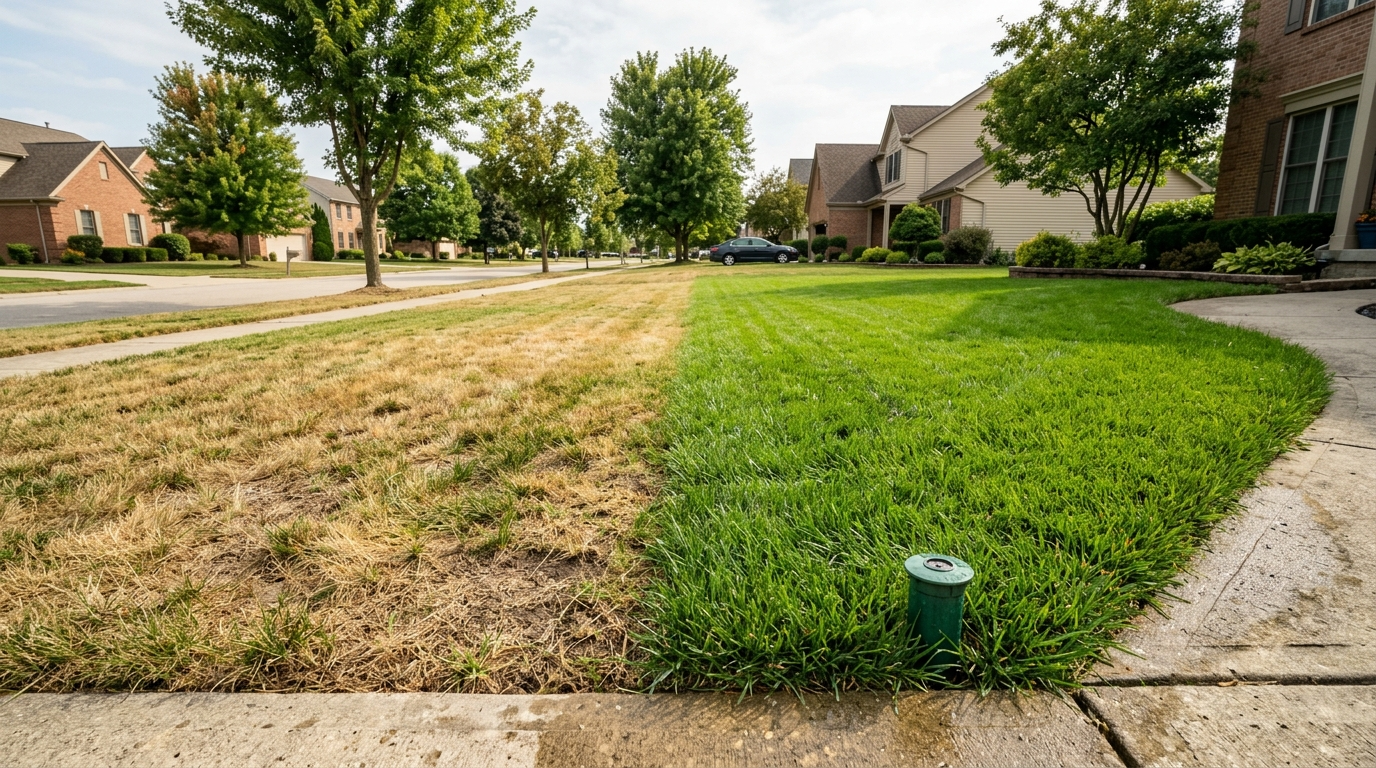
If the lawn is pushed hard while some sections are still lagging, the stronger parts of the yard often surge ahead while the weaker parts stay behind. The result is a lawn that looks less connected. One side seems active. Another still looks flat. Open areas respond faster than tree lined sections. Borders stay inconsistent while the middle looks stronger.
That makes the property harder to manage.
A supportive fertilization plan helps the lawn build more evenly instead of exaggerating the divide between the sections already performing well and the sections that still need time or additional support.
Spring fertilization cannot fix problems that are not nutrient problems
This is one of the most important realities homeowners need to understand.
If a section of the lawn is thin because of compaction, fertilization does not remove compaction. If the edge is weak because of heat and traffic along concrete, fertilization does not remove that pressure. If turf around trees is struggling because of shade and root competition, fertilization does not solve the site limitation. If the lawn is soft because of drainage, nutrients alone do not stabilize that area.
That is why pushing fertilizer harder often disappoints.
The lawn may react visually, but the actual problem stays in place. The area still falls behind. The weakness still shows up later. The property still feels less stable than it should.
Supportive fertilization works best when it is part of a broader understanding of what the lawn is actually dealing with.
A controlled fertilization plan leaves room for the rest of the season
Spring is not the only part of the season that matters.
The lawn still has to move through late spring, early summer, weed pressure, changing moisture, insect pressure, and the general stress that builds as the season progresses. A fertilization plan should account for that. It should help the lawn build into those conditions with more control rather than chase an early look that leaves the property harder to manage later.
That is one reason restraint matters.
The goal is not to extract the fastest response possible from the lawn at one moment in spring. The goal is to put the property on a better seasonal path overall. A supportive fertilization approach fits that goal much better than one built around pushing the lawn for immediate appearance.
What support looks like in a spring fertilization plan
Supportive spring fertilization has a calmer objective.
It is trying to help the lawn regain direction, improve seasonal consistency, and build toward stronger turf performance without forcing an exaggerated response too soon. It works as part of a structured lawn care program. It fits into the timing of the property. It helps the lawn progress more deliberately.
That means the outcome often looks less dramatic at first than homeowners expect.
But the better result is not always the loudest result. A lawn that starts spring with more balance, steadier recovery, and fewer exaggerated swings is often in a stronger position than a lawn that surged visually and then struggled to hold together.
What pushing the lawn often looks like instead
A push mindset usually sounds simple.
The lawn looks tired, so the answer is to wake it up hard. Make it greener fast. Make it grow fast. Make spring visible right now.
That approach can create a quick response, but it often ignores the condition of the property underneath. It assumes all lawn weakness is solved by more growth. It treats early color as proof of success. It overlooks whether the lawn is actually getting more stable or simply reacting.
That is why pushed lawns often look ahead of their real condition.
The appearance improves before the structure improves. Then the season keeps moving, and the unresolved weaknesses start showing up again.
The right spring fertilization plan should make the lawn feel more controlled
This is the standard that matters.
A good spring fertilization plan should make the property feel like it is moving into the season with more order. The lawn should start looking more connected. Growth should become more consistent. Weak sections should become easier to interpret. The yard should feel like it is being managed, not overstimulated.
That is a very different outcome than simply getting faster green color.
A controlled lawn season is built by supporting the lawn through its transition, not by trying to push it past its actual condition.
Why this matters so much in the Rochester region
Lawns in the Rochester region rarely get a smooth, simple spring.
They come through long winters, stop and start early weather, wet soil, shaded sections that lag, and properties that often recover unevenly from one area to another. That makes spring fertilization more important, not less. But it also means the lawn benefits more from measured support than from aggressive pushing.
In this region, the season is already uneven enough.
A good fertilization plan should reduce that unevenness where it can, not make it more dramatic by pulling the stronger sections ahead while the weaker ones stay unstable.
Why spring fertilization should support the lawn, not push it
Spring fertilization should support the lawn because the goal is not just to create an early visual response. The goal is to help the property move out of winter and into the season with better balance, steadier growth, and stronger long term stability.
Pushing the lawn too hard can create a quick surface improvement without solving the conditions that still make parts of the property weak. Supporting the lawn helps build a more controlled season instead. It gives the turf what it needs to move forward without forcing it to perform ahead of what the lawn can actually sustain.
That is the difference between a lawn that just looks active and a lawn that is being managed properly.
Frequently Asked Questions
Is spring fertilization supposed to make the lawn dark green right away?
Not necessarily. A good spring fertilization plan should support the lawn’s seasonal transition, not just chase fast color. Quick greening does not always mean the lawn is becoming more stable.
Can too much spring fertilizer be a problem?
Yes. If the lawn is pushed too hard too early, it can create a fast visual response without improving the conditions that are still making the property uneven or weak.
What does supportive spring fertilization mean?
It means fertilizing in a way that helps the lawn recover, stabilize, and build into the season with better balance rather than forcing aggressive early growth.
Can fertilizer fix thin or weak areas by itself?
Not always. If those areas are weak because of drainage, compaction, shade, wear, or other site conditions, fertilization alone will not solve the actual cause.
Build the season with support, not force
If the lawn is going to hold together through the season, spring fertilization should help it build strength in the right sequence. LawnLogic uses fertilization as part of a
structured lawn care program designed to support recovery, improve consistency, and move the property into a more stable season without forcing growth the lawn is not ready to sustain.
Explore More About Managing Your Lawn
Continue building your understanding of how structured lawn care supports long-term stability.