The First Things You Can Do to Help Your Lawn
When Winter Finally Breaks
When winter finally starts letting go, a lot of homeowners want to get outside and do something useful for the lawn right away.
That instinct makes sense. The yard looks tired. The grass may still be flattened in places. Some areas are wetter than others. Color is uneven. The whole property can feel like it has been sitting still for months. Once the snow is gone and the ground starts opening up, it is natural to want to jump in and help.
The problem is that not every early spring lawn task actually helps.
Some of the best first steps are simple. Some things are worth waiting on. And some of the most common early season mistakes happen when homeowners try to force the lawn forward before conditions are ready.
That is why the first things you do matter.
Start by looking at how the lawn came through winter
Before doing anything else, take a slow walk across the property.
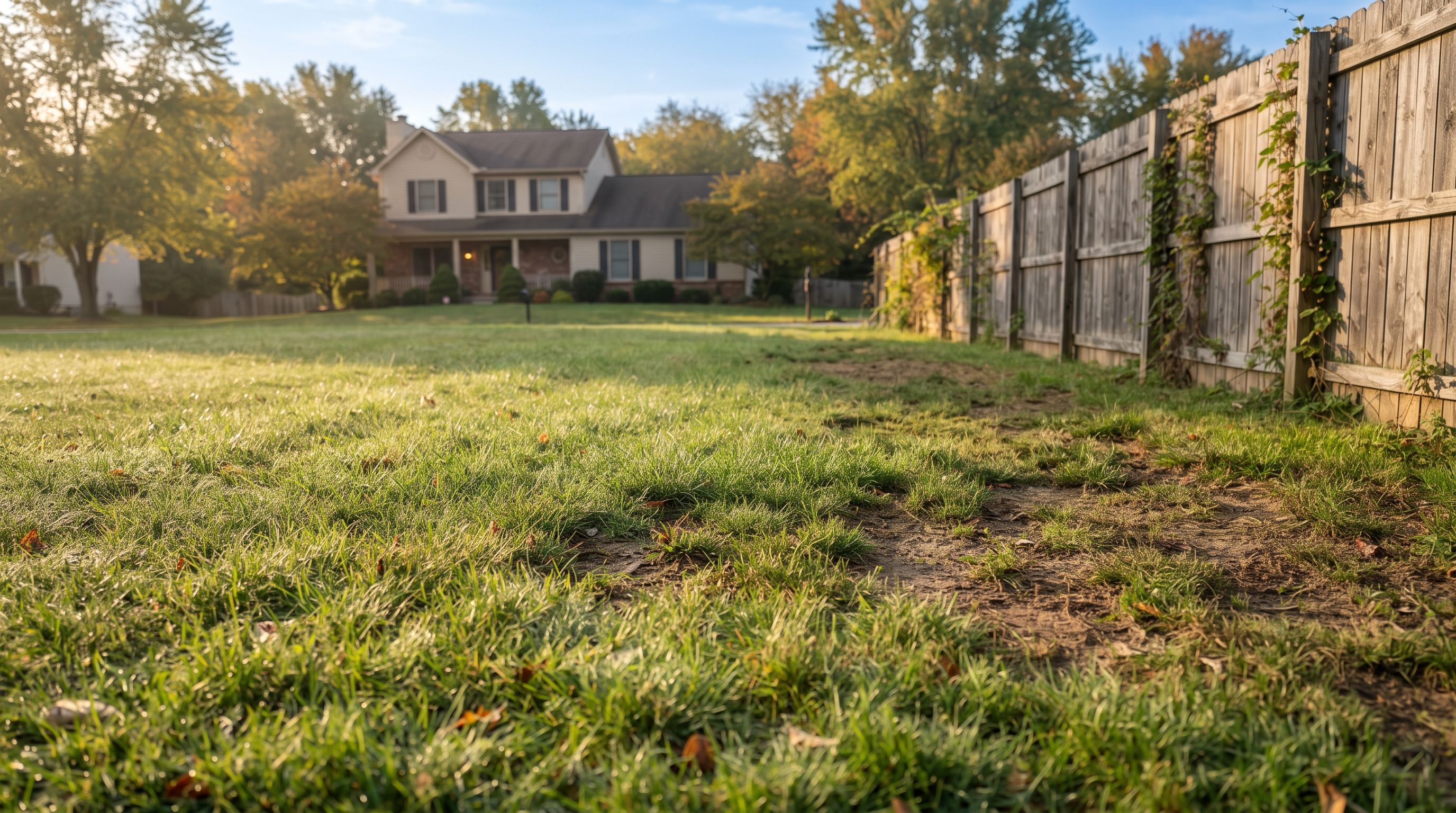
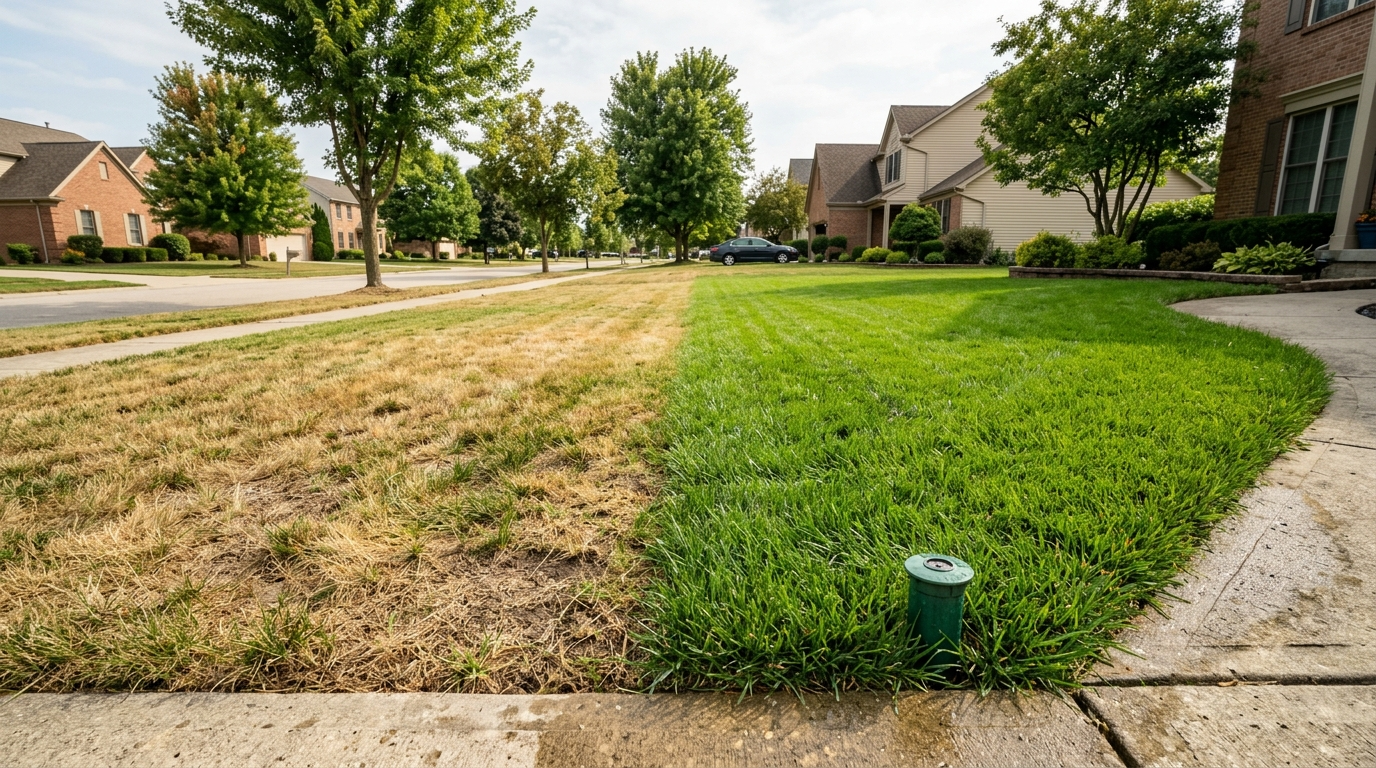
Look at what the lawn is actually showing. Some areas may be waking up faster than others. Certain sections may still be soft. The edges near the driveway or sidewalk may look rougher. Tree lined areas may seem thinner. Low spots may still be holding moisture. Parts of the yard may look flattened or matted down from snow cover and winter conditions.
This first look matters because it helps you avoid treating the whole property like one uniform surface.
The lawn usually comes out of winter unevenly. The more clearly you can see where it is soft, slow, thin, or beat up, the easier it becomes to avoid doing the wrong thing too early.
Wait until the lawn is dry enough before walking it heavily
One of the most helpful things you can do for the lawn in early spring is also one of the simplest.
Stay off it when it is too wet.
This is especially important in parts of the Greater Rochester area and nearby communities where spring often starts with saturated ground, melting snow, and cold rain. When the lawn is still soft, repeated walking can press weak areas down further and create unnecessary stress right when the turf is trying to recover.
If the ground feels spongy or leaves footprints easily, it is too early for much traffic.
That does not mean you cannot check on the lawn. It means avoid turning early spring into a season of unnecessary wear before the grass has a chance to stabilize.
Clean up sticks, branches, and winter debris first
Once the lawn is reasonably accessible, one of the best first tasks is basic cleanup.
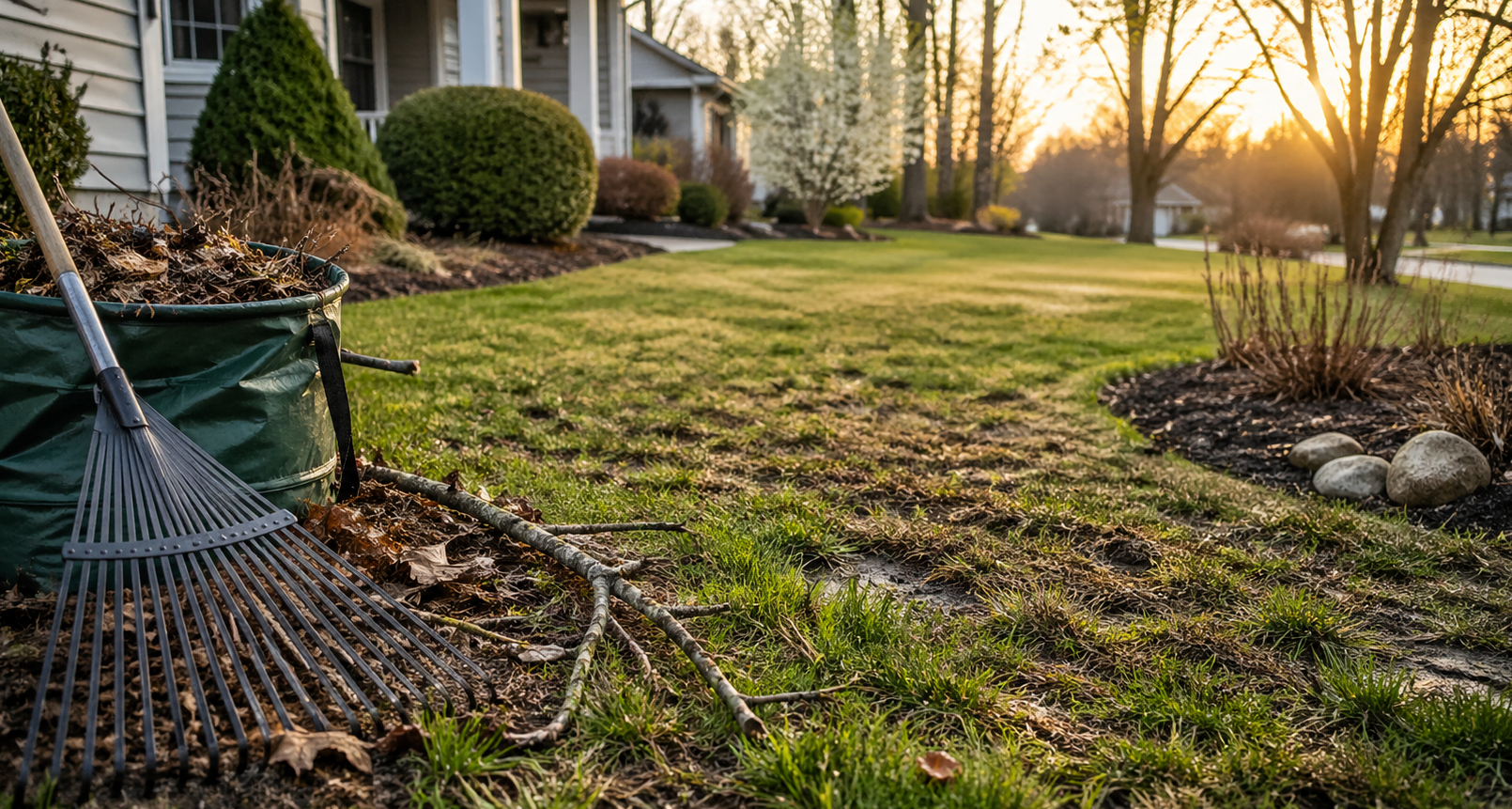
Pick up branches, sticks, and any winter debris scattered across the yard. Remove leaves or piles of organic material that are still smothering sections of grass. Clear out anything that is blocking light and air from reaching the surface.
This is a useful first step because it helps the lawn breathe and lets you see what condition the turf is actually in.
It also makes the property safer and easier to inspect without creating the kind of disruption that more aggressive early spring work can cause. Cleanup is one of the few things that is almost always worth doing first, as long as the lawn is dry enough to walk carefully.
Gently rake matted areas, but do not overwork the lawn
Some lawns come out of winter looking flattened or stuck together in spots.
This is common in areas where snow sat for a while, where leaves collected, or where the grass stayed pressed down through long cold periods. In those cases, a light rake can help loosen matted sections and improve airflow around the turf.
The key word is light.
You are not trying to tear into the lawn or aggressively dethatch it the moment winter breaks. You are just helping lift areas that are pressed down enough to stay stuck. If you rake too hard while the lawn is still fragile, you can do more harm than good.
A gentle cleanup pass is helpful. A heavy handed early spring attack usually is not.
Hold off on seeding until you know why an area is thin
A lot of homeowners see thin spots in early spring and immediately want to throw seed down.
Sometimes that urge is understandable, but it is usually too early to assume seeding is the right first move. Some areas are only late because they are shaded, wetter, slower to warm, or still recovering from winter conditions. Other areas are thin for deeper reasons like compaction, wear, edge stress, or tree competition.
That is why one of the smartest first steps is observation.
Let the lawn show you a little more before deciding that every thin area needs seed right away. If the problem section is still soft, still shaded, or still under the same pressure that weakened it before, seeding too early may just turn into a wasted effort.
Do not rush to fertilize just because the lawn looks pale
Pale spring color can make homeowners feel like the lawn needs feeding immediately.
Sometimes the lawn does need nutrient support as part of a proper seasonal plan, but early spring color alone is not a good reason to rush. The lawn may still be coming out of cold soil conditions, lingering moisture, and uneven early weather. A pale lawn is not always a hungry lawn. Sometimes it is simply an early season lawn.
That is why the first thing to do is not usually to throw product at the problem.
A better first step is understanding whether the lawn is just slow, whether it is starting to move, and whether the season has actually settled in enough for more active steps to make sense.
Clear out anything that is keeping water trapped
If parts of the lawn are staying overly wet, look for simple things that may be making the problem worse.
A blocked downspout outlet, leftover debris, a pile of leaves, or anything else trapping water near the surface can keep a section of the yard heavier than it needs to be. You may not be able to solve every drainage issue right away, but you can remove the obvious things that are making early spring conditions worse.
This is a practical homeowner step that often gets overlooked.
The lawn does not need to stay wetter than necessary just because winter ended. Small cleanup actions around water flow can make a real difference in how quickly certain areas start recovering.
Pay attention to where the lawn stays behind
One of the most helpful things you can do in early spring is simply take note of the patterns.
Which side wakes up first. Which areas stay soft longer. Where the grass looks thinner. Which borders look rough. What parts of the lawn seem slower every year. Those early observations are valuable because they often tell you where the property is least stable before the season gets busier.
That information matters later.
The weak areas that show up right after winter often become the same sections that struggle with weeds, thinning, edge breakdown, or uneven growth once the season picks up.
Avoid heavy raking, aggressive dethatching, or major disturbance too early
When winter finally breaks, it is easy to mistake activity for progress.
Homeowners often feel like they should be doing something vigorous to wake the lawn up. But in many cases, the best early spring approach is lighter than people expect. If the turf is still fragile and the soil is still soft, aggressive work can create more stress instead of helping recovery.
That includes heavy dethatching, hard raking, and unnecessary disturbance before the lawn has started growing more actively.
The lawn does not need to be bullied into spring. It needs enough time and the right conditions to move into the season without being set back by early damage.
Watch for repeated problem areas instead of treating everything equally
Not every section of the property needs the same help.
A sunny front lawn may start moving before a shaded backyard. The strip by the driveway may look rougher than the open yard. Turf around trees may lag for reasons that have nothing to do with the rest of the lawn. One part of the property may need patience, while another may need more deliberate support later.
That is why the best DIY mindset is not to do the same thing everywhere.
It is to let the lawn show you where conditions are different and avoid forcing one blanket approach across the whole yard too soon.
Mow only when the lawn is actually ready
As the season starts moving, mowing becomes part of the next phase, but timing matters.
Do not mow just because a few sections of the lawn are growing faster. Wait until the property is dry enough and the grass is actively growing enough to justify it. Early mowing on soft ground can create wear, tracking, and unnecessary stress in weaker sections.
The first cut should help the lawn feel cleaner and more settled, not drag it backward.
That means waiting until conditions support the pass instead of treating the first possible mowing day like a race.
Focus on helping the lawn recover, not forcing it to look finished
This is probably the most useful early spring mindset a homeowner can have.
When winter finally breaks, the lawn does not need to look done. It needs to start recovering in the right direction. That means cleanup, careful observation, reduced traffic on wet ground, and enough restraint to avoid overworking the property before it is ready.
A lot of good early spring lawn care is about not creating extra problems.
You are helping the yard come out of winter with less pressure, better visibility, and a cleaner path into the season.
What to avoid doing too early
A helpful DIY article should be honest about this part too.
Avoid assuming every pale area needs fertilizer right away. Avoid assuming every thin area needs seed immediately. Avoid walking the lawn hard when it is still soft. Avoid aggressive raking just because the grass looks tired. Avoid treating early unevenness like proof that the whole lawn is failing.
A lot of spring lawn mistakes come from doing too much before the property is ready.
The best first steps are usually the ones that support the lawn without overcorrecting it.
What the first things should actually accomplish
By the time you finish the first round of early spring lawn work, the goal is not to have a perfect lawn.
The goal is to have a cleaner, clearer, less burdened property.
You should be able to see how the lawn came through winter. The surface should be free of obvious debris. Matted spots should be gently opened up where needed. Water trapping issues should be reduced where possible. And the lawn should be protected from unnecessary traffic while it is still soft.
That is a strong start.
It gives the property a better chance to move into spring without extra stress and gives you a more accurate read on what the lawn may need next.
Frequently Asked Questions
What is the first thing I should do for my lawn after winter?
Start with cleanup and observation. Remove branches, leaves, and winter debris, then look at how different parts of the lawn are coming out of winter before doing anything more aggressive.
Should I rake my lawn as soon as winter ends?
You can lightly rake matted areas once the lawn is dry enough, but avoid aggressive raking too early. The grass is often still fragile in early spring.
Is it too early to seed thin spots right after winter?
Usually, yes, at least as a first reaction. Thin areas often need to be understood before they are seeded, especially if they are still wet, shaded, compacted, or under another kind of stress.
Can I walk on my lawn when the snow is gone?
Only carefully if the ground is still soft. If the lawn feels spongy or leaves footprints easily, too much traffic can create extra stress before the turf has recovered.
Give the lawn a better start without overdoing it
When winter finally breaks, the best first steps are usually the simplest ones. Clean up the surface, stay off wet ground, gently loosen matted areas, and pay attention to what parts of the lawn are slow, soft, or thin. A good early spring start is less about forcing the lawn forward and more about helping it recover without adding new stress.
Explore More About Managing Your Lawn
Continue building your understanding of how structured lawn care supports long-term stability.