Why Your Lawn Looks Patchy After Winter in NY
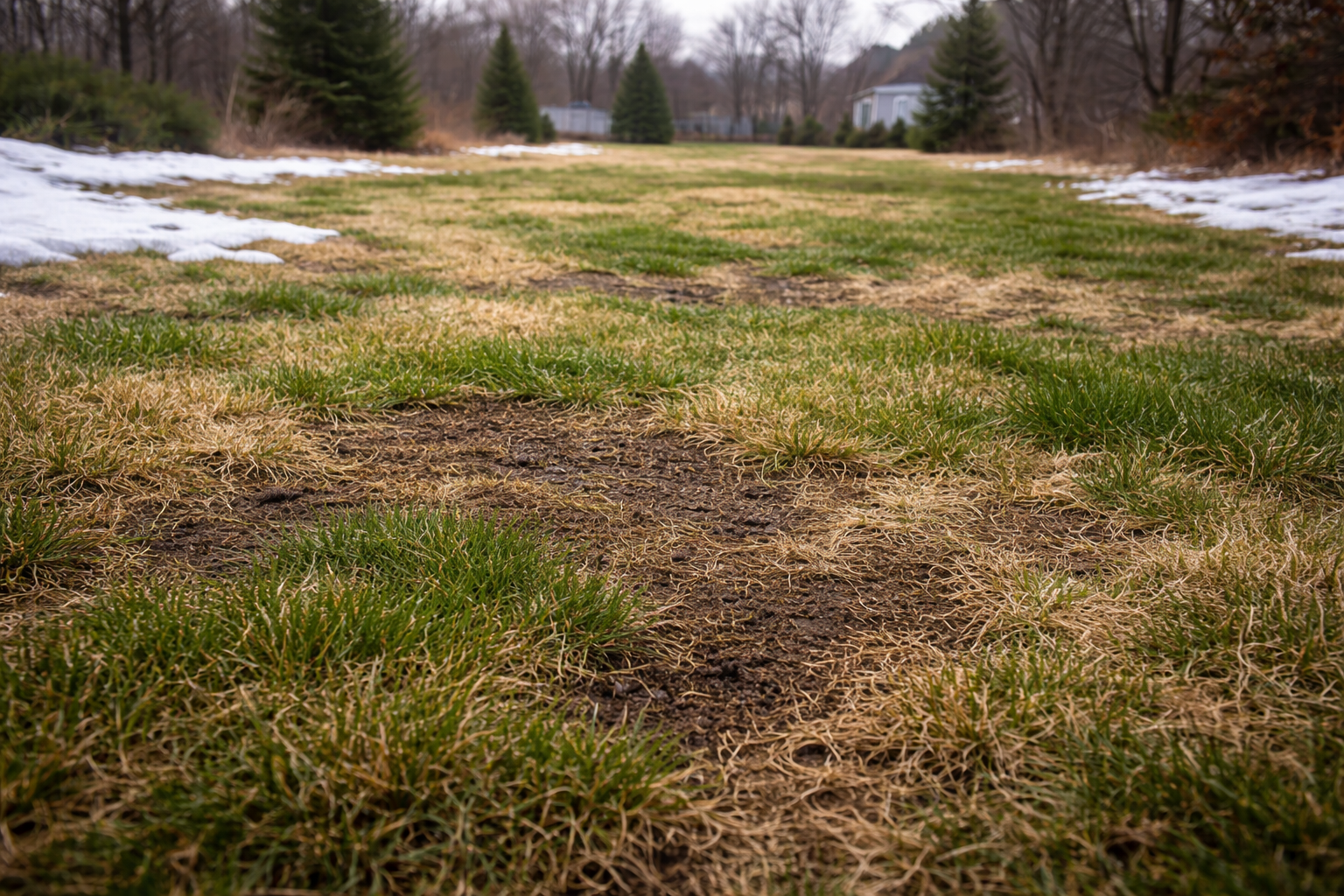
By late February and early March, snow begins to melt across Western New York. What remains rarely looks impressive. Certain areas appear thin. Some sections feel softer than others. Color is uneven, and patches stand out more than they did in the fall.
It is common to assume winter caused damage. In most cases, what you are seeing is not damage. It is transition.
Early spring exposes how your soil, roots, and seasonal timing interact. The lawn is not failing. It is recalibrating.
What Actually Happens Beneath the Surface
During winter, grass enters dormancy. Growth above ground pauses almost entirely. Below the surface, root activity slows to a minimum. Soil temperatures drop. Microbial activity decreases. Nutrient movement becomes limited.
Then Western NY does what it always does. It freezes. It thaws. It freezes again.
Each cycle expands and contracts the soil. Water moves through it. Ice crystals form and break apart. That repeated movement changes soil structure before you ever see the lawn again.
When snow finally melts, the surface may look inconsistent, but most of what matters is happening below it.
Uneven Thaw Creates Uneven Recovery
One of the biggest contributors to patchiness is uneven thawing.
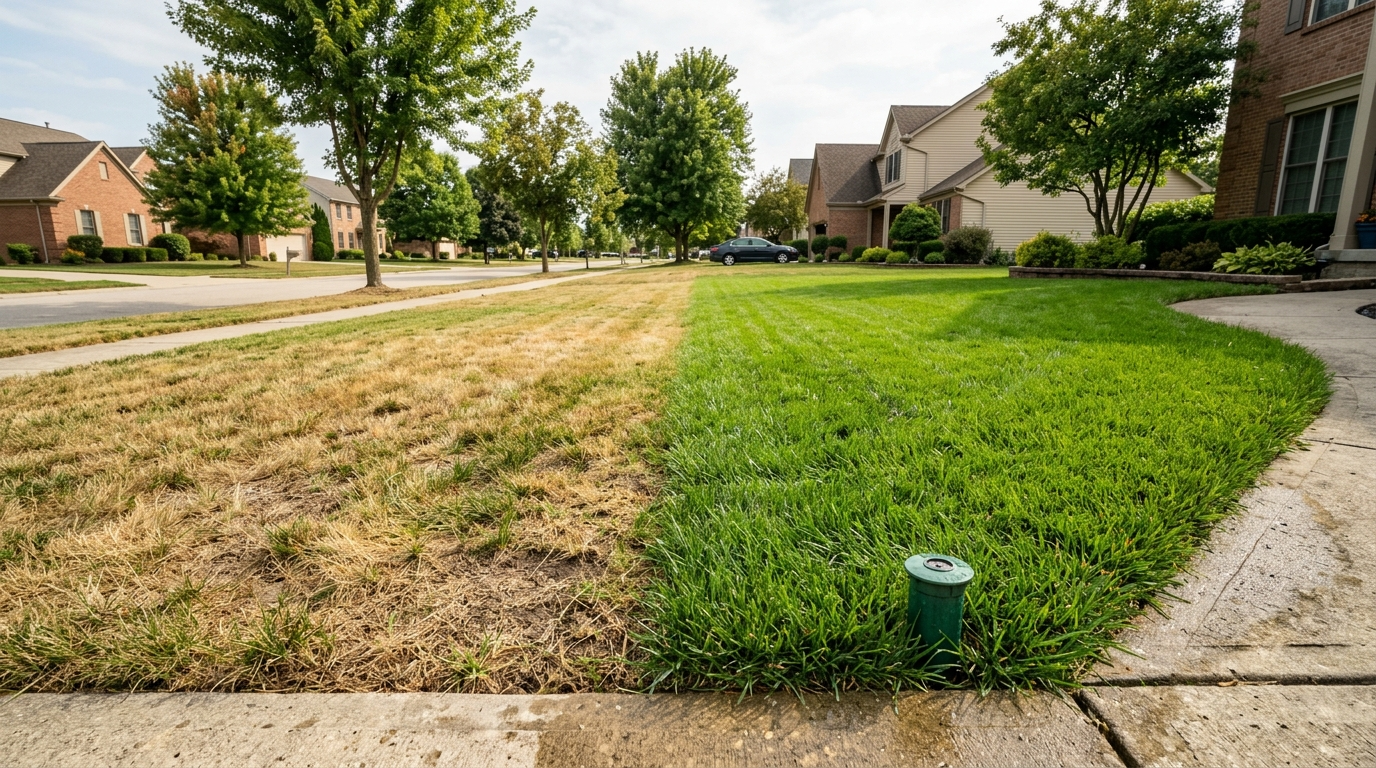
South-facing areas warm first. Shaded sections remain colder longer. Low areas hold moisture. Higher traffic areas stay compacted.
The lawn does not wake up evenly because the soil does not warm evenly.
When one section begins producing color and another is still dormant, contrast exaggerates the appearance of thinning. The lawn often looks worse during transition than it actually is.
Compaction After Winter Is Common
Snow weight, foot traffic on frozen ground, and repeated freeze-thaw cycles often leave surface soil compressed.
Compacted soil restricts oxygen flow. It slows root expansion. It limits how efficiently water and nutrients move through the profile.
Even if the grass survived winter without issue, compaction alone can delay early season density.
This is one of the most overlooked contributors to spring patchiness. It is not visible from the road. It is felt underfoot.
Why Color Alone Is a Poor Indicator
In early spring, homeowners often focus on color. If it is not green, something must be wrong.
But color follows temperature, not intention.
Grass requires sustained soil warmth before chlorophyll production increases consistently. Until soil temperatures stabilize, growth will lag behind what air temperature suggests.
Applying fertilizer too early may produce a temporary green response without strengthening the root system underneath. That creates uneven growth patterns that become more obvious later.
Early spring is not about forcing growth. It is about preparing the lawn for stable growth.
The Difference Between Temporary Patchiness and Structural Problems
Most patchiness resolves gradually as soil conditions normalize. However, there are situations where closer evaluation makes sense.
If grass pulls up easily from the soil, root systems may have been compromised.
When areas remain excessively soft weeks after thaw, drainage may need attention. If certain sections never begin to respond while surrounding turf improves, underlying soil variation may be present.
The key is observing progression. Recovery should be steady. If it stalls, something structural may be interfering.
Where Early Decisions Create Season-Long Problems
Patchiness creates urgency. Urgency leads to overcorrection.
Common early mistakes include:
- Applying fertilizer before soil temperature supports root uptake.
- Overseeding into compacted soil.
- Watering in response to color rather than moisture conditions.
- Stacking multiple treatments too close together.
These actions may feel proactive, but without coordination, they can disrupt the natural recovery cycle.
Spring is the most important sequencing window of the year. The order of decisions matters more than the speed of decisions.
What Stabilized Spring Recovery Looks Like
When soil conditions are evaluated first and treatments are coordinated deliberately, improvement becomes predictable.
The surface firms evenly as moisture balances. Roots resume steady activity. Growth fills in consistently rather than in bursts. Color deepens gradually instead of appearing in streaks.
Within a few weeks of sustained temperatures, density increases across the entire property. The lawn begins to feel level and stable underfoot. That stability is not random. It is guided.
Moving From Reaction to Structure
Early spring is not about doing everything immediately. It is about understanding what your lawn needs now and what can wait.
Weed prevention timing, fertilization sequencing, soil conditioning, and seasonal monitoring all interact. When they are coordinated intentionally, patchiness resolves without creating new problems later in the season.
That is the difference between reacting to appearance and managing the system beneath it. If you want to understand how structured Lawn Care Programs organize that process throughout the growing season, you can explore how they are built and what they include.
Explore More About Managing Your Lawn
Continue building your understanding of how structured lawn care supports long-term stability.