What Homeowners Can Do When Their Lawn Starts Showing Problems
Not every lawn problem requires the same level of response.
Some issues can be reduced with better mowing, better watering, careful observation, and a more controlled homeowner approach. Other problems point to conditions that retail products and isolated repairs are not built to manage.
The key is knowing the difference.
A lawn usually gives signs before it becomes harder to control. The useful question is simple: what is the lawn showing, what can a homeowner reasonably do first, and when does the property need structured professional intervention instead?
If the Lawn Looks Uneven Across the Yard
Uneven color or growth is often the first thing homeowners notice.
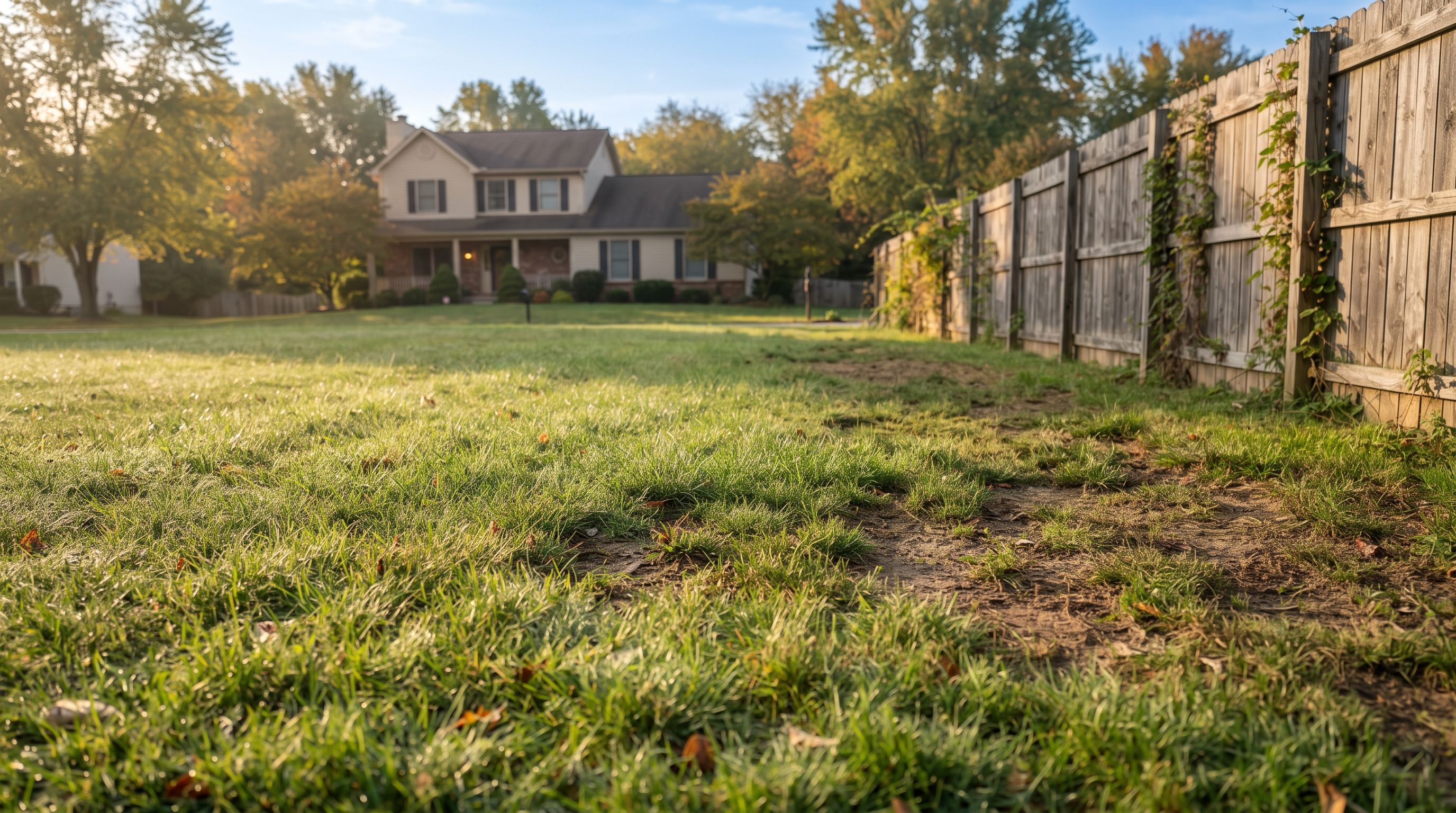
One area may look full while another looks lighter, thinner, or slower to respond. Before applying anything, look at where the issue is happening.
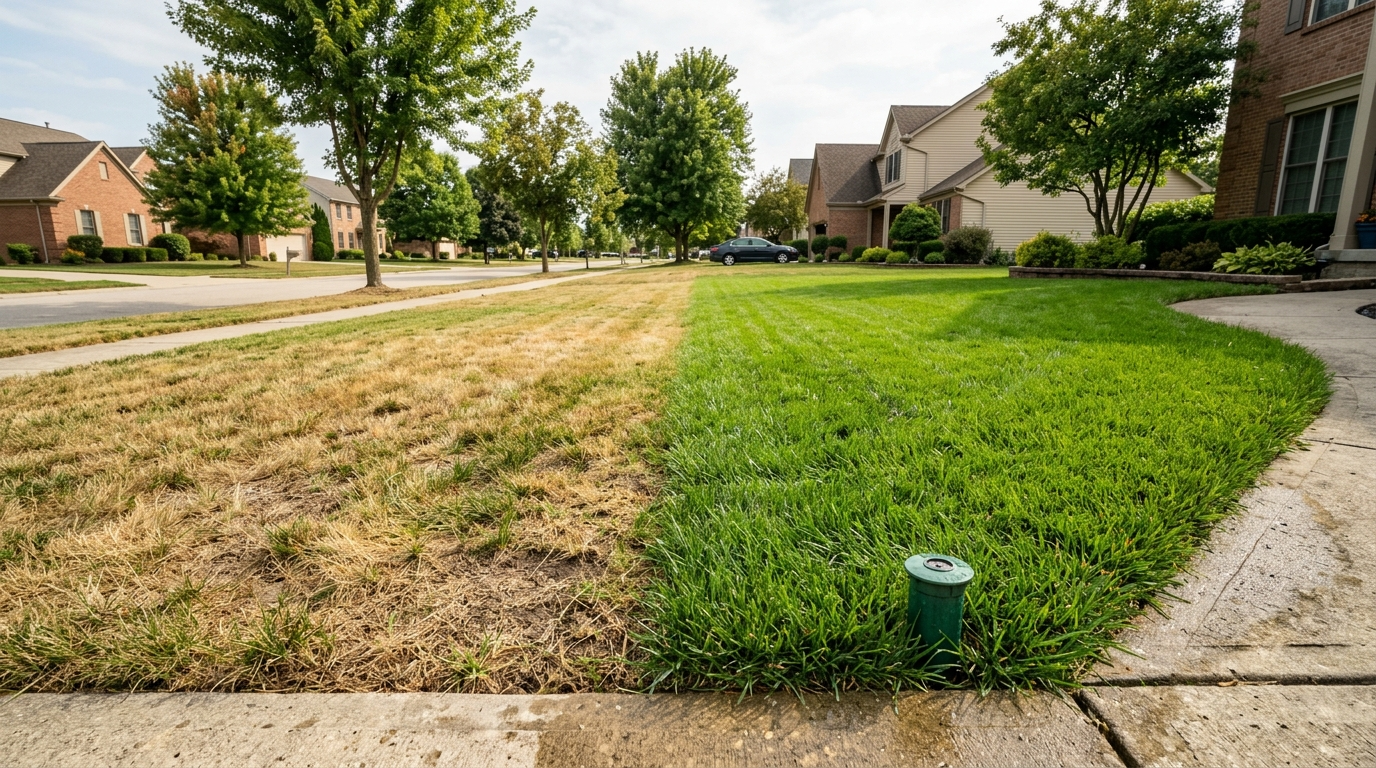
Areas near driveways, sidewalks, slopes, and direct sun may be drying out faster. Areas where people walk often may be dealing with compaction. Shaded areas may not have the same growing conditions as the rest of the yard.
Start with the basics. Keep the mower height reasonable. Avoid cutting the lawn too short. Water deeply when conditions are dry. Try to reduce repeated traffic over the weak area.
If the same section looks weak year after year, the issue is probably not just temporary stress.
If Weeds Are Showing Up
A few weeds are different from weeds spreading across the lawn.
For isolated weeds, hand pulling or careful spot treatment may be enough. Retail weed control products can help in limited situations, but they should be used only as directed and only when the lawn is healthy enough to handle the treatment.
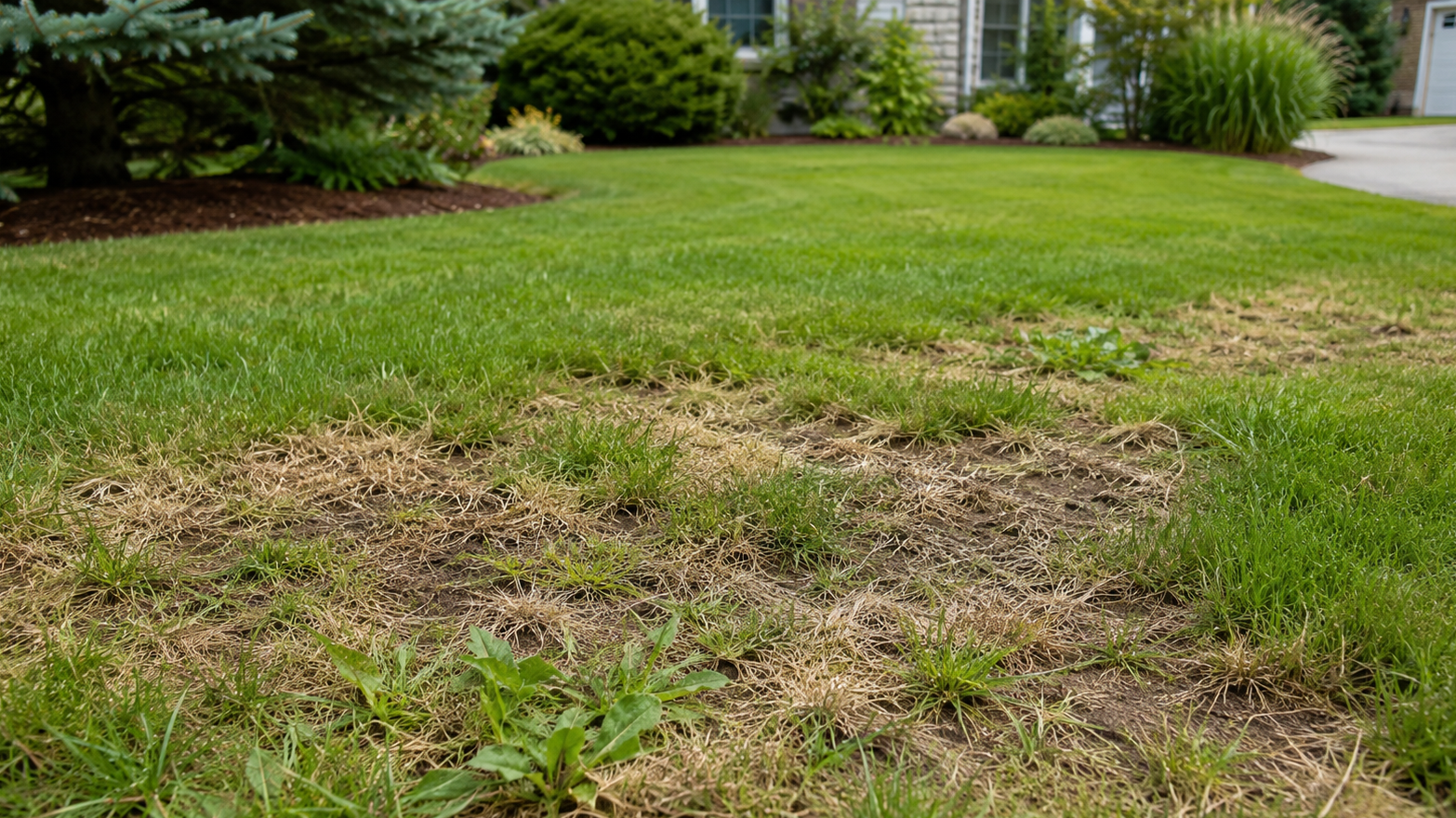
The bigger concern is when weeds are showing up in the same thin areas again and again. That usually means the lawn does not have enough density to hold those spaces on its own.
The homeowner response should be measured. Do not blanket treat the entire lawn because of a few weeds. Do not apply multiple products at once. Do not assume the weed is the whole problem.
A recurring weed problem is often a lawn density problem.
If Crabgrass Is Starting to Appear
Crabgrass usually shows up where the lawn is thin, hot, open, or disturbed.
Driveway edges, sidewalk edges, bare spots, and sunny areas are common places to see it first. Once crabgrass is visible, the best homeowner response is to avoid making the conditions worse.
Do not mow too short. Do not leave bare soil exposed. Do not disturb thin areas unnecessarily.
Small crabgrass patches may be manageable with retail products labeled for crabgrass control, but timing matters. Once crabgrass is established and spreading, it becomes harder to correct with basic homeowner tools.
This is one of the clearest examples of why prevention matters more than reaction.
If Thin Areas Keep Coming Back
Thin areas that return every year should not be treated like a simple bare spot.
Seeding may help for a while, but if the reason for the thinning is still present, the lawn will usually decline again.
Before reseeding, look for the cause.
Does the area get enough sunlight?
Does water collect there after rain?
Does the soil feel hard?
Is the mower turning sharply in that section?
Is it a common footpath?
Has seed failed there before?
If the area has a clear issue, address that first. Improve watering habits. Reduce traffic where possible. Loosen compacted soil when appropriate. Use seed only when the site can support it.
Repeated seeding without correcting the cause usually leads to repeated disappointment.
If the Lawn Looks Dry
A dry looking lawn does not always need daily watering.
Short, frequent watering often keeps moisture near the surface and encourages weaker rooting. A better first step is to water less often but more deeply when the lawn actually needs it.
Look for signs of stress. Grass may look dull, fold slightly, or fail to bounce back after being walked on. Those are better indicators than simply watering because the day is hot.
Watering should also account for recent rain. A quick storm may not provide enough moisture, while steady rainfall may reduce the need for irrigation.
The goal is consistency. Do not let the lawn move from dry stress to overwatering and back again.
If You Notice Insect Activity
Not every brown patch is an insect problem.
Before applying an insect control product, look for actual signs of activity. Sudden thinning, animal digging, surface movement, or damage that expands quickly may justify a closer look.
Retail insect products can be useful in specific situations, but they are easy to misuse when the problem has not been identified. Applying the wrong product at the wrong time can waste money and leave the real issue unresolved.
When insect pressure is suspected, observation matters more than guessing.
If the Lawn Is Growing Fast But Still Looks Weak
Fast growth does not always mean the lawn is stable.
A lawn can grow quickly after rain and still look thin, uneven, or easy to stress. In that situation, mowing habits matter.
Keep the mowing schedule consistent. Avoid removing too much grass at once. Keep the blade sharp. Do not scalp the lawn to make it look cleaner for a few days.
Cutting too short often creates more problems than it solves. It can open space for weeds, expose the lawn to more heat, and make weak areas more obvious.
Good mowing will not solve every lawn problem, but poor mowing can make nearly every problem worse.
When DIY Lawn Care Makes Sense
DIY lawn care makes sense when the issue is limited, clear, and manageable.
A small number of weeds, a dry area that responds to better watering, minor mowing stress, or an isolated bare spot can often be handled by a careful homeowner.
The most important thing is to avoid overreacting.
One visible issue does not always mean the lawn needs several products. More applications do not automatically create better results. A calm, limited response is usually safer than stacking treatments without knowing what the lawn actually needs.
When Retail Products Are Not Enough
Some lawn issues move beyond what a homeowner can reasonably manage with retail products.
That is usually the case when the problem is recurring, widespread, or connected to several conditions at once.
Professional intervention becomes more appropriate when weeds keep returning in the same areas, crabgrass is spreading, thin spots have failed after repeated seeding, insect damage is suspected, or the lawn looks uneven across large sections of the property.
It also becomes more appropriate when timing has already been missed. Some lawn problems are easier to prevent than correct.
Once they are established, the lawn may need coordinated applications and a more structured plan.
LawnLogic Provides Structured Turf Support When DIY Reaches Its Limit
LawnLogic is built for homeowners who want the lawn managed with more consistency, not handled through guesswork.
Our lawn care programs coordinate fertilization, weed control, crabgrass prevention, insect protection, soil support, aeration, overseeding, and corrective services around the needs of the property. These services are not treated as isolated treatments. They are part of a managed seasonal approach.
For some lawns, better mowing, watering, and limited spot correction may be enough. For others, the pattern is already showing that retail products will not provide the control the property needs.
LawnLogic provides structured lawn care programs, pest control services, and targeted turf support solutions for residential and commercial properties throughout Monroe County, NY and select portions of Wayne and Ontario Counties.
Get a Clearer Plan for the Lawn
Start with what the lawn is showing.
When the issue is small and manageable, a measured homeowner response may help. When the same problems keep returning or spreading, LawnLogic can evaluate the property and place it into a structured turf management program.
Explore More About Managing Your Lawn
Continue building your understanding of how structured lawn care supports long-term stability.