Why Your Mosquito Treatment Falls Apart Every July
Most mosquito control programs start strong. Mid-summer is when they fall apart. Most homeowners only realize it when they are already outside wondering why they are still getting bitten after paying for a service. The problem is not always the product. It is the timing, the conditions, and whether the program accounts for what happens to mosquito pressure as temperatures climb.
If you have been looking into mosquito control in Rochester NY, or you are already enrolled in a service that is not delivering, the explanation almost always comes down to a few consistent, observable patterns.
Reapplication Windows Compress When Summer Hits Hard
Mosquito treatments do not last indefinitely. Most barrier sprays are designed to hold for three to four weeks under moderate conditions. Mid-summer is not moderate.
Heat accelerates product breakdown. Rain events wash residuals off vegetation. Warm-season growth means treated surfaces are constantly being replaced by untreated ones. A treatment applied in late June may offer solid coverage through early July. By the third week of July, that coverage is diminishing. By the time many programs schedule the next visit, there is a meaningful gap, and that gap lands exactly when mosquito pressure peaks in this region.
The reapplication schedule that worked in spring does not match the biology or the environment in the heart of summer.
Mosquitoes Move Deeper Into Properties When Temperatures Rise
Understanding why a treatment stops working requires understanding where mosquitoes are when they are not flying. They do not rest in open grass or exposed areas. They rest in the coolest, most sheltered locations available, and mid-summer drives them deeper into harborage.
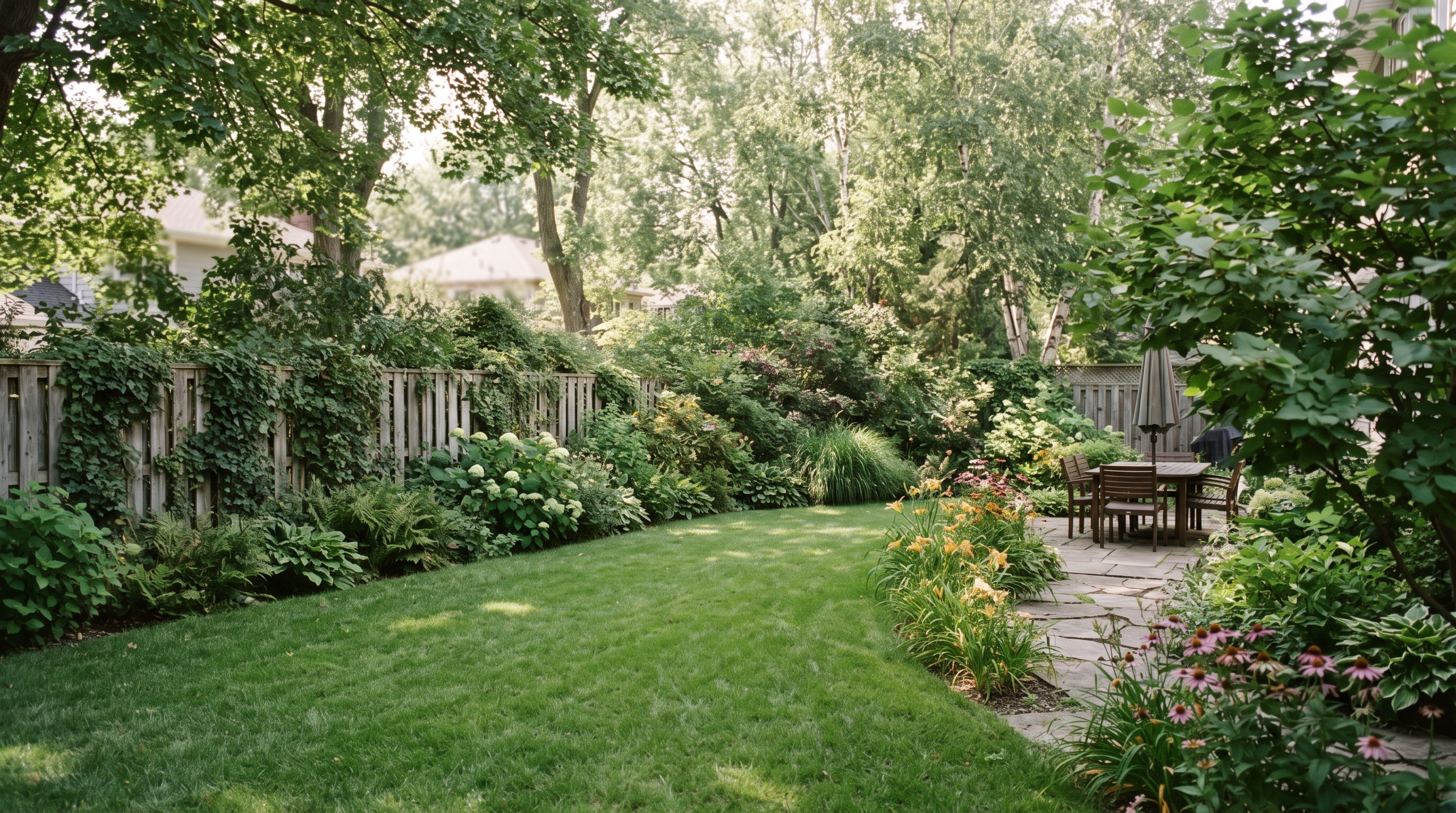
Dense shrub beds, the shaded underside of low-growing ornamentals, overgrown foundation plantings, and areas where foliage layers are thick become the primary resting zones during heat. These are also the locations where barrier treatments have the hardest time achieving full coverage.
We regularly see properties where the open lawn and perimeter received thorough treatment, but the shrub beds along the foundation or the back corner with heavy plantings were not reached with enough volume or penetration. The homeowner steps outside within minutes and has mosquitoes on them, because those mosquitoes rested twelve feet away in a shrub the spray passed over rather than through.
Harborage quality drives mosquito density. Treating the perimeter without addressing the harborage zones solves half the problem.
The Water Sources That Keep Populations Going Are Rarely Obvious
The standard advice to eliminate standing water is accurate. It is also incomplete.
Most homeowners look for birdbaths, clogged gutters, and low spots that hold puddles after rain. Those matter. But the sources that sustain mosquito populations through a dry July are often less visible: dense ground cover that holds moisture at the soil level, mulch beds that stay saturated under the surface even when the top looks dry, containers along a fence that collect a quarter inch of water inside a folded tarp.
Mosquitoes require very little water to complete their development cycle. A bottle cap holds enough. Properties that manage the visible standing water but ignore these smaller accumulation points keep producing mosquito populations even when barrier treatments are applied on schedule. This is a site management issue, not a product issue.
Standard Programs Fail on Non-Standard Properties
A program that works well on one property and underperforms on the neighboring one is not a product failure. It is a site condition failure.
Property characteristics determine how much mid-summer pressure any program has to overcome. A heavily wooded lot with layered plantings, a rain garden, or poor drainage along the back fence will carry a mosquito population that a standard-interval program cannot fully suppress without adjustments to frequency, application points, or coverage density.
The pattern we encounter most often: a program designed for average site conditions applied to a property that is above average in harborage and moisture. The product is fine. The schedule is reasonable. But the property requires a different approach, and that conversation either never happened at the initial assessment or was not revisited when results began slipping. Mid-summer is when the gap between a standard program and a site-specific one becomes visible.
Questions Homeowners Ask When a Mosquito Program Is Underperforming
I had a treatment two weeks ago and the mosquitoes are already back. Is that normal?
In July and August, it can be. Two weeks falls inside the typical coverage window, but heat, rain, and heavy vegetation can compress it significantly. If you had rain within 48 hours after a treatment, coverage was likely affected. If temperatures have been consistently above 90, breakdown accelerates. The interval may need to be tightened for summer conditions on your specific property.
My yard does not have much shade or vegetation. Why am I still having problems?
Even low-density landscapes can have moisture sources or wind-driven mosquito migration from neighboring properties. Mosquitoes are capable fliers and will move from a heavily vegetated neighboring yard into yours. Treatment on your property controls the population resting there. It does not stop reintroduction from adjacent areas.
Does it make sense to start a service mid-summer or should I wait until next spring?
Starting mid-summer is worth it if you have remaining outdoor time in your season. Late July through September still represents several weeks of activity. A properly applied program will reduce pressure within a few days of the first application, with fuller results building over the first two or three visits as resting populations are addressed more completely.
My provider says the treatment is working, but I am still getting bitten every time I go outside. Who is right?
You are. Reduced pressure on a population count is not the same as a yard you can use. If you are consistently getting bitten within minutes of going outside, the program is not performing at an acceptable level for your property. That could mean the interval needs tightening, the harborage zones were not fully addressed, or there is a water source still producing. A provider worth keeping will want to walk the property and find out why, not defend the schedule.
How LawnLogic Structures Mosquito Control for This Region
LawnLogic provides mosquito control programs for residential properties throughout Monroe County and surrounding areas. The program is built around the actual seasonal pressure patterns in this region, not a generic national schedule. That means adjusting application frequency for mid-summer conditions, identifying harborage zones at the property level, and managing the program as conditions change rather than treating every visit as identical.
If your current program is not holding through the summer, or you have not started yet, contact LawnLogic to schedule a property assessment. You will get a clear picture of what is driving the pressure on your specific property and a program structured to address it.
Explore More About Managing Your Lawn
Continue building your understanding of how structured lawn care supports long-term stability.