April Snow Can Throw the Lawn Back Into Winter Mode
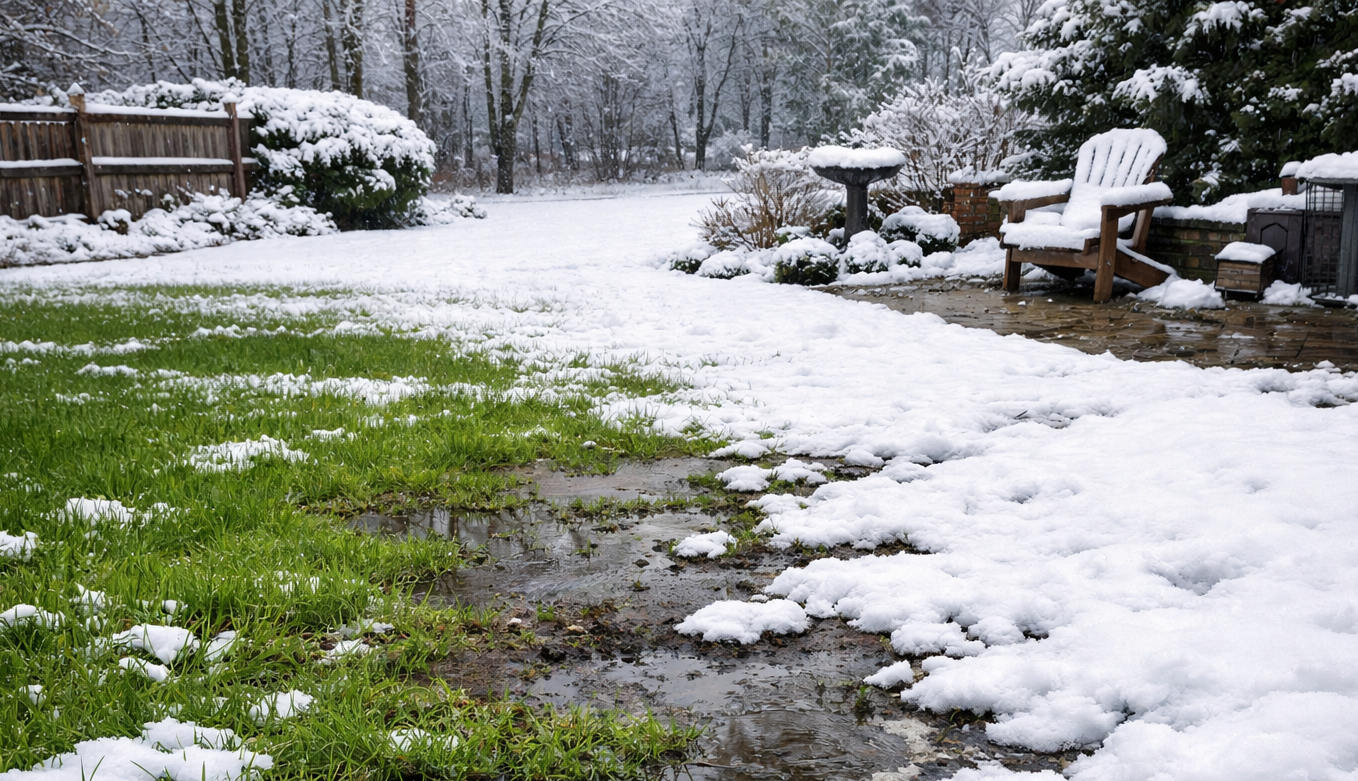
A lawn can start looking like it is finally turning the corner, then April brings snow again and the whole property seems to stall.
The color softens. Wet sections slow back down. Areas that had started waking up look flat again. The yard can feel like it moved into spring too early and then got pulled backward before it had any chance to settle.
That pattern is common in this part of New York.
Across the Greater Rochester area and nearby communities along Lake Ontario, late snow and sharp temperature swings are part of the seasonal transition. A few warm stretches can make the lawn look ready to move, but that does not mean the season is fully established. When colder weather returns in April, the lawn often reacts by slowing down again.
That does not always mean real damage has occurred.
But it does mean the lawn’s spring transition has been interrupted, and that affects how the property should be understood and managed.
A lawn can look active before spring is actually stable
One of the easiest mistakes to make in early spring is assuming the lawn has fully entered the season because it started responding during a warm stretch.
That early movement is real, but it is often incomplete.
A few mild days can start changing the look of the lawn. Sunnier sections begin greening up. The surface starts drying in some areas. The yard looks more awake than it did a week earlier. But if the larger weather pattern is still unstable, that progress is not always secure. A return to snow, colder nights, and wet conditions can slow everything back down.
That is why April snow feels so frustrating.
The lawn looked like it was finally moving forward, but the season had not fully taken hold yet.
False spring conditions often create mixed signals across the property
Late winter warmth and early spring sun can make a lawn look more ready than it really is.
That is especially true when one side of the property gets more sun, dries faster, or warms earlier than the rest. A homeowner may see one section responding and assume the whole lawn is beginning its normal spring progression. Then colder weather returns and the yard looks uneven again.
That is not random.
False spring conditions often create a short burst of visible activity before the property is actually working under stable spring conditions. When April snow follows, the lawn may appear to shut back down in certain areas while other sections hold a little more color. The result is a property that looks inconsistent and harder to read.
The lawn is not confused.
It is reacting to a season that has not fully committed yet.
April snow usually slows recovery more than it damages the lawn
In many cases, late snow is more disruptive than destructive.
A lawn in the Rochester region is built to handle cold weather swings better than people think. Turf does not usually collapse just because snow showed up again in April. What tends to happen instead is that recovery slows down. Growth pauses. Color stalls. Wet sections stay behind longer. The property looks less settled than it did during the earlier warm stretch.
That distinction matters.
A slowed lawn and a damaged lawn are not the same thing. If the grass was reasonably healthy heading into spring, the bigger issue is often delayed momentum, not major loss. The lawn simply needs more stable weather before it can keep progressing.
That is why overreacting to every April snow event usually creates more confusion than clarity.
Wet ground often becomes a bigger issue after late snow
The snow itself is only part of the story.
What often matters more is what follows. Melting snow, cold rain, and lower evaporation can push the lawn back into wetter conditions just as it was starting to dry out. That tends to hit weaker sections of the property first. Low spots stay soft. shaded areas remain slow. border sections near hardscape can look uneven again. The lawn that had started showing direction begins feeling stalled.
This is one reason April setbacks can linger even after the snow disappears.
The yard may not be visibly snow covered for long, but the heavier conditions often remain. That can delay how quickly the lawn resumes normal spring recovery and make the property feel like it is dragging behind.
In many cases, it is not the snow on top of the lawn that matters most.
It is the moisture pattern left behind.
Sunny and shaded areas usually react differently after an April setback
Not every section of the property gets pushed back the same way.
Sunny lawn areas often recover faster after a late snow because they warm up sooner once the weather clears. Shaded sections usually stay colder and wetter longer, which can make the setback feel more dramatic there. A lawn that already had uneven spring momentum can look even more split after an April weather reversal.
That is why some properties seem to have one side moving and one side stalling.
The weather event hit the whole lawn, but the site conditions still determine how each section responds afterward. That difference can make the yard look more inconsistent than it really is in the long term.
The setback is real, but it usually reflects the structure of the property as much as the weather itself.
April snow can delay the visual signs homeowners expect to see
A lot of homeowners use visible green up as proof that the season is progressing the way it should.
That is understandable, but late snow can interrupt that visual pattern even when the lawn is still fundamentally on track.
The yard may stop brightening for a while. Areas that had started looking more even can flatten out again. The lawn may not feel like it is building momentum the way it should in mid to late April. That can create the impression that the lawn has lost progress completely.
Usually, it has not.
It has just lost rhythm. The weather interrupted the visible part of the transition, and the lawn needs a more stable stretch before those signs begin showing again.
Early weed timing does not always slow down just because the weather swings
This is one reason structured lawn care matters so much during unstable spring conditions.
Homeowners often assume that if the lawn looks paused, the season itself has paused. That is not always true. Weather swings can slow visible turf response while still allowing seasonal weed pressure to keep moving in the background. That creates a gap between what the lawn looks like and what the season is actually doing.
That gap matters.
A property may appear too early, too cold, or too unsettled for spring lawn care to feel important, but the timing behind the season does not always wait for the lawn to look ready. This is part of why false spring and April snow can be so misleading.
The lawn may look pushed backward while the need for structured timing is still moving forward.
Warm spells before April snow can leave some areas more exposed
One reason late snow feels disruptive is that the lawn may have already started shifting into a more active state before the setback happened.
That early movement does not usually mean the lawn is fully vulnerable, but it can make the interruption more noticeable. Areas that had begun waking up faster, especially open sunny sections, may lose some of that visual momentum quickly once colder conditions return. The contrast becomes obvious because the lawn had already shown signs of progress.
That is part of what makes false spring so frustrating.
The property gives the impression that it is ready to go, then the weather reminds you it is still too early to trust the pattern fully.
A controlled lawn season accounts for April reversals
This is where structured turf management matters more than surface level lawn care.
A controlled lawn season is not built around assuming spring will move in a straight line. It is built around understanding that properties around Rochester and the Lake Ontario region often deal with resets, pauses, and interruptions before the season fully settles in.
That means the lawn should be managed with timing, restraint, and a clear read on conditions rather than emotion.
If April snow returns, the goal is not to panic, chase instant green up, or assume the season has failed. The goal is to keep the property on a more deliberate path while the weather finishes sorting itself out. That approach usually leads to better decisions than reacting to every temporary shift in appearance.
The biggest risk is usually overreading the setback
When the lawn looks like it moved backward, homeowners often assume something major has gone wrong.
Sometimes there is real concern. Most of the time, the bigger issue is that the lawn is being judged too aggressively during a period when the weather is still unstable.
A wet shaded section that lags after April snow is not necessarily failing. A border that looks flat again is not always damaged. A lawn that loses some early color is not automatically off track. These patterns often reflect temporary interruption more than lasting decline.
That does not mean the lawn should be ignored.
It means the setback should be interpreted carefully.
What April snow is usually telling you about the lawn
When April snow seems to throw the lawn back into winter mode, it is usually revealing that the property had started moving before stable spring conditions were fully in place.
The lawn was responding to warmth, but the season itself was still unsettled. Once cold, snow, and wet conditions returned, the visible progress slowed down again. That does not usually mean the lawn is ruined. It means the transition has been interrupted and the property needs more stable weather to keep building momentum.
That is the real read.
The lawn is not starting over from scratch. It is being forced to pause in the middle of a season that has not fully turned yet.
Why this pattern is so common around Rochester and Lake Ontario
Properties in the Greater Rochester area often go through exactly this kind of spring volatility.
Lake effect influence, lingering cold patterns, wet ground, and uneven warmups make it common for lawns to show early activity and then get checked again by snow or colder weather in April. Some years the shift is mild. Other years it is dramatic. Either way, the region tends to create a stop and start spring more often than homeowners want.
That is why lawns here benefit from a more measured approach.
The property often needs to be managed through a transition, not just a season.
What to watch after an April snow event
After the snow clears, the most useful thing to watch is not whether the lawn looks perfect right away.
Watch whether the property starts regaining direction once conditions stabilize. Notice which sections stay wet longest. Pay attention to whether sunny areas recover faster than shaded ones. Look at whether weak edges, thin zones, or low spots continue lagging after the weather improves. Those patterns often tell you more than the snow event itself.
The lawn usually reveals where it is least stable during these interruptions.
That makes the setback useful, even if it is frustrating.
Frequently Asked Questions
Can April snow actually hurt the lawn?
Usually, it causes more delay than real damage. A healthy lawn can often handle late snow better than homeowners expect, but recovery may slow down for a while afterward.
Why does the lawn look worse after warming up and then getting snow again?
Because the lawn had started responding to warmer conditions, then lost momentum when colder weather returned. The setback is often visual and seasonal rather than catastrophic.
Should lawn care timing change because it snowed in April?
Not automatically. The lawn’s appearance can pause while seasonal timing still matters. This is why structured lawn care is more reliable than reacting only to what the yard looks like that week.
Why do some parts of the lawn bounce back faster after April snow?
Usually because sun exposure, drainage, and site conditions are different across the property. Sunny sections often recover faster, while shaded or wetter areas lag.
Keep the lawn on track even when spring does not cooperate
If your lawn looks like it moved backward after April snow, the season usually needs steadier structure, not panic. LawnLogic manages lawns through the kind of stop and start spring conditions common across the Rochester area so timing stays controlled, weak areas are read correctly, and the property keeps moving toward a more stable season once the weather settles.
Explore More About Managing Your Lawn
Continue building your understanding of how structured lawn care supports long-term stability.