Overseeding Is Not the Right Fix for Every Thin Lawn Area
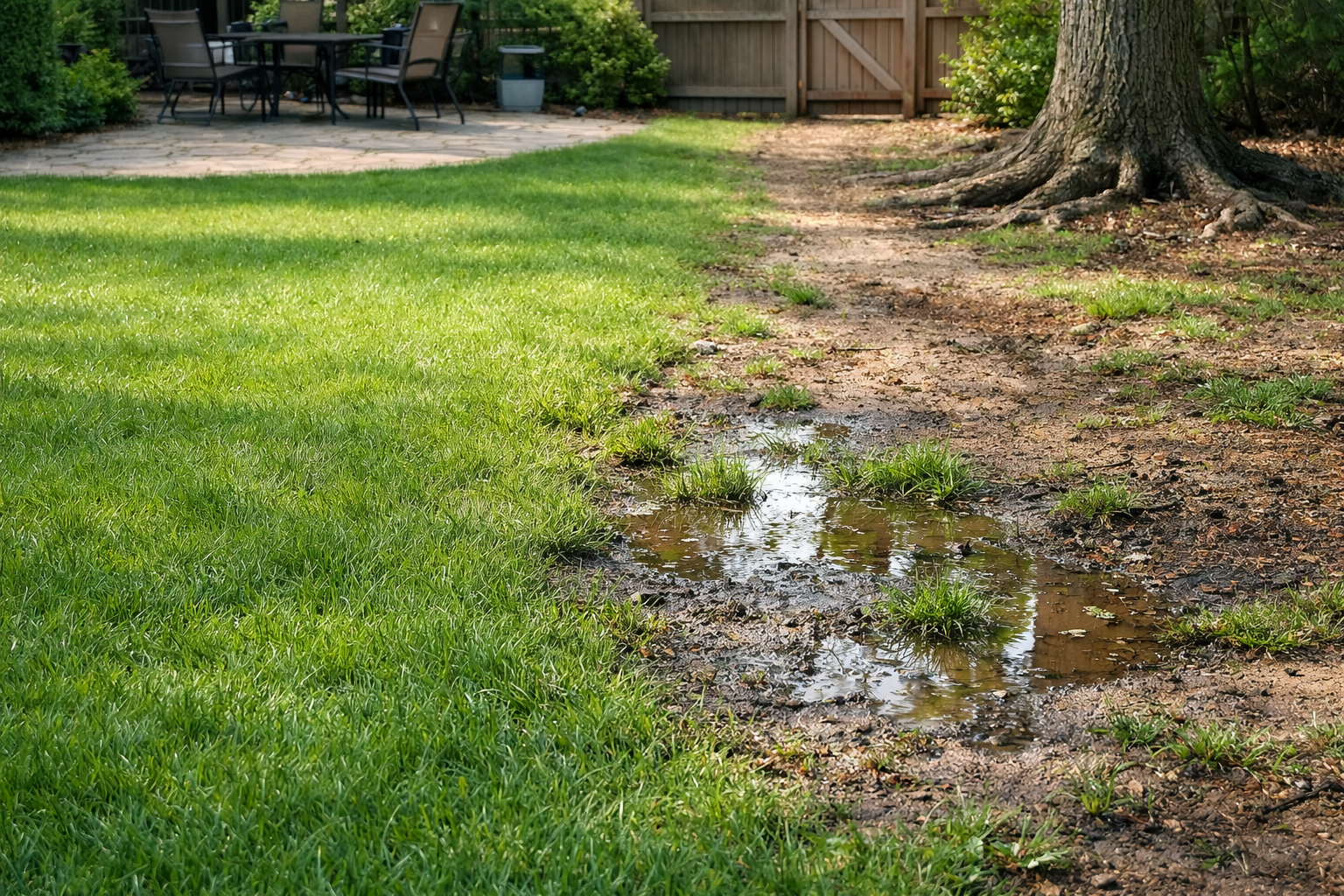
A thin area in the lawn makes overseeding feel like the obvious answer.
The grass looks lighter, less even, or more open than the rest of the yard, so adding more seed seems like the next logical step. Sometimes that is the right move. But not every thin area is thin because it simply needs more grass. A lot of the time, the lawn is thinning because that section of the property is under pressure from something seed alone will not correct.
That is where homeowners often get stuck.
They overseed the area, see a little improvement, and then watch it thin back out again. The patch may respond at first, but it never seems to hold the way they expected. In some cases, the seed comes up and struggles. In others, the area looks better for a while, then falls behind once heat, moisture swings, or normal lawn pressure returns.
The problem was not always a lack of seed.
The problem was that the thin area was already telling a bigger story about how that part of the property was functioning.
Thin lawn areas usually have a reason for falling behind
A lawn does not usually thin for no reason.
When one section starts looking lighter, weaker, or less full than the rest of the yard, that area is often responding to a site condition that has been building for a while. It may be getting less sunlight. It may stay wetter longer. It may be taking more traffic. It may be dealing with compaction, tree competition, heat along hardscape, or a recurring weakness that keeps reducing turf density over time.
That matters because overseeding does not remove the reason the turf thinned.
It only introduces new grass into the same environment. If that environment is still working against stable turf, the area may still struggle no matter how good the seed is.
That is why some thin areas improve after overseeding and others do not.
Some thin areas are really drainage problems
A lawn section that stays wet too long often thins differently from the rest of the property.
It may look slower to recover in spring. It may stay soft after rain. It may feel less stable through the season and gradually lose density because the growing conditions in that section are heavier and less balanced. In that case, the thinning is not just about missing grass. It is about a part of the lawn that is not functioning well enough to support grass consistently.
That is where overseeding can disappoint.
The new seed may germinate, but if the area still holds too much moisture or stays overly soft, the grass may struggle to establish well or remain stable. The section can end up looking better briefly, then slipping again once the same drainage related stress returns.
A thin area that stays wet usually needs that condition addressed, not just more seed added on top of it.
Some thin areas are being worn down by repeated use
Traffic pressure is another common reason overseeding falls short.
A path across the lawn, a section near a gate, a strip by the driveway, or a route between the patio and another part of the yard may keep thinning because it takes repeated use. Even if grass is still present, the turf may be flatter, weaker, and less able to recover because that part of the property is carrying more wear than the rest.
In those cases, overseeding can help restore density, but it does not change the fact that the lawn is still being stressed in the same place the same way.
That is why some repaired sections never hold for long.
The new grass is being placed into a repeated wear pattern that has not actually changed. The issue is not just turf loss. It is recurring pressure.
Shade can make overseeding a weaker answer than it sounds
Thin grass in shaded areas often gets treated like a simple density problem.
But a section under trees, beside the house, or in a narrow side yard may be thinning because it does not receive enough consistent light to support stronger turf performance. Even if the area is not fully bare, it may stay behind because the environment is already limiting what the grass can do there.
That is where overseeding needs to be evaluated honestly.
If the area is still dealing with the same shade, the same reduced airflow, and the same slower recovery conditions, new grass may still struggle once it is established. The section may improve for a short time, but that does not mean it can hold that improvement the way sunnier, more open parts of the lawn can.
A shaded thin area often needs realistic expectations and better diagnosis before it needs more seed.
Tree competition can make thin areas look simpler than they are
Some of the most frustrating thin areas are the ones around mature trees.
The turf may not be completely gone, but it stays lighter, weaker, and less consistent than the rest of the lawn. Homeowners often try overseeding because it seems like the area just needs help filling in. But the section may actually be dealing with a much harder environment than open turf elsewhere on the property.
That can include lower light, root competition, less available moisture, and a more restricted growing zone overall.
In that situation, overseeding may not solve much by itself. The seed is entering an area where the old grass was already struggling for reasons larger than simple density. That does not mean the area cannot be improved. It means it should not be treated like ordinary lawn that just needs a thicker stand.
Concrete edges often thin for structural reasons
Thin turf near sidewalks and driveways is another area where overseeding gets overused.
These sections often deal with more heat, quicker moisture loss, tighter soil space, winter accumulation, and more traffic than the rest of the lawn. When they start thinning, the assumption is often that they simply need fresh seed. But many of these strips are under more stress than homeowners realize.
That is why they fall behind first.
If those pressures are still present, overseeding the edge may provide temporary improvement without creating lasting stability. The grass comes back, but the section remains the weakest part of the lawn because the underlying conditions never changed.
The edge was not just thin. It was under harder pressure.
Compaction can keep overseeded areas from holding
Some thin areas are really soil problems first.
If the ground is compacted, the lawn may have a harder time maintaining density because the soil underneath is less supportive. Water movement becomes less balanced. Root development becomes more restricted. Recovery slows down. The turf can stay thinner because the section is operating with less room for strong performance.
This matters because seed can sprout in compacted ground and still fail to become durable turf.
A homeowner may see the area fill in at first, then wonder why it starts slipping again later. Often the answer is that the soil condition underneath the overseeding never improved enough to support lasting growth.
That makes overseeding a partial response at best.
Some thin areas are not lacking grass, they are lacking stability
This is one of the biggest distinctions homeowners miss:
A lawn area can look thin without actually needing overseeding as the first answer.
What the yard may really need is better seasonal support, improved site conditions, or correction of the factor that keeps making it unstable. The grass is present, but the section does not stay strong because something keeps pulling it backward.
That could be moisture imbalance, heat exposure, repeated traffic, shade, compaction, weak recovery, or some combination of those issues.
In that case, overseeding can look like the solution because it feels active and visible. But the lawn is often asking for something deeper than just more plants in the same stressed location.
Some lawns thin seasonally without needing seed right away
Not every thin area needs to be repaired the moment it looks lighter than the rest of the property.
Some sections thin seasonally because they are slower to recover, more exposed to stress, or naturally less aggressive than stronger parts of the lawn. That does not always mean the area needs overseeding first. Sometimes it means the lawn needs to be observed more carefully to understand whether the thinning is temporary or part of a larger structural issue.
That distinction matters.
A section that looks behind for a short period may still stabilize as the season progresses. A section that stays weak, reopens repeatedly, or keeps losing density under the same conditions is a different kind of problem. Overseeding makes more sense once the pattern is understood clearly, not simply because the lawn looks thinner for the moment.
Repeatedly overseeding the same area usually points to a larger issue
If the same section keeps needing seed over and over, that pattern should be taken seriously.
It usually means the lawn is not just lacking density. It is lacking the ability to hold density in that location. The area may improve temporarily after overseeding, but if it keeps falling back to the same condition, something more structural is likely driving the pattern.
That is why repeat failure matters.
The lawn is showing that the area is not stable enough to keep the improvement. Until the real source of the weakness is identified, overseeding can become a cycle instead of a solution.
The seed is not necessarily failing. The site is often staying unfavorable.
Overseeding works best when the site can actually support stable turf
This is the more useful way to think about it:
If the environment is supportive enough, seed can strengthen coverage and improve the lawn in a meaningful way. But if the site still has major limits, the result is often short lived.
That is why overseeding should be a strategic move, not a default reaction.
The question is not just whether the area is thin. The question is whether that section of the property is in a condition where new grass has a real chance to hold.
The right first step is often diagnosis, not seed
When a thin area shows up, the instinct is usually to fix the appearance.
That is understandable. But the better first step is often figuring out why that area is thinner than the rest of the lawn in the first place. Is it staying wet. Is it too shaded. Is it worn down. Is it compacted. Is it next to hardscape. Is it competing with tree roots. Is it simply entering every season weaker than it should.
Those questions matter more than most homeowners realize.
They determine whether overseeding is actually the right repair or just the most obvious one.
Thin areas often reveal where the property is least resilient
A thin section of lawn is often one of the most useful signals a property gives.
It shows where the turf has the least margin for stress. It shows where site conditions are working against consistency. It shows where the lawn cannot hold density as easily as stronger parts of the yard. That makes the thin area more than just a cosmetic flaw.
It becomes a clue.
When that clue is read correctly, the repair can be approached more intelligently. When it is reduced to a simple seeding issue, the lawn often ends up repeating the same weakness with a temporary green-up in the middle.
Properties in the Greater Rochester area often have mixed conditions that make this more obvious
Across the Greater Rochester area, lawns often deal with a mix of shade, tree pressure, spring moisture, summer stress, edge heat, and compacted use zones that make some thin areas more complicated than they first appear.
A section may look like it just needs overseeding, but the real issue may be that it stays too wet in spring, too stressed in summer, or too restricted all season long. That is why results can vary so much from one part of the property to another.
The lawn is not reacting unevenly by accident.
Different sections are often functioning under very different conditions.
Why overseeding is not the right fix for every thin lawn area
Overseeding is a useful tool, but it is not the right fix for every thin lawn area because not every thin area is failing for the same reason.
Some sections are wet. Some are worn down. Some are shaded. Some are compacted. Some are under tree pressure. Some are thinning because they never had enough stability to begin with. In those cases, more seed may help temporarily, but it may not solve the actual reason the area keeps falling behind.
That is the real point.
A thin area should be understood before it is repaired. Once the cause is clear, overseeding may still be part of the solution. But it should be used where it makes sense, not treated like a universal answer for every section that looks less full than it should.
Frequently Asked Questions
Should I overseed every thin area in my lawn?
Not always. Some thin areas are caused by shade, drainage, compaction, wear, or other site conditions that seed alone will not solve.
Why does a lawn area stay thin even after overseeding?
Usually because the reason it thinned in the first place is still there. The new grass may establish, but the area may still be under the same stress.
Is overseeding worth doing in shaded lawn areas?
Sometimes, but shaded sections should be evaluated realistically first. If light is limited and the area stays weak for structural reasons, overseeding may not hold well on its own.
What should I look at before overseeding a thin section?
Start with the site conditions. Look at sunlight, moisture, traffic, compaction, tree competition, and whether the same area keeps thinning repeatedly.
Repair the reason the area keeps falling behind
If the same sections of your lawn keep thinning out, the answer may be bigger than seed alone. LawnLogic evaluates why specific areas are losing density so overseeding is used where it makes sense and the real source of instability is addressed before the pattern keeps repeating.
Explore More About Managing Your Lawn
Continue building your understanding of how structured lawn care supports long-term stability.