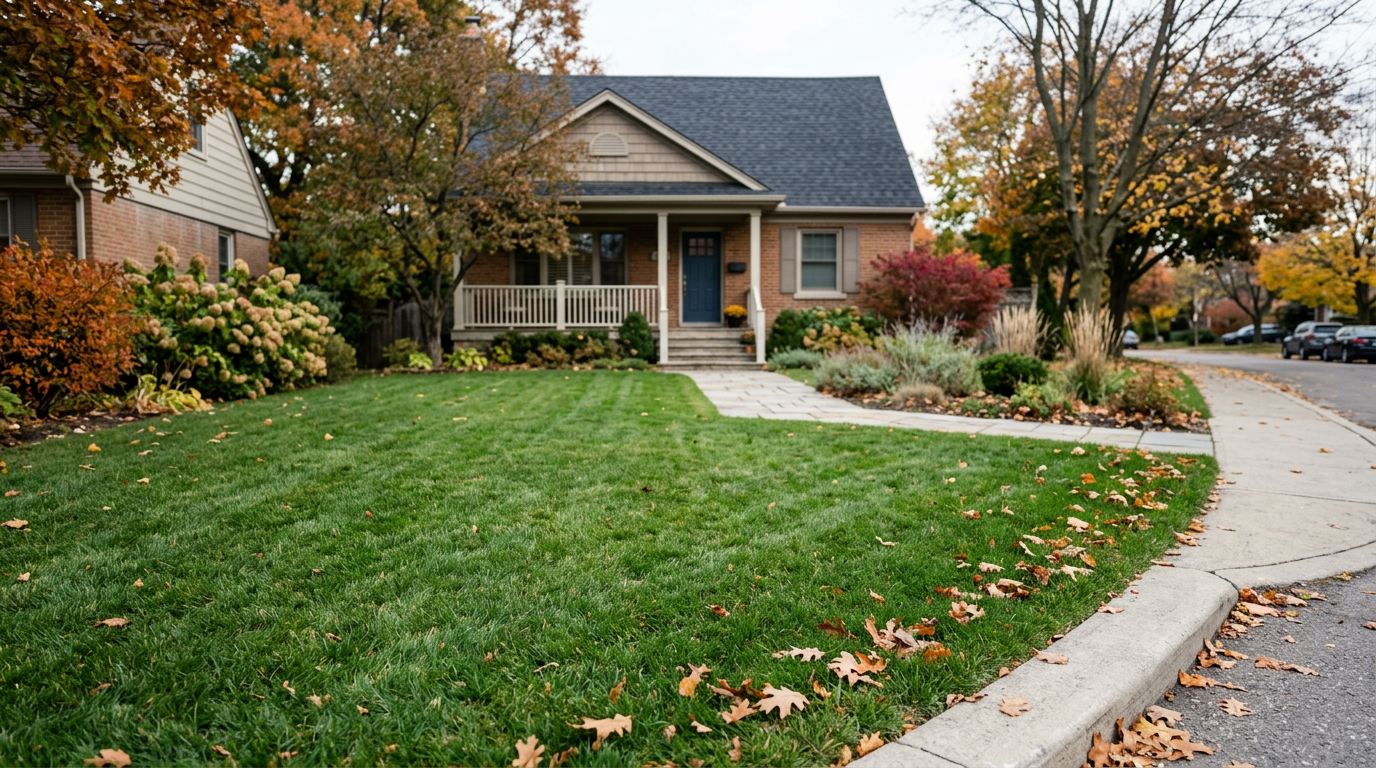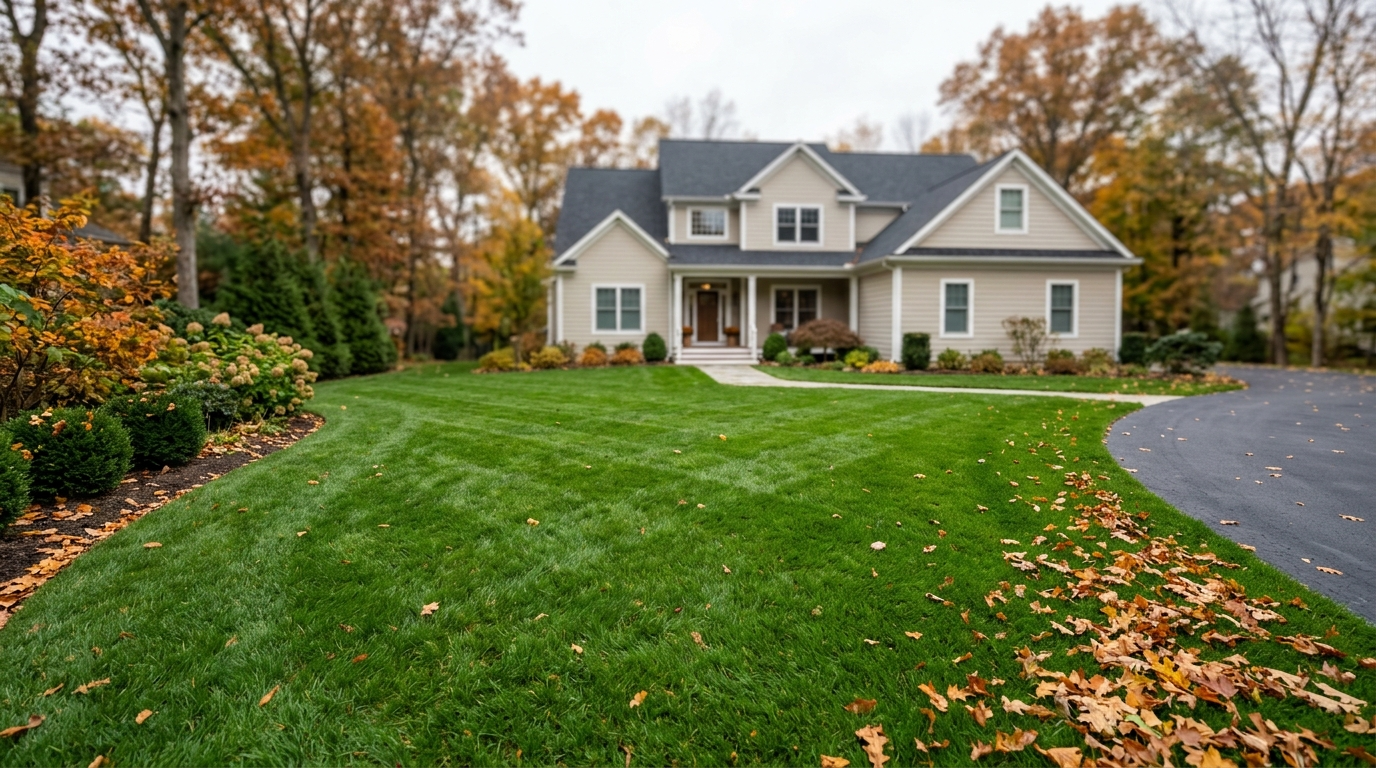
Last Season’s Lawn Gaps Often Become This Season’s Crabgrass Pressure
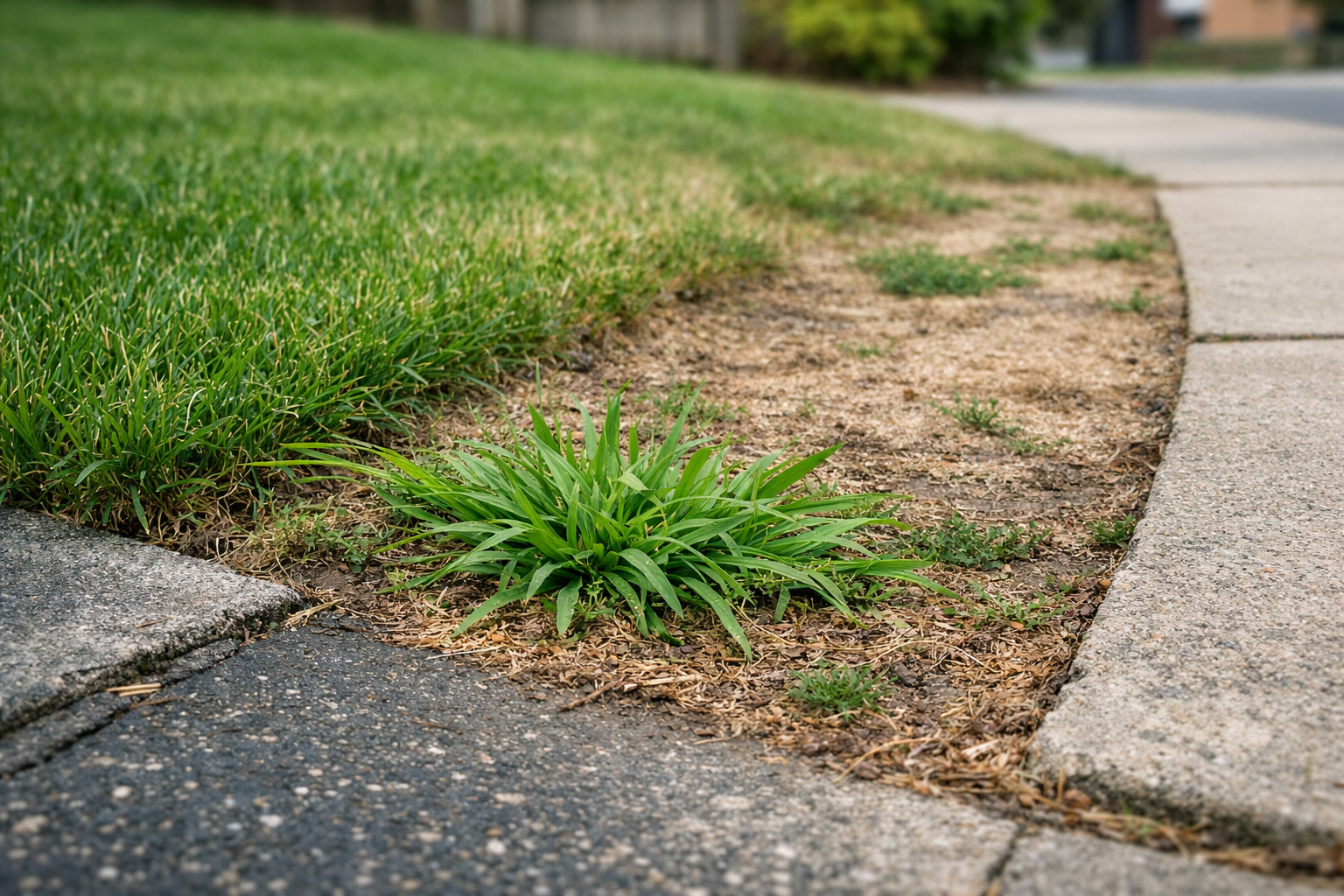
Crabgrass rarely feels random when it starts showing up early.
A lawn may look mostly intact from a distance, but certain sections begin breaking pattern first. The grass near the driveway edge starts looking different. A thinner area near the sidewalk opens up again. A weaker strip along the border starts losing consistency sooner than the rest of the yard. Then crabgrass pressure begins showing up in those same sections before the lawn has fully settled into the season.
That pattern usually has a history.
Early crabgrass pressure often points back to where the lawn was already vulnerable last year. The issue is not just that crabgrass arrived. The issue is that the turf likely left enough open space behind for crabgrass to move into once conditions became favorable.
That is why crabgrass pressure is often less about surprise and more about carryover.
Early crabgrass usually builds where turf was already thin
Crabgrass does not need the whole lawn to fail.
It only needs opportunity. That opportunity usually shows up where turf density was already reduced, where the lawn never fully filled back in, or where certain sections finished the previous season weaker than they should have. Those gaps may not have looked dramatic at the time, but they created openings that made the lawn less competitive heading into the next year.
That is why early crabgrass often appears in familiar places.
The same edge that stayed thin last summer starts breaking again. The same weak strip that never looked fully settled becomes more vulnerable first. The same worn section that lagged behind before winter becomes an easier entry point once the season turns.
Crabgrass pressure often starts where the lawn already left room for it.
Last season’s weak areas often become this season’s pressure zones
A lawn usually tells you where it is least stable before crabgrass ever enters the picture.
It may be a thinning section near the driveway. A worn route across the yard. A weak area around trees. A border strip that kept drying out. A section that stayed less dense than the rest of the property no matter what time of year it was. Those are not just cosmetic inconsistencies. They are often the parts of the lawn with the least resistance to future weed pressure.
That matters because turf density is one of the lawn’s best defenses.
When density drops, the lawn loses part of its ability to hold space. Once that space opens up, crabgrass does not have to break through a strong surface. It only has to move into an area where the turf was already underperforming.
That is why early pressure usually follows older weakness.
Crabgrass pressure often reveals where the lawn never fully recovered
A lot of lawns improve visually at certain points in the season without ever becoming fully stable.
The color may come back. Growth may improve for a while. The yard may even look reasonably healthy from the street. But underneath that surface improvement, some sections never fully regained density. They remained thinner, less even, or more fragile than the stronger parts of the property.
That is often where early crabgrass pressure starts.
The lawn did not actually close the gap. It just looked better for a period of time. Once the new season begins and conditions shift, those weaker sections often reveal themselves again. Crabgrass is not creating the weakness from scratch. It is often exploiting a weakness that was already there.
That is why early crabgrass should be read as a structural clue, not just a weed event.
Thin lawn edges from last year often become early crabgrass targets
One of the most common places this happens is along the edges of the lawn.
Grass near driveways, sidewalks, and other hardscape borders often struggles more than open turf. Those areas deal with more heat, tighter growing space, more wear, and less margin for stress. If they finished last season thin or uneven, they often enter the new season with less ability to resist weed pressure.
That is why crabgrass often shows up there early.
The edge may have looked slightly off at the end of last year, but not bad enough to trigger major concern. Then the new season begins and the same strip becomes one of the first places where crabgrass pressure starts building. That is usually not coincidence.
It is the lawn showing that the edge never fully regained control.
Last year’s worn areas often become this year’s open areas
Repeated wear patterns create another common starting point.
A route across the yard, a section near a gate, a strip beside the driveway, or an area around regular activity may have taken enough repeated pressure last year that turf density never fully came back. Even if the lawn still had grass there, that section may have been thinner, flatter, and less resilient heading into the off season.
That kind of carryover matters.
When the season turns, those worn sections often become some of the easiest places for crabgrass pressure to show up. The lawn did not enter the year with a strong enough surface there to hold the line effectively.
Crabgrass often takes advantage of what repeated use already weakened.
Bare spots from last season rarely stay neutral for long
If part of the lawn opened up last year and never really stabilized, that area usually does not stay empty in a harmless way.
Open turf does not tend to remain open for long once the season becomes active. If the lawn has not recovered density in a section that went bare or nearly bare, that area often becomes one of the most obvious pressure points for crabgrass later.
This is one reason old bare spots matter so much.
A homeowner may think of the area as a past issue, but the lawn often carries that weakness forward. If the section was not corrected properly, it becomes part of the new season’s weed story. Crabgrass pressure often begins where turf was already missing, thinning, or functionally unstable.
The gap may be old. The opportunity is current.
Shaded weak spots can still become crabgrass prone when turf is unstable
Not every crabgrass prone area is a hot, open edge.
Sometimes the issue starts in a section where the lawn was simply too weak to stay dense. Shaded areas, tree affected sections, and parts of the property with inconsistent recovery can all become vulnerable if turf stability broke down the previous season. The exact site pressure may differ, but the pattern is similar. The lawn lost enough hold in that section to leave space behind.
That is the key point.
Crabgrass pressure often follows open turf conditions more than it follows one single site type. Heat can contribute. Edge stress can contribute. But the larger issue is often that the lawn no longer had enough consistent cover to resist intrusion.
Weak turf leaves a mark that the next season often exposes.
A lawn gap is not just missing grass, it is lost control
This is where many homeowners misread the problem.
A gap in the lawn is easy to treat like a visual flaw. It looks like a section that just needs more grass. But from a lawn management standpoint, a gap is more than that. It represents a section where the property lost density, consistency, and control. Once that happens, weed pressure becomes much easier to build.
That is why last season’s gaps matter so much this season.
They are not just leftovers. They are signals that part of the lawn entered the year without enough turf strength to defend itself properly. Crabgrass is often one of the clearest ways that lost control becomes visible.
The problem started before the crabgrass appeared.
Early crabgrass often says more about turf density than weed timing alone
Timing always matters in crabgrass control.
But early crabgrass pressure is often about more than timing by itself. If the lawn has enough density and stability, it usually has a better chance to resist pressure even when conditions become favorable. If the turf is open, thin, or structurally weak, that same pressure becomes much easier to see.
That distinction matters.
Homeowners sometimes assume early crabgrass means the weed simply arrived aggressively. In many cases, what it really means is the lawn was already open enough to let that pressure show up quickly. The crabgrass timing may matter, but the turf condition often explains why certain sections gave way first.
A stronger lawn usually makes weed pressure work harder. A weaker lawn often gives it room.
Recurring crabgrass areas usually point to recurring lawn weakness
If the same areas keep getting crabgrass year after year, that pattern should be taken seriously.
The lawn is usually telling you those sections are not recovering well enough between seasons. The issue may involve edge stress, compaction, repeated wear, weak density, thinning around trees, or some other site condition that keeps leaving the area exposed. But whatever the exact cause, the consistency of the pattern is usually the clue.
This is not random weed behavior.
It is a recurring site issue showing up through crabgrass pressure. Until the turf weakness is addressed, the lawn often keeps presenting the same openings in the same places. That makes the weed problem feel repetitive because the structural problem is repetitive.
Seeding alone does not always fix the sections crabgrass keeps finding
A lot of homeowners try to repair these areas by adding seed and hoping the problem is solved.
Sometimes that helps, but not always in a lasting way. If the section is still dealing with the same stress that made it thin last year, new grass may still struggle to hold. The patch may improve for a while, but if the underlying weakness remains, that section often becomes vulnerable again.
That is why recurring crabgrass pressure should not be viewed as just a seeding issue.
The lawn may need better density support, better seasonal structure, or a clearer correction of whatever keeps weakening that part of the property. Otherwise the repair becomes temporary and the pressure returns to the same place.
Crabgrass often finds the area because the area never became stable.
Lawn gaps often begin before homeowners realize they matter
One reason this pattern keeps repeating is that last season’s gaps do not always look serious at the time.
A section may seem only a little thin. A border may look slightly off. A worn strip may feel manageable. The yard as a whole may still look decent enough that the weak spots do not feel urgent. But those smaller gaps often matter more than they seem because they shape how the lawn enters the next season.
That is where early crabgrass pressure starts making sense.
The lawn is revealing that those small weaknesses were not minor after all. They became the places where turf control was reduced enough for crabgrass to begin building earlier and more visibly.
The weed problem often starts with a weakness homeowners were already seeing, just not yet reading correctly.
Properties in the Greater Rochester area often carry these gaps forward
Around the Greater Rochester area, lawns often move through enough seasonal pressure that weak sections can carry over more easily than homeowners expect.
Spring moisture, summer stress, tree competition, edge heat, compaction, and uneven site conditions can all leave certain parts of the lawn thinner at the end of the season. If those areas do not fully recover, they often enter the next year with less density and less resistance than the rest of the property.
That is why early crabgrass pressure in this region often follows familiar patterns.
The lawn is not just responding to current conditions. It is also carrying forward what last season left behind.
What early crabgrass pressure is usually telling you
When crabgrass starts showing up early, the lawn is often pointing back to where it was already open, thin, or unstable last season.
That may be along concrete edges, in worn routes, around trees, in thinner strips, or in sections that never fully recovered their density. The crabgrass is not just the problem. It is often the visible result of a gap the lawn never really closed.
That is the bigger message.
Last season’s lawn gaps often become this season’s crabgrass pressure because turf weakness tends to carry forward until it is corrected. A lawn that stays open in the wrong places often invites the same kind of trouble back in.
Why these early weed patterns are worth paying attention to
Early crabgrass pressure is useful because it helps show where the lawn is least secure.
It identifies the sections that lost density, failed to recover, or remained vulnerable long enough to let weed pressure build again. That makes early crabgrass more than a weed issue. It becomes a read on the property itself.
The lawn is showing you where control was already weaker.
Those are the places that usually need better structure, better support, and a more deliberate plan if the goal is long term stability rather than repeated seasonal cleanup.
Frequently Asked Questions
Does early crabgrass mean my lawn was already weak?
Often, yes. Early crabgrass pressure usually shows up first in areas where turf density was already reduced, thin, or unstable from the previous season.
Why does crabgrass keep coming back in the same spots?
Usually because those sections of the lawn keep staying vulnerable. The same edge stress, wear pattern, compaction, or turf weakness keeps leaving room for pressure to return.
Can last year’s thin lawn areas become this year’s weed problem?
Yes. Thin or open sections from last season often carry forward into the new season and become easier places for crabgrass pressure to build.
Is crabgrass only a timing issue?
No. Timing matters, but turf density matters too. A lawn with stronger coverage usually resists pressure better than a lawn that already has open gaps.
Strengthen the sections that keep opening up first
If crabgrass keeps showing up in the same early season patterns, the lawn is usually revealing where it never fully regained control.
LawnLogic evaluates the weak sections that carry pressure forward so turf can be managed more deliberately, stabilized more effectively, and kept from reopening into the same weed problems each year.
Explore More About Managing Your Lawn
Continue building your understanding of how structured lawn care supports long-term stability.