A Lawn Running Late and a Lawn Falling Behind Are Not the Same Thing
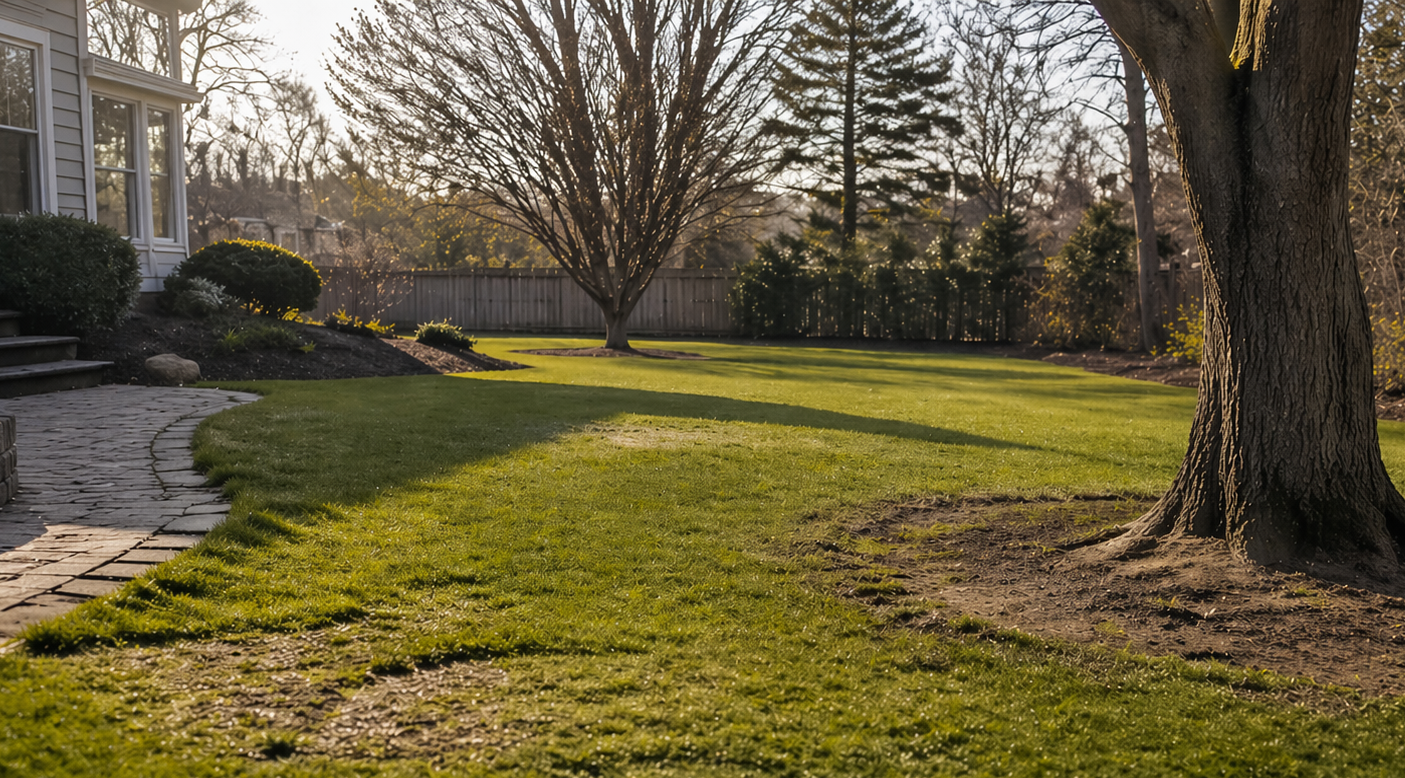
Some lawns take longer to settle into spring.
That by itself is not unusual. A colder start, late snow, wet ground, shaded sections, and uneven warming can all make a lawn look slower than expected for a while. In the Rochester area and nearby communities along Lake Ontario, that kind of stop and start spring is common enough that a delayed lawn does not automatically mean something is wrong.
But delay and decline are not the same thing.
A lawn that is just running late usually starts moving once conditions stabilize. A lawn that is falling behind keeps revealing the same weak sections even after the weather becomes more workable. That is the difference homeowners need to watch for.
A late lawn is usually reacting to the season
When a lawn is simply late, the slowdown is usually tied to broader spring conditions.
The property may have come through a false spring, colder April weather, late snow, repeated rain, or a longer stretch of wet soil than expected. In those cases, the lawn often looks paused more than damaged. It may be slower to green up. Growth may feel inconsistent. Certain sections may look flat or inactive for longer than the homeowner wants.
That is frustrating, but it is often still normal.
A lawn that is running late is usually responding to seasonal conditions that affected the property as a whole. The yard may not look finished, but it is still behaving like a lawn waiting for better conditions rather than a lawn actively losing ground.
A lawn falling behind usually reveals a pattern
A lawn that is falling behind tends to show more than simple delay.
It usually has sections that keep lagging even after the broader weather pattern improves. The same strip stays thin. The same shaded section remains weak. The same border along the driveway continues looking off. The same worn route across the yard does not recover the way the rest of the property does.
That is where the difference starts becoming clearer.
A delayed lawn tends to improve once the season settles. A lawn that is falling behind keeps pointing to the same structural weak spots. It is not just late. It is less stable.
A lawn running late usually still looks like it is trying to move
Even when a lawn is behind schedule, there are usually signs that it is still progressing.
The color may be inconsistent, but it is beginning to build. Growth may be uneven, but it is becoming more active. Wet areas may still be slower, but they are starting to dry. The property may not look fully settled, but it no longer feels completely stalled.
That kind of movement matters.
It shows that the lawn is responding once conditions become more favorable. A late lawn usually gives some indication that it is coming along, even if that progress is slower than expected.
A lawn falling behind often stops looking connected to the rest of the property
This is one of the easiest ways to spot the difference.
When part of the lawn is just late, it usually still feels connected to the season the rest of the yard is entering. It may be behind, but it is still part of the same general spring progression.
A lawn area that is falling behind often feels disconnected instead.
One side of the yard may be greening up while another still looks winter stuck. A thin section may remain weak while surrounding turf starts building density. A low area may stay soft and unstable while the rest of the lawn becomes more usable. That kind of separation usually points to more than timing alone.
Weather delay usually affects the property more broadly
A late lawn tends to reflect broad seasonal interruption.
That may mean the whole yard had trouble drying out. The whole property lost momentum after April snow. Green up happened in waves because temperatures kept changing. Even if some sections still moved faster than others, the overall pattern usually feels weather driven.
That is different from a lawn that is falling behind.
When the issue is more structural, the problem usually narrows into specific sections of the yard. The whole property is no longer being held back equally. Instead, certain areas keep losing pace while the rest of the lawn starts moving on.
Structural weakness usually shows up in the same places again
A lawn that is falling behind often has a history.
The same tree line stays thin. The same edge near concrete weakens first. The same shaded side lags every spring. The same traffic route never fully fills in. The same low section feels soft longer than everything around it. Those repeated patterns usually mean the lawn is dealing with something more persistent than a late start.
That is useful to notice.
A delayed lawn may look uneven for a while because of the season. A lawn that is falling behind often repeats its weak points because the underlying conditions in those areas have never really been corrected.
A late lawn usually catches up once the weather levels out
This is the simplest working test.
Once the weather finally stabilizes, a late lawn should begin showing more connected progress. It does not need to become perfect right away, but it should start moving forward more reliably. The property should feel less paused. Growth should begin feeling more consistent. Color should start holding instead of flashing briefly and fading again.
That is what catching up looks like.
The lawn starts acting like spring has actually taken over.
A lawn falling behind keeps asking for attention after conditions improve
If the weather has stabilized and parts of the lawn still look stuck, that is when concern becomes more reasonable.
At that point, the issue is often no longer just delayed timing. It may be poor drainage, compaction, repeated wear, shade pressure, tree competition, weak density, or another site condition that keeps making that section less resilient than the rest of the yard.
That is what falling behind usually means.
The season is moving forward, but a part of the lawn is not moving with it.
Thin areas often tell the difference most clearly
Thin turf is one of the best places to read this.
A thin area that is just late will usually begin filling back in once conditions improve. It may not become dense overnight, but it should start looking more active and less exposed. A thin area that is falling behind often stays visibly weaker even while surrounding sections improve.
That difference matters because it helps separate delay from instability.
If the weak area keeps standing out after the rest of the lawn begins settling into the season, the lawn is usually telling you that this is not just a timing issue anymore.
Wet areas can be late, but they can also reveal a bigger problem
Spring moisture makes this harder to judge at first.
A wet section of lawn may simply be late because the whole property has been slow to dry out. That is normal after a stop and start spring. But once the weather becomes more cooperative, that section should begin improving if the issue was only seasonal.
If it stays soft, pale, or slow well beyond that point, the lawn is usually revealing more than a temporary delay.
The same is true for shaded sections, worn routes, and border strips. A little lag is normal. Persistent underperformance is different.
A lawn running late usually becomes easier to trust
There is a feel to a late lawn once it starts coming around.
Even if it is not where the homeowner wants it yet, it begins giving more confidence. The property starts feeling more readable. The weak areas begin narrowing. The whole yard starts moving in the same general direction.
That is a good sign.
A lawn falling behind tends to do the opposite. It keeps creating uncertainty because the same sections remain unstable while the rest of the property progresses.
Delay usually looks temporary, falling behind usually looks repetitive
That may be the clearest distinction of all.
A lawn that is just running late usually looks temporarily interrupted. A lawn that is falling behind usually looks repetitively weak. The pattern keeps returning to the same places, the same conditions, and the same problem areas.
That repetition is rarely random.
It is often the lawn showing where site pressure has been building for longer than one season.
Some lawns only need time, others need correction
This is where homeowners often get frustrated.
They wait, assuming the whole lawn just needs more time. Sometimes that is correct. But sometimes waiting only reveals that certain sections are not going to recover well without more deliberate support. The lawn may not need full scale repair across the whole property, but it may need targeted attention where the pattern keeps breaking down.
That is why the distinction matters.
Time helps delayed lawns. Time alone usually does not solve structural weakness.
In this region, it is easy to mistake delay for a real problem too early
Around Rochester and the Lake Ontario side of New York, spring often trains homeowners to doubt what they are seeing.
The season can look active for a week, then cold again. Green up can start, pause, and restart. Wet ground can hold longer than expected. That makes it easy to think the lawn is in trouble when it may simply be reacting to unstable spring conditions.
So some patience is reasonable.
But that patience should not become blind optimism once the weather has truly settled and the same areas still refuse to catch up.
What the lawn is usually telling you
If the whole property looks slower than expected after a rough spring, the lawn may just be running late.
If certain sections keep staying weak while the rest of the yard begins moving forward, the lawn is usually falling behind in those areas for a reason. That reason may be shade, moisture, compaction, edge stress, traffic, tree pressure, or another condition that keeps reducing turf stability there.
That is the real distinction.
A late lawn is usually waiting on the season. A lawn falling behind is usually revealing a weak point in the property.
Frequently Asked Questions
How do I know if my lawn is just late or actually struggling?
Watch what happens once the weather stabilizes. If the lawn starts showing steady progress, it is usually just late. If the same sections stay weak while the rest improves, those areas are likely falling behind.
Is it normal for some parts of the lawn to still lag in spring?
Yes. Shaded, wet, or slower warming sections often lag. The question is whether they begin catching up once conditions improve.
How long should I wait before getting concerned?
A little patience makes sense after unstable spring weather. But once the broader pattern settles, persistent weak areas usually deserve closer attention.
What parts of the lawn are most likely to fall behind?
Shaded zones, low wet sections, worn routes, driveway edges, and areas around mature trees are common places where structural weakness shows up first.
See the difference before the season slips away
If your lawn still looks uneven after the weather has finally settled, the question is no longer just whether spring ran late. LawnLogic helps identify which areas are simply catching up and which ones are revealing deeper instability so the property can be managed with more structure and fewer repeated setbacks.
Explore More About Managing Your Lawn
Continue building your understanding of how structured lawn care supports long-term stability.