Why Your Lawn Burns in August Even When You're Watering It
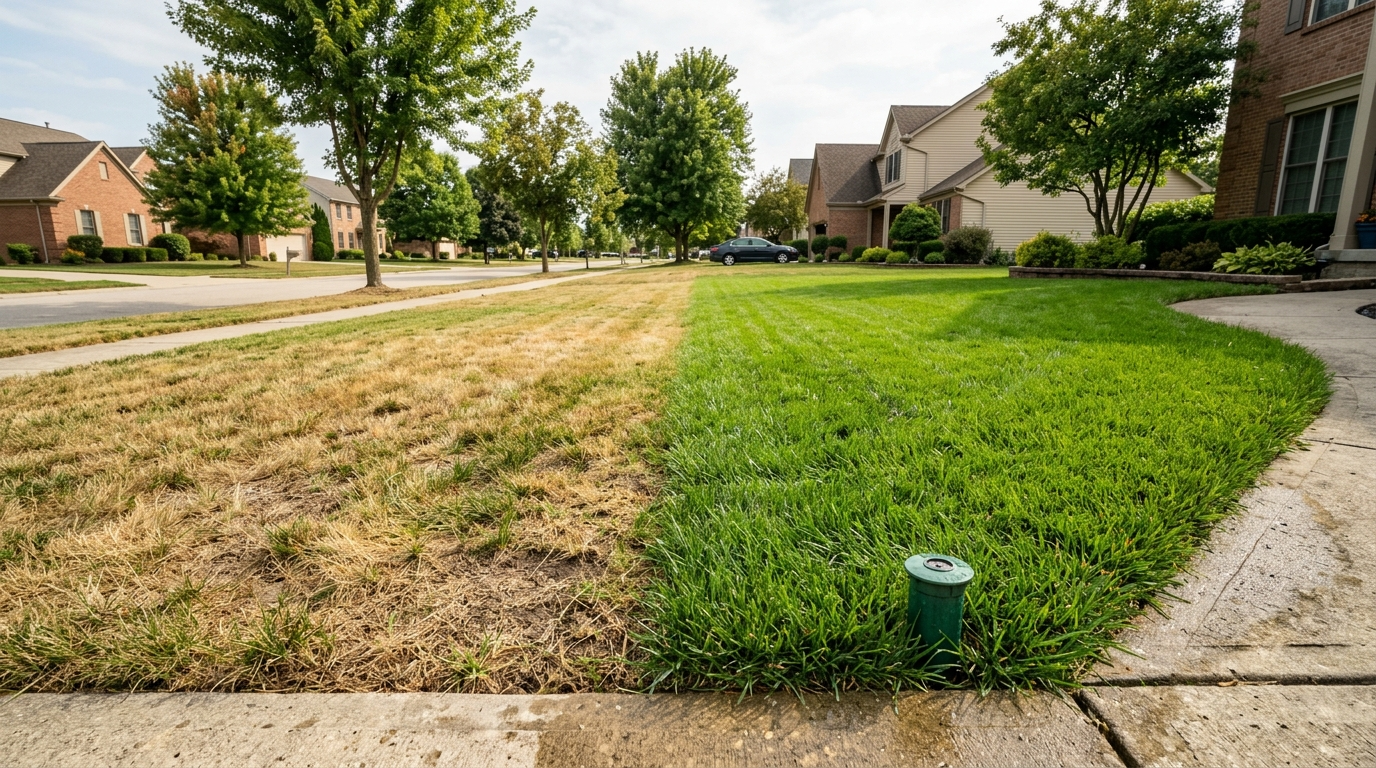
You are watering consistently. The timer is set, the soil gets checked, and you are doing everything the standard advice recommends. By mid-August, large sections of the lawn still look scorched, yellowed, or thinning in ways that make it seem like you have not watered at all. The problem is not your effort. The problem is structural, and no amount of water fixes a structural problem. Turf management providers in Monroe County, NY see this pattern every summer. The explanation is almost always the same.
Water Cannot Fix What Compaction Prevents
Most summer lawn advice focuses entirely on moisture. Water more. Water deeper. Water earlier in the morning. That guidance is not wrong, but it treats the symptom rather than the cause. When soil becomes compacted over time, its physical structure changes. The pore spaces that allow water and oxygen to move through close off. Water applied at the surface either runs off or pools near the top without penetrating to any useful depth.
Roots follow moisture. When moisture cannot move down, roots stay shallow. Shallow roots cannot reach the cooler, more stable moisture that exists deeper in the soil during August heat. The turf at the surface dries out fast. You water again. The same thing happens.
The lawn looks burnt not because it lacks water but because the root system cannot reach the water that is available. That distinction matters, because the response to each problem is completely different.
Compaction builds over seasons. One dry August does not create it. It accumulates gradually through normal foot traffic, seasonal freeze-thaw cycles, and the clay-heavy soil conditions common throughout Monroe County.
What the Lawn Is Actually Telling You in August
Yellowing, browning, and thinning in summer do not all mean the same thing. Reading those signs correctly matters before deciding what to do next.
Uniform yellowing across a large area often points to shallow-rooted turf under heat stress. The turf is not dead. It is dormant. That distinction matters for how you respond.
Irregular brown patches in random shapes or rough circles suggest something else entirely. Grub activity below the surface severs roots at the point where they cannot hold moisture at all. A lawn under active grub pressure during July and August cannot recover through watering because the root system is being physically destroyed from below. If you can pull back a section of turf and it lifts like loose carpet, grub damage is the likely cause. Grub curative applications address active infestations when the window for prevention has already passed.
Patches that feel spongy, look off-color, or seem to grow at a different rate than surrounding turf may indicate bentgrass intrusion. Bentgrass does not handle summer heat the way desirable turf does. It goes brown and matted during stress periods, making sections of an otherwise manageable lawn look much worse than they are. That is a separate problem requiring a targeted approach, not a watering adjustment.
The Lawn That Looks Fine in June and Falls Apart in August
One of the more consistent frustrations we encounter in late summer is a property that has been maintained for years but still struggles in August. The watering is adequate. The fertilization history is reasonable. But soil structure has not been addressed in years, and that gap compounds.
Surface conditions look acceptable in May and June. Then the lawn deteriorates sharply under the first sustained heat of August. The turf appeared healthy because conditions were mild enough to mask the structural limitation. Heat exposes it quickly.
The correction for compacted soil is physical, not chemical. Aeration opens the soil profile, restores oxygen movement, and creates conditions where roots can develop depth before the following summer. It does not produce results overnight. Aeration completed in September of this year directly affects how that lawn handles stress next August. That relationship is why repeatedly deferring aeration creates a problem that gets worse each season rather than holding steady.
Why Seeding Thin Areas in August Usually Fails
When turf thins out in August, the instinct is to seed immediately. That instinct is understandable, but the timing is almost always wrong. Seed applied in mid-to-late August faces hostile germination conditions: soil temperatures remain high, and the moisture window between germination and establishment is extremely narrow. The seed either fails to germinate or germinates and dies before roots can establish.
The correct window for overseeding in Monroe County runs from late August into mid-September, when soil temperatures begin to moderate and cooler overnight conditions support establishment.
The difference between a successful stand and bare dirt in October often comes down to two or three weeks of timing and whether the soil was aerated before the seed went down. Aeration and overseeding structured as a coordinated step, rather than a reactive measure, produces turf density that holds through the following summer much more reliably.
What Homeowners Ask When Summer Watering Is Not Working
My lawn looks dead. Is it actually dead, or will it come back?
Probably not dead. Most cool-season turf enters summer dormancy when heat and moisture stress exceed a threshold. It turns brown as a survival mechanism and typically recovers when temperatures drop and rainfall returns in September. The real concern is whether the root system is intact enough to support that recovery. Grub damage, severe compaction, or prolonged dry periods in already-thin areas can push turf past dormancy into actual dieback. If sections do not green up by late September, something beyond normal stress is involved.
I've had aeration recommended to me for three years. I keep skipping it. How bad is that, actually?
Each skipped fall compounds the one before it. Roots stay shallow. The soil stays dense. The moisture that does reach the surface evaporates faster because there is no depth to draw from. Turf that might have tolerated last August's heat reasonably well struggles this August, and more of it dies back rather than going dormant. The aeration skipped this September is a direct reason next August looks the same as this one.
Is there anything I should be doing differently with how I water right now?
Watering deeply and infrequently is more productive than light daily watering during stress periods. Light watering keeps moisture at the surface and encourages roots to stay shallow. One longer watering cycle that allows moisture to penetrate several inches down is more effective than three short cycles that evaporate quickly. That said, if compaction is severe, even deep watering cannot move water through the soil profile efficiently. Watering strategy and soil structure are not substitutes for each other.
Could something below the surface be making this worse without me knowing it?
Yes, and it is worth checking before you assume this is purely a watering problem. Grub populations peak in late summer. Active grub feeding cuts root systems from below, which means turf showing stress in August may have its moisture problem compounded by physical root loss happening underground. If irregular dead patches appear and the turf pulls up without resistance, that warrants a closer look before any fall seeding begins.
What Comes Next Matters More Than What You Do Right Now
August is mostly about observation and assessment. The window to correct structural turf problems in Monroe County opens in September, when soil conditions support aeration, overseeding, and soil reconditioning work. The lawns that recover well by the following summer are the ones where that fall window was used deliberately rather than skipped.
LawnLogic manages turf through structured seasonal programs designed to address the conditions that produce summer stress, not just the visible results of it. The enhanced program includes organic liquid aeration and thatch control as part of the seasonal round structure, which supports soil health between mechanical aeration cycles. Properties with more complex structural needs are managed under the premium program, which includes soil conditioning and targeted weed management alongside the full seasonal application schedule.
If your lawn looked reasonable in June and looks burnt in August, the underlying cause is worth understanding before fall. Contact LawnLogic to schedule a property evaluation and build a plan that addresses what is actually driving the problem.
Explore More About Managing Your Lawn
Continue building your understanding of how structured lawn care supports long-term stability.