What August Grub Damage Looks Like Before Your Lawn Tells You
By the time a lawn starts pulling away from the soil in late summer, most homeowners assume it's a watering problem. That assumption is reasonable. August in Monroe County is dry, and dry lawns look like struggling lawns. But grub control in Monroe County becomes urgent in August for a reason most general advice skips entirely: the larvae feeding below the surface right now are still small enough to treat effectively, and that window closes faster than the visible damage suggests.
The grubs working through root systems in August are not the large, entrenched larvae you find in October. They hatched from eggs laid in June and July, and they are currently in their most active feeding phase. The damage accumulates underground before the lawn gives any clear signal above it.
The Surface Looks Like Drought Stress Because the Roots Are Already Gone
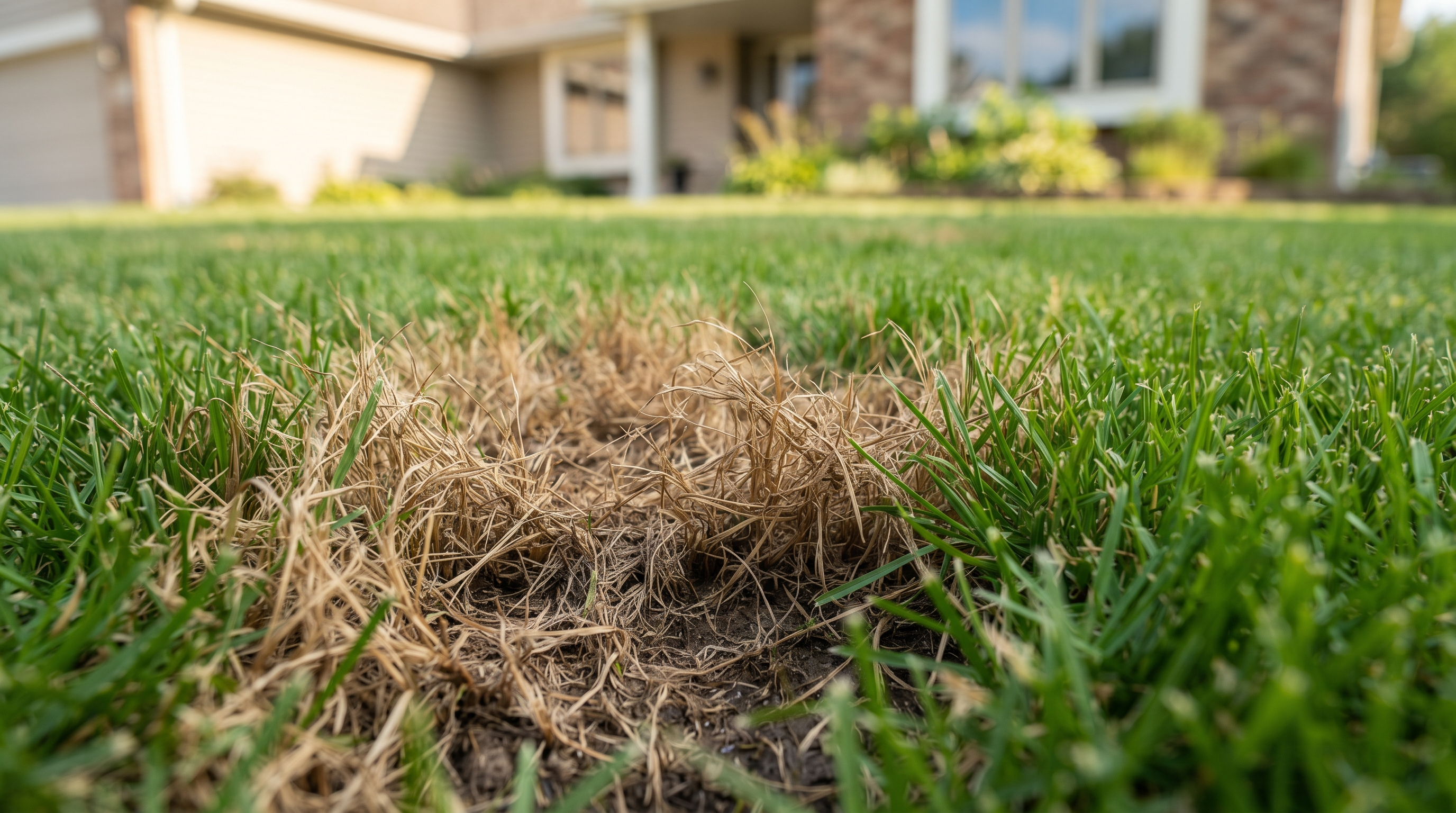
Dry patches in August are common. That's what makes grub activity so difficult to identify without knowing what to look for. When grubs sever grass roots near the soil surface, the turf loses its ability to take up water. The result looks identical to drought stress: brown color, a dull texture, and turf that doesn't recover after irrigation.
The difference is what happens when you test the turf directly. A section of lawn with intact roots will resist light pulling. A grub-damaged area lifts. The root layer has been severed, and the turf above it is essentially sitting loose. We regularly see properties in Monroe County where homeowners spent two to three weeks adjusting irrigation schedules before realizing the issue had nothing to do with water delivery.
That's the August trap. The visual symptoms are ambiguous. The cause is underground.
Grubs Feed Hard While Soil Is Warm, Then Move Beyond Reach
August soil temperatures drive grub behavior. Larvae feed aggressively while soil temperatures stay elevated because that feeding supports their development before they overwinter. As September moves into October and soil cools, grubs move deeper into the profile and become progressively harder to reach with curative applications.
This timing explains why a grub curative applied in August produces materially different results than the same product applied in late September. The larvae are near the surface in August, actively feeding. The product reaches them when it needs to. A month and a half later, those same larvae have moved below the zone where curative chemistry is effective, and the application window has passed.
The clock runs out gradually. That's exactly why this service call tends to come late. Homeowners notice the damage, wait a week to see if conditions improve, and contact us in mid-to-late September when the curative window has already narrowed significantly.
Skipping Prevention in June Does Not Mean August Is Too Late
A common misread is that grub management is binary: either you applied a preventive product in early summer or you're waiting until next year. That framing causes homeowners to do nothing in August when a meaningful option still exists.
Preventive applications, typically applied in June, work by establishing product in the soil ahead of egg hatch. They protect against a population that hasn't fed yet. A curative application works differently. It targets larvae that are already present and actively feeding, and it requires a different product applied under specific timing conditions.
For properties enrolled in structured programs like our Enhanced program, grub preventer is already part of the seasonal structure. But properties without prevention, or where populations came in higher than anticipated, still have a viable path through curative treatment in August. That's not a backup plan. It's a legitimate intervention with documented effectiveness when timed correctly.
Stopping the Feeding Is Step One. Recovery Is Step Two.
Effective curative treatment stops the feeding. It does not restore the root system. Once grub activity is addressed, the next management question is what the lawn needs to recover. In most cases, damaged sections require aeration and overseeding in early fall to rebuild density where the root system was compromised.
The pattern we encounter most often: curative treatment applied in late August, followed by aeration and seeding in September, produces measurable recovery before the season closes. Properties that address the pest but skip the recovery step tend to see thin, open areas the following spring, which then become pressure points for crabgrass and broadleaf weed intrusion.
Grub control and recovery seeding are sequential steps. One addresses the cause. The other rebuilds what was lost. Both are necessary for a complete outcome.
What Homeowners Are Actually Asking Us in August
My lawn was fine in July. Why did it go brown so fast?
Rapid late-summer browning that doesn't respond to water is the most consistent signal that something is wrong below the surface. Drought stress progresses slowly and typically recovers when irrigation improves. Root damage from grubs doesn't recover with water because the roots responsible for uptake are no longer intact. If you're irrigating consistently and specific areas still aren't responding, grub activity is the first thing to rule out.
I already watered those areas heavily. Did I make the problem worse?
Watering a grub-damaged area doesn't worsen the grub population, but it doesn't help the turf recover either. The water has nowhere to go if the root structure is severed. We hear this concern often. The answer is straightforward: you didn't cause additional damage. You just haven't addressed the actual problem yet.
Can I treat for grubs myself this time of year?
Consumer products are available, but the gap in effectiveness compared to professional curative applications in August is significant. Timing, product selection, and application rate all affect whether the treatment reaches active larvae at the correct depth. Getting one of those variables wrong at this stage means the window closes before you can try again.
If I wait another week or two to see if things improve, am I losing anything?
Yes. The curative window in August is not open indefinitely. Larvae move deeper as soil cools in September, and once they drop below the effective treatment zone, a curative application no longer reaches them. A two-week delay in late August can be the difference between a successful treatment outcome and waiting until next season to try again.
The August Decision That Shapes What Your Lawn Looks Like Next Spring
August grub activity is not a fall problem showing up early. It is a late-summer event with a shrinking response window. Grub control in Monroe County is most effective right now, while larvae are near the surface and actively feeding. Waiting to see if things improve typically means waiting until the curative option is no longer viable.
If sections of your lawn are lifting, browning without a drought explanation, or not responding to irrigation, contact LawnLogic. We will assess the situation, confirm whether grub activity is the cause, and apply the appropriate curative treatment while the timing still supports a full outcome.
Request a grub assessment before the August window closes.
Explore More About Managing Your Lawn
Continue building your understanding of how structured lawn care supports long-term stability.