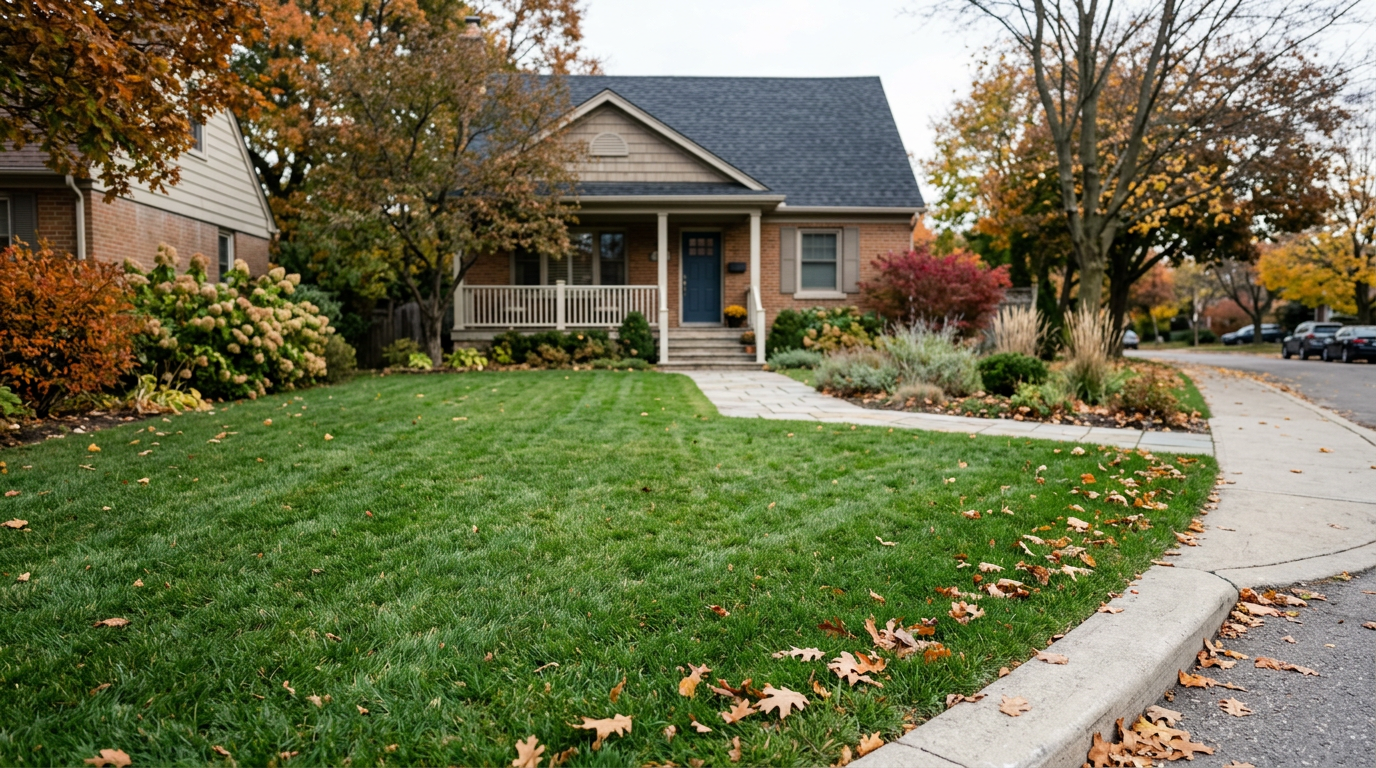
Why Your Fall Seeding Keeps Failing And It Has Nothing to Do With the Seed
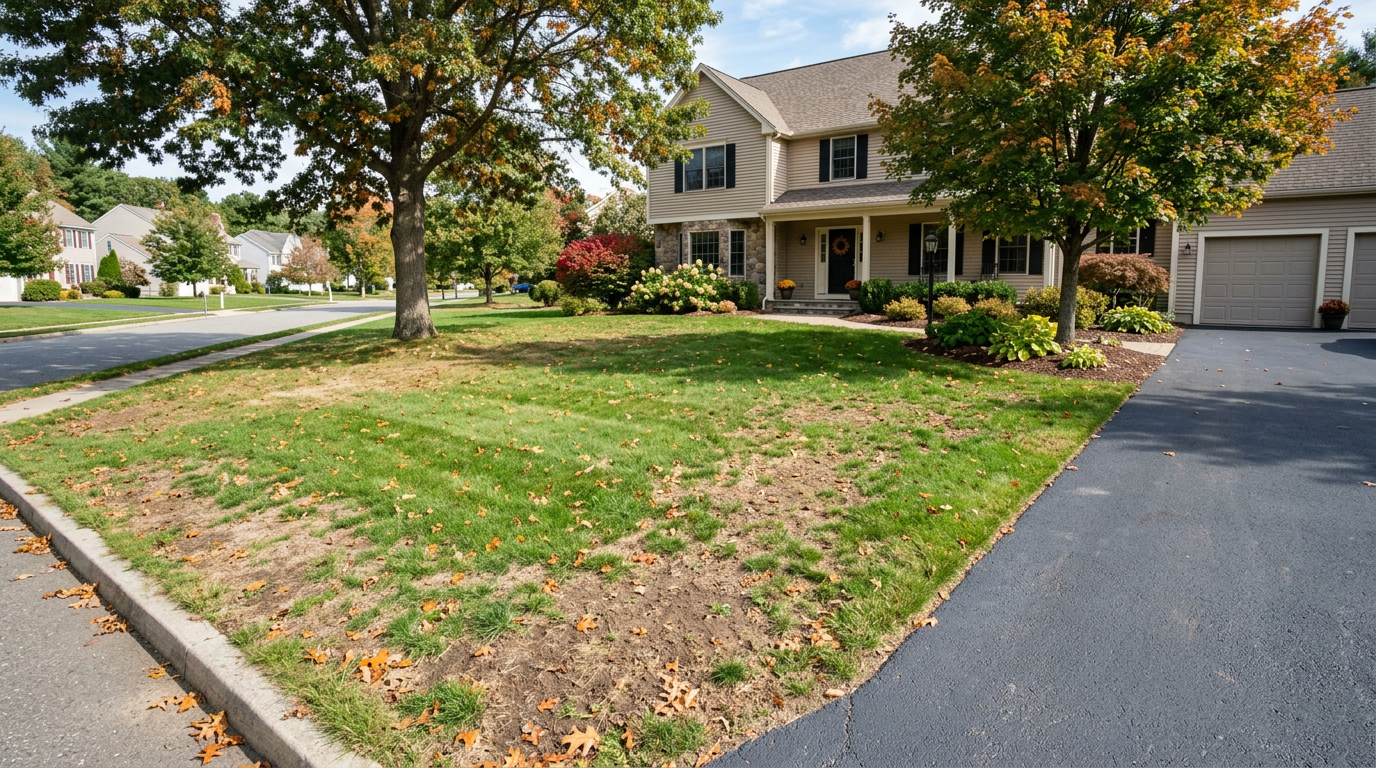
Seeding in the fall feels like doing the right thing. The timing advice is everywhere, the calendar lines up, and the intent is sound. But if you seeded last September and watched it either not germinate or disappear by spring, the problem was not the seed or the season. The problem was what you were seeding into. For homeowners across Monroe County considering aeration and overseeding this fall, the more important question is not when to seed. It is whether the lawn is actually ready to accept it.
This is the part that most fall lawn care content skips entirely. Aeration and overseeding works when the conditions beneath the surface support germination. When summer has left behind compacted soil, grub activity, or persistent stress damage, those same conditions that thinned your lawn will reject new seed just as efficiently. The calendar did not fail you. The soil did.
Compacted Soil Does Not Reset Itself When Summer Ends
Soil compaction does not resolve on its own between summer and fall. Foot traffic, heat, and dry periods compress the upper soil layer throughout the growing season. By late summer, heavily trafficked areas can reach a point where seed cannot establish meaningful root contact, water moves across the surface instead of absorbing, and oxygen exchange at the root zone is limited.
Aeration physically breaks that pattern. Hollow-tine aeration removes small plugs of soil, creating channels where seed can settle, moisture can penetrate, and roots can expand. Without that step, overseeding onto compacted ground puts seed in contact with a surface that cannot support it. Some seed will germinate. Most will not survive the transition into established turf.
Compaction is also not uniform across a property. We regularly see lawns where the front area along the walk and driveway edge is significantly more compacted than the backyard. Seeding results reflect that difference even when the same seed and the same rate were used throughout the entire yard.
Grubs That Fed in August Will Eliminate September Seeding Results
This is the failure point that surprises homeowners most often. Grub populations peak in late summer, and their feeding disrupts root systems across large sections of lawn. In some cases, visible browning or turf that lifts in sections is the first sign. In others, the damage is less visible but equally disruptive at the root zone.
Seeding over grub-damaged soil plants new seed directly into a root zone that is already compromised. Even if germination occurs, young turf establishes fragile initial roots, and those roots enter the same damaged environment that eliminated the mature turf. New grass does not have the root depth or density to survive it.
If your lawn showed irregular brown areas through July and August, sections that peeled up easily, or visible activity when you pulled back thin turf, grub damage is a realistic explanation. A grub curative application addresses active populations before seeding rather than asking new seed to establish in soil that is still being fed on. Treating after seeding does not protect germination. That window is already closed.
For a clearer explanation of when preventive versus curative grub treatment is appropriate, grub preventer vs grub curative: when each makes sense covers the distinction in practical terms.
Stressed Soil Lacks the Biological Activity New Seed Requires
Healthy germination depends on more than moisture and temperature. Soil biology matters. A season of heat stress, thatch buildup, or neglected fertility leaves soil with reduced microbial activity. New seed placed into that environment germinates into conditions that cannot cycle nutrients effectively or support the root development needed for turf to harden before winter arrives in Monroe County.
This is why fall seeding works reliably in some lawns and fails repeatedly in others that look nearly identical from the street. The surface tells you almost nothing about what the soil can actually support beneath it.
Soil managed consistently through the season with organic inputs and structured fertility programs retains more biological activity. Soil that has not been managed that way may require corrective work before overseeding produces reliable results. Lawn seeding and renovation in situations like this is a structured process, not a single application.
Seeding as a Standalone Task Is Why the Problem Keeps Repeating
The pattern we encounter most often when a homeowner reports that fall seeding never seems to hold is that each attempt was treated as a standalone task rather than part of managed seasonal care. Seed was applied. It either worked or it did not. No assessment of what caused the thinning was completed first.
Properties that produce consistent fall seeding results have usually addressed the underlying conditions before the seed goes down. Compaction was relieved through aeration. Grub pressure was evaluated and treated if present. Soil fertility was maintained across the season so the ground remained biologically active. Persistent weed pressure, including nutsedge or bentgrass that competed throughout summer, was cleared so thin areas were not immediately re-invaded.
If your lawn struggled with invasive weeds competing in thin areas this season, reviewing the role of bentgrass control or nutsedge treatment as part of the pre-seeding process is worth doing now. New seed placed into areas where these species are actively present will face competition before it can establish any meaningful density.
Common Questions Before Scheduling Fall Seeding Service
I seeded last fall and the new grass did not survive winter. Does that mean the timing was wrong?
Timing may have been a factor, but it is rarely the only one. Seed applied in late October often does not have enough time to establish adequate root depth before ground temperatures drop. Seed applied in mid-September that still failed usually did so because of what it was seeding into, not when. Compacted soil, biological depletion, or active grub populations will finish what summer started, regardless of the calendar date.
Can I just aerate without overseeding and still see improvement?
Yes, and in some cases that is the right approach. Aeration alone improves compaction, water infiltration, and root development in turf that is thin but still present. If your lawn has reasonable density but has been struggling with compaction-related stress, aeration without overseeding can produce meaningful improvement. Overseeding adds value when bare or very thin areas will not fill in on their own.
My lawn looks fine in spring but always thins out by August. Is that a seeding problem?
That pattern points to summer stress as the primary driver, not a seeding failure. Lawns that perform well in spring and decline through summer are usually experiencing a combination of heat stress, compaction that worsens as the season progresses, and pest pressure that peaks in late summer. Seeding in fall addresses the symptoms. The recurring pattern requires a structured management approach that supports the lawn through the conditions causing the decline each year.
If the soil has real problems, will I just be wasting money seeding this fall?
Not necessarily, but that depends on what the problems are and whether they get addressed first. Seeding into soil that has not been aerated, has active grub populations, or has significant biological depletion is genuinely unlikely to hold. Seeding into soil where those conditions have been corrected first is a reasonable investment. The honest answer is that the assessment determines whether fall seeding makes sense this year or whether the better move is to correct the conditions now and seed when the soil can actually support it.
Starting This Fall With the Right Assessment
If your lawn has had a hard summer and you are planning to seed this fall, the most productive first step is an honest evaluation of what caused the thinning. Compaction, grub activity, fertility depletion, and invasive weed pressure each require a different corrective step before seeding will hold.
LawnLogic manages this process as a coordinated sequence, not a single service call. Contact us to schedule an assessment. We will identify exactly what we observe and lay out the appropriate sequence for your property before any work begins.
Explore More About Managing Your Lawn
Continue building your understanding of how structured lawn care supports long-term stability.